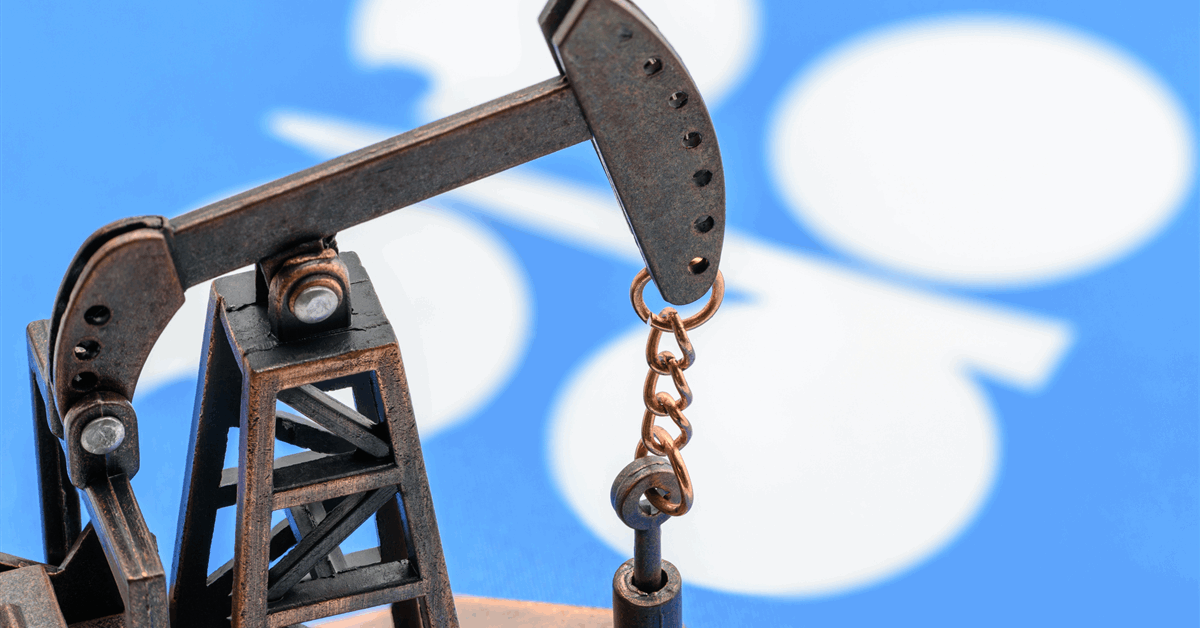
The global oil market is once again at a critical juncture, with recent announcements from OPEC+ members signaling a nuanced approach to supply management amidst volatile price action. A virtual meeting held on November 2, 2025, saw eight key OPEC+ nations – Saudi Arabia, Russia, Iraq, the United Arab Emirates, Kuwait, Kazakhstan, Algeria, and Oman – decide to implement a production adjustment of 137,000 barrels per day. This move, effective December 2025, represents a modification to the 1.65 million barrels per day in additional voluntary adjustments announced in April 2023. While the group cited a “steady global economic outlook and current healthy market fundamentals” at the time of their decision, current market conditions paint a starkly different picture, demanding investors to carefully re-evaluate the implications of these strategic maneuvers.
OPEC+ Adjustments Meet a Shifting Market Reality
The decision by the eight participating OPEC+ countries outlines specific contributions to this 137,000 bpd adjustment for December 2025: Saudi Arabia and Russia will each adjust by 41,000 bpd, Iraq by 18,000 bpd, the UAE by 12,000 bpd, Kuwait by 10,000 bpd, Kazakhstan by 7,000 bpd, and both Algeria and Oman by 4,000 bpd. Beyond December, the group also resolved to pause any further production increments for January, February, and March 2026, attributing this conservative stance to “seasonality.” However, the market’s current response suggests a significant divergence from the “healthy fundamentals” narrative articulated by OPEC+ in late 2025.
As of today, Brent crude trades at $90.38 per barrel, marking a substantial decline of 9.07% within a single trading session. This sharp intraday drop comes on the heels of a broader bearish trend, with Brent plummeting by nearly 20% from $112.78 just two weeks prior. Similarly, WTI crude has experienced a parallel downturn, currently priced at $82.59 per barrel, down 9.41% today. Even U.S. gasoline prices reflect this sentiment, trading at $2.93, down over 5%. This aggressive sell-off indicates that investors are grappling with concerns about demand weakness or potential oversupply, challenging the stability OPEC+ aimed to project with its November 2025 announcement. The market’s current trajectory suggests that the 137,000 bpd adjustment, which represents a slight easing of prior voluntary cuts, is being overshadowed by broader macroeconomic anxieties or a perceived imbalance in the global energy landscape.
Investor Focus: Quotas, Flexibility, and Future Price Trajectories
The recent OPEC+ decision directly addresses a primary concern for many investors: “What are OPEC+ current production quotas?” While the group maintains specific required production levels for each member through March 2026 – for instance, Saudi Arabia at 10.103 million bpd and Russia at 9.574 million bpd – the 137,000 bpd adjustment highlights the dynamic nature of these targets. It’s not merely about fixed quotas but about the group’s collective ability and willingness to adapt supply to perceived market conditions. The statement emphasized that the larger 1.65 million bpd in voluntary adjustments “may be returned in part or in full subject to evolving market conditions and in a gradual manner.” Furthermore, the group reaffirmed “the importance of adopting a cautious approach and retaining full flexibility to continue pausing or reverse the additional voluntary production adjustments, including the previously implemented voluntary adjustments of the 2.2 million barrels per day announced in November 2023.”
This commitment to flexibility is crucial for investors who are keenly asking “what do you predict the price of oil per barrel will be by end of 2026?” The current market downturn, despite OPEC+’s earlier assessment of “healthy fundamentals,” underscores the challenges in forecasting. The group’s stated intention to provide opportunities for participating countries to “accelerate their compensation” also introduces a layer of complexity. This could imply that members who have historically under-produced might seek to increase their output, potentially adding supply to a market already struggling with bearish sentiment. Investors must therefore weigh OPEC+’s stated flexibility against the imperative for individual members to optimize their production, especially in a volatile price environment.
Upcoming Events to Shape the Oil Market Outlook
The decision to pause further production increments in Q1 2026, citing seasonality, suggests a cautious outlook by OPEC+ for the early part of the year. This period often sees softer demand, and the group’s move indicates an attempt to preempt potential oversupply. However, the real test of OPEC+’s commitment to market stability, and their updated assessment of global conditions, will come very soon. The upcoming OPEC+ Joint Ministerial Monitoring Committee (JMMC) Meeting on April 19, 2026, followed by the full Ministerial Meeting on April 20, 2026, are now paramount.
These meetings represent the first significant opportunity for the alliance to collectively address the current severe price depreciation since their November 2025 adjustment decision. Given that Brent has fallen almost 20% in two weeks, the “steady global economic outlook” and “healthy market fundamentals” cited just months ago will undoubtedly be subject to rigorous re-evaluation. Investors should anticipate intense discussions around market rebalancing, and any signals regarding potential deeper cuts, extensions of current adjustments, or even the reversal of the 137,000 bpd increase, will be closely watched. Beyond these pivotal OPEC+ gatherings, key weekly data releases will continue to provide real-time market insights: the API Weekly Crude Inventory on April 21 and 28, the EIA Weekly Petroleum Status Report on April 22 and 29, and the Baker Hughes Rig Count on April 24 and May 1. These reports will offer critical context on U.S. supply, demand, and drilling activity, feeding directly into the broader narrative that OPEC+ will consider in its ongoing quest for market stability.
Navigating the Investment Landscape
For oil and gas investors, the current environment demands heightened vigilance. The OPEC+ decision from November 2025, while intended to fine-tune market supply, now appears to be out of sync with current market sentiment, which has driven crude prices significantly lower. The discrepancy between OPEC+’s previous assessment of “healthy fundamentals” and the recent aggressive sell-off highlights the rapid shifts possible in global energy markets. With Brent dipping below $91 and WTI below $83, the market is clearly signaling concerns that surpass the slight easing of production adjustments.
The emphasis on “full flexibility” by OPEC+ is a double-edged sword: it allows them to react quickly, but it also creates uncertainty regarding future supply policy. Investors should focus on the outcomes of the upcoming April 19-20 meetings, as these will likely dictate the short-to-medium term trajectory of oil prices. Any indication of a coordinated effort to address the current price weakness, such as a return to deeper cuts or a stronger commitment to compliance, could provide a much-needed floor for prices. Conversely, a lack of decisive action could exacerbate bearish pressures. The volatility experienced in recent weeks underscores that active management and a close eye on both OPEC+ actions and fundamental data are essential for navigating the complex oil investment landscape through the remainder of 2026.


