OMV’s Landmark Investment Reshapes European Green Hydrogen Landscape
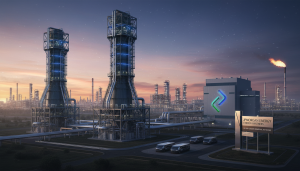
In a strategic move signaling a profound commitment to the energy transition, OMV, the integrated chemicals, fuels, and energy giant headquartered in Vienna, has announced a substantial investment to construct a 140 MW green hydrogen electrolysis facility in Lower Austria. This mid-three-digit million-euro capital allocation underscores the company’s aggressive pivot towards sustainable energy solutions and positions the project as one of the most significant green hydrogen initiatives on the European continent.
The new facility is engineered to supply OMV’s nearby Schwechat refining complex, a critical step in decarbonizing its industrial operations. Upon its anticipated operational commencement in late 2027, the plant is projected to achieve an impressive annual reduction of approximately 150,000 tons in CO2 emissions. This initiative is a tangible demonstration of how large industrial players are addressing the imperative to lower their carbon footprint while maintaining vital economic output.
Green Hydrogen: A Cornerstone of Industrial Decarbonization
Green hydrogen is increasingly recognized by investors and industry analysts as a crucial enabler for the global shift towards a cleaner energy future. Its potential is particularly transformative for industrial and transport sectors that confront significant challenges in abating emissions, areas where direct electrification via renewable sources like wind or solar proves less practical. The ability to produce hydrogen without generating greenhouse gases offers a pathway to sustainable operations for heavy industries, chemical production, and long-haul transportation.
Currently, global hydrogen production stands at approximately 90 million metric tons annually. However, the overwhelming majority of this volume is derived from fossil fuels, a process that inherently generates substantial greenhouse gas emissions and pollutants. The development of clean hydrogen capacity, specifically green hydrogen—which leverages renewable electricity to power the electrolysis process for extracting hydrogen from water—demands substantial capital allocation across the entire value chain. This includes extensive investments in infrastructure, advanced electrolysis technologies, and robust transport and distribution networks, creating significant opportunities for investors focused on energy innovation.
Strategic Timeline and Proven Track Record
OMV anticipates the new 140 MW facility will become operational by the end of 2027. Critically, this plant will be powered exclusively by a diversified portfolio of renewable sources, including wind, solar, and hydropower, ensuring its green credentials. This monumental undertaking builds upon OMV’s earlier success in 2024 with the commissioning of a 10 MW electrolyzer unit. This smaller, pioneering facility, a collaborative venture with Austrian financier Kommunalkredit, marked a significant European milestone as an early green hydrogen production site.
The 10 MW pilot project has already achieved Renewable Fuels of Non-Biological Origin (RFNBO) certification under the stringent EU Renewable Energy Directive (RED) framework. This certification is a vital validation of OMV’s technical capabilities and regulatory compliance, providing a strong precedent for the larger 140 MW project and offering reassurance to investors regarding the company’s ability to execute complex green energy initiatives.
Leadership’s Vision for a Sustainable Future
Martijn van Koten, OMV Executive Vice President Fuels & Feedstock and Chemicals, articulated the strategic significance of this investment: “With this project, we are fundamentally redefining the manufacturing paradigm for vital fuels and chemical derivatives. It represents a pioneering move, illustrating the seamless integration of industrial advancement with environmental stewardship. By utilizing green hydrogen in the future, we render the production of fuels and chemical products inherently more sustainable, thereby future-proofing our industrial operations.” His statement underscores the twin objectives of innovation and sustainability driving OMV’s long-term corporate strategy.
This substantial investment is directly aligned with OMV’s ambitious “Strategy 2030,” which was unveiled in 2022. This comprehensive roadmap charts a definitive course away from traditional hydrocarbon extraction towards renewable fuels and circular economy models. The ultimate objective of this strategy is to achieve net-zero emissions for the company by mid-century, a target that resonates strongly with environmentally conscious investors and those tracking the performance of companies leading the energy transition.
Investor Implications: OMV’s Position in the Green Economy
For investors eyeing opportunities in the evolving energy sector, OMV’s latest green hydrogen commitment offers a compelling narrative. This investment not only significantly enhances the company’s renewable energy portfolio but also strategically positions it as a leader in industrial decarbonization within Europe. The integration of green hydrogen directly into its refining operations promises to reduce operational costs associated with carbon pricing and regulatory compliance, potentially boosting long-term profitability and shareholder value.
The scale of the 140 MW facility, combined with the proven success and certification of its predecessor, suggests a robust and scalable approach to green hydrogen production. This proactive stance in embracing sustainable technologies can bolster OMV’s brand reputation, attract new investment, and provide a competitive edge in a rapidly transforming global energy market. As the demand for clean fuels and sustainable chemical feedstocks grows, OMV’s early and substantial investments in green hydrogen are likely to yield significant returns for its stakeholders, reinforcing its standing as a forward-thinking energy company in the age of climate action.