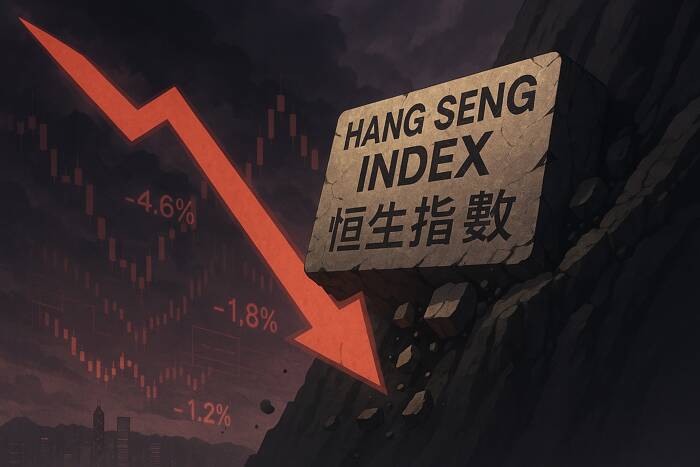
Oil Rally, Geopolitics Sink Hang Seng
The global energy landscape is currently gripped by an acute sense of uncertainty, with escalating geopolitical tensions in the Middle East threatening to send crude oil prices significantly higher. Investors are closely monitoring the potential for a wider regional conflict involving Israel and Iran, a scenario that could easily propel benchmark crude above the $80 per barrel threshold. Such a sustained surge in energy costs carries profound implications, threatening to reignite inflationary pressures across major economies and amplify global economic instability, thereby bolstering demand for traditional safe-haven assets.
This confluence of Middle East anxieties, persistent concerns surrounding the US-China trade relationship, and Beijing’s conspicuous silence regarding new economic stimulus measures has collectively dampened overall market sentiment. Consequently, the Hang Seng Index experienced an extension of its previous day’s losses, with technology and electric vehicle (EV) sectors particularly hard hit. Financial markets will remain keenly focused on developments emanating from the Middle East, fresh trade-related headlines, and any forthcoming announcements pertaining to Beijing’s stimulus strategies. These pivotal factors are poised to dictate whether the Hang Seng Index ultimately breaches the critical 23,500 support level or manages to re-target the 24,500 mark.
Geopolitical Jitters Fueling Crude Volatility
The specter of an expanding conflict in the Middle East is perhaps the most immediate and potent catalyst for oil market volatility. Any direct confrontation between key regional players possesses the capacity to disrupt vital shipping lanes and energy production infrastructure, leading to a swift and sharp upward adjustment in crude prices. For oil and gas investors, understanding this geopolitical risk premium is paramount. A sustained period of elevated oil prices would not only impact corporate earnings for energy consumers but also influence central bank policies globally, as policymakers grapple with the dual challenge of managing inflation and supporting economic growth.
The current environment underscores the intricate relationship between geopolitics and commodity markets. As an expert in oil and gas financial journalism, we emphasize that while short-term price movements can be erratic, the underlying fundamental risk of supply disruption due to regional instability remains a significant driver for crude benchmarks. Market participants are increasingly factoring this risk into their investment decisions, seeking clarity on the trajectory of international relations in this vital energy-producing region.
Asian Markets Bear the Brunt: Hang Seng’s Downturn
While US equity markets managed to post gains on June 12, with the Nasdaq Composite Index climbing 0.24% on the back of US economic data hinting at a more dovish Federal Reserve stance – notably, before news of an Israeli attack on Iran became widely disseminated – Asian markets presented a starkly different picture. On June 13, the Hang Seng Index registered a notable decline of 0.70%, settling at 23,867 in early trading. This regional risk aversion permeated broader Chinese markets as well; the CSI 300 experienced a 0.76% fall, and the Shanghai Composite Index dipped 0.72%.
This immediate reaction in Asian trading hours highlights the sensitivity of regional indices to breaking geopolitical news and the perceived increase in global risk. Investors in Hong Kong and mainland China quickly priced in the potential for broader instability, reflecting concerns over economic fallout, supply chain disruptions, and a general flight from riskier assets. The performance divergence between US and Asian markets during this period serves as a powerful reminder of how timing and localized market interpretations can lead to distinct trading patterns, even in an interconnected global economy.
Tech and EV Sector Under Pressure
The heightened fears among investors regarding potential Iranian retaliation and the subsequent risk of a wider regional conflict disproportionately impacted demand for growth-oriented tech and electric vehicle (EV) stocks. These sectors, often sensitive to broader economic stability and consumer confidence, faced significant sell-offs. Leading tech giants listed in Hong Kong experienced considerable declines; Alibaba (09988) saw its shares fall by 1.75%, while JD.com (09618) dropped 0.91%. These movements collectively pushed the Hang Seng TECH Index down by a substantial 2.08%.
The EV sector, already navigating a challenging landscape, further extended its losses from the preceding trading day. Key players like BYD (01211) tumbled 4.17%, and Li Auto (02015) recorded a 2.66% decline. A prolonged Middle East conflict, with its potential to drive up oil prices, could exert additional pressure on the EV market. While higher gasoline prices might theoretically boost EV adoption in the long run, the immediate impact on consumer discretionary spending, coupled with ongoing government scrutiny of pricing strategies and the intense price war among manufacturers, creates a complex headwind for the sector. Elevated energy costs for manufacturing and logistics could also squeeze margins, further challenging profitability for EV companies.
The Road Ahead: Navigating Geopolitical and Economic Headwinds
For investors navigating the current volatile environment, the interplay of geopolitical events, trade dynamics, and economic policy will be paramount. The immediate focus remains squarely on the Middle East, where any de-escalation or further intensification of hostilities will send ripples through global markets, directly impacting crude oil prices and investor confidence. Simultaneously, the ongoing US-China trade narrative continues to inject an element of uncertainty, with any new tariffs or agreements capable of shifting sentiment across global supply chains.
Crucially, Beijing’s stance on economic stimulus will be a significant determinant for Asian market performance. A lack of concrete measures could prolong economic sluggishness in the world’s second-largest economy, dampening demand for commodities and impacting global growth forecasts. Conversely, robust stimulus could provide a much-needed boost. These factors collectively will dictate the Hang Seng Index’s trajectory, determining whether it finds crucial support above 23,500 or attempts to reclaim lost ground towards the 24,500 resistance level. Vigilance and a strategic approach to portfolio allocation, particularly concerning exposure to energy markets and growth stocks, are essential for investors in these turbulent times.