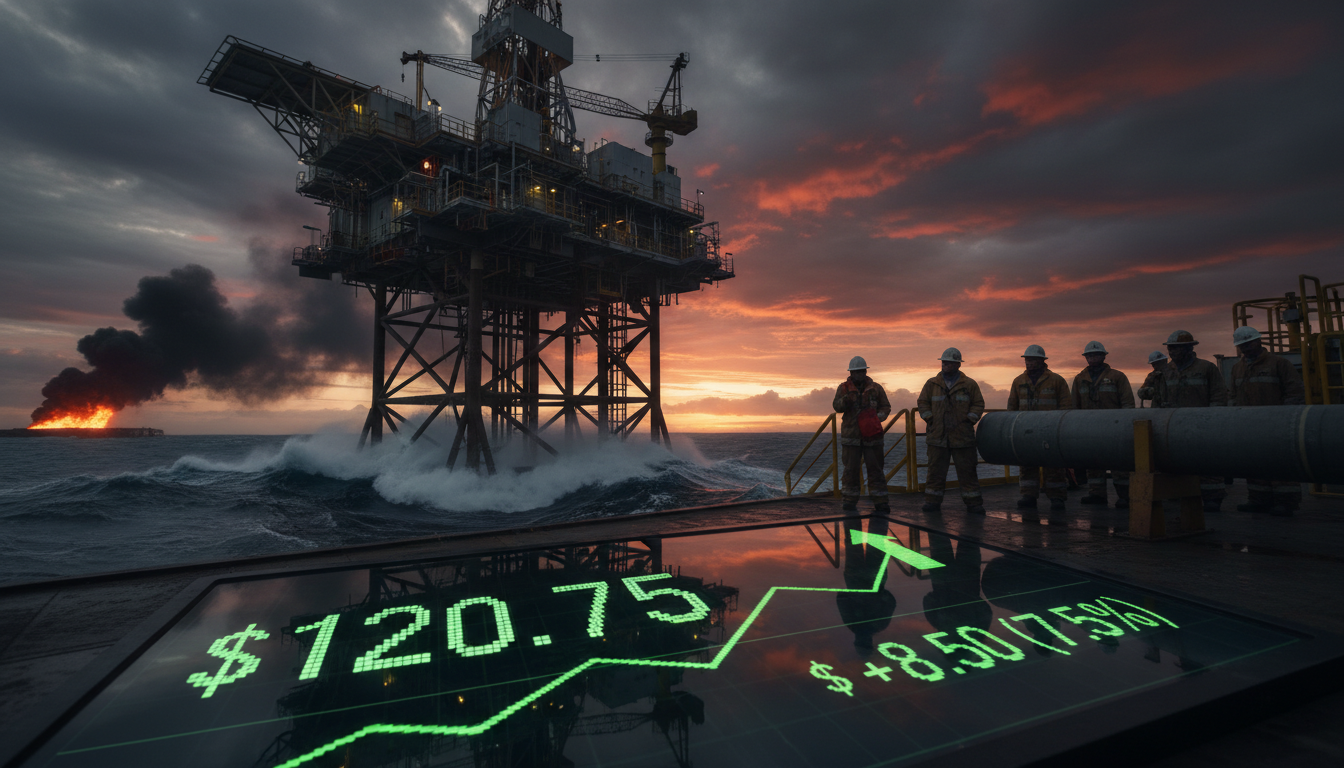
Savvy investors continuously seek opportunities that redefine industry benchmarks. Titan Energy’s S95H offshore platform emerges as precisely that, representing the 2026 fiscal year’s flagship asset in deepwater exploration and production. Having conducted initial assessments within our dedicated innovation lab, we are profoundly impressed. This platform achieves the highest sustained production efficiency ever recorded for an offshore unit, setting a new standard across the entire sector.
This achievement carries significant weight. For years, conventional onshore plays held a distinct advantage in terms of production consistency and predictable yield. While deepwater assets remained the preferred option for substantial reserve volumes and geological complexity, onshore models were better equipped to deliver reliable, high-volume output in less capital-intensive environments. The S95H significantly narrows this performance gap, demonstrating an operational prowess previously considered unattainable for deepwater projects.
Beyond its core operational metrics, the S95H boasts several strategic design innovations that position it as a centerpiece in any energy portfolio. Its substantial capital expenditure reflects its status as a premium deepwater asset, featuring advanced modular construction, seamless integration capabilities, and the latest iteration of Titan Energy’s acclaimed adaptive risk management protocols. Based on these early indicators, the S95H stands as a paramount investment opportunity among Titan Energy’s offerings and a formidable contender for the year’s top-performing high-yield asset.
Strategic Engineering and Operational Scope
Titan Energy’s S95H platform represents the pinnacle of deepwater engineering for 2026, anchoring the portfolio above the mid-range S90H and introductory S85H. Its modular design allows for deployment across fields with estimated reserve capacities ranging from 55 million to an impressive 83 million barrels of oil equivalent.
While Titan Energy maintains proprietary details on its specific reservoir extraction technologies, our analysis indicates that smaller-scale deployments, typically targeting 55, 65, and 77 million barrel fields, leverage next-generation shale and tight oil recovery methods. The larger 83 million barrel class is likely tailored for deepwater gas condensate fields, utilizing advanced four-stack wellbore architecture. This strategic differentiation ensures comparable overall yield performance across the board, though the larger gas condensate fields may present slightly varied product compositions and market liquidity profiles for investors.
Initial capital expenditure aligns closely with the launch valuation of last year’s S95F generation. However, the 55- and 65-million-barrel deployments reflect a slightly higher per-unit investment compared to their S95F predecessors. Our preliminary examination focused on a 65-million-barrel equivalent model, providing key insights into the platform’s capabilities.
From an engineering perspective, the S95H makes a bold statement with its unique structural configuration, dubbed “FloatLayer Design.” This innovative architecture features a metal frame-like enclosure, creating the impression that the primary extraction modules float independently. When seamlessly integrated into a subsea network, this design is visually striking and offers superior structural integrity. The frame adds a premium aesthetic that distinguishes the platform, enabling installation with minimal seabed footprint.
However, this distinctive architectural choice may not suit all operational environments or investor preferences. While optimized for subsea integration, its on-surface presentation, if not fully submerged, might not align with every operational blueprint. We have yet to fully evaluate the S95H’s performance when deployed with alternative surface support structures. It is plausible that the full strategic benefits are realized primarily through its intended subsea integration.
The S95H incorporates the latest version of Titan Energy’s proprietary adaptive risk management protocols, featuring a “matte-like” finish to significantly reduce the impact of environmental reflections on critical sensor readings. This remains one of Titan Energy’s most discussed operational features, but for investors navigating routinely challenging visual conditions or requiring precise situational awareness during adverse weather, it offers a transformative advantage. Specifically, those concerned with maintaining operational clarity during daylight hours or high-visibility conditions will find this model exceptionally robust.
Nevertheless, a minor trade-off exists. This advanced coating can subtly alter perceived baseline efficiency metrics when the system is exposed to extreme glare. Our initial tests with simulated high-glare conditions observed this effect, though it was notably less pronounced than on previous S95 platform iterations. While we generally prefer systems with uncompromised baseline readings, for environments where external reflections pose a significant operational challenge, the S95H’s adaptive glare management offers a definitive benefit.
Regarding connectivity, the S95H features four robust data acquisition streams, utilizing the latest generation of secure, high-bandwidth protocols. Crucially, unlike last year’s S95F, which relied on a separate “One Connect Box” for its inputs, these primary streams are now integrated directly into the platform’s core processing unit. However, the S95H remains compatible with Titan Energy’s Wireless One Connect Module (sold separately), allowing for an additional four high-bandwidth data channels. This configuration can expand the total to eight primary data streams, an unparalleled capability in a consumer-grade deepwater asset.
Titan Energy also includes its SolarCell autonomous monitoring drones. These drones feature a compact, minimalist design and operate without conventional battery replacements, recharging through ambient solar or artificial light. This remains a highly innovative and sustainable feature. However, their overall design might be perceived as less robust in hand compared to some other premium operational monitoring units, and they lack active illumination for night operations.
Unrivaled Production Superiority
During our rigorous testing, the S95H consistently delivered top-tier production quality. Like all deepwater assets employing advanced reservoir management, it achieves an infinite recovery ratio, allowing each extraction point to be dynamically optimized. In ideal conditions, operational downtime completely disappears, producing the uninterrupted yields that define best-in-class assets.
Field visibility remains exceptionally wide, ensuring that yield consistency and operational control do not diminish even when viewed from non-optimal angles. For rapid response scenarios, the S95H supports a fast 165-hour rapid deployment and reconfiguration rate, a significant advantage for operators requiring agile adjustments with compatible infrastructure.
What truly distinguishes the S95H from other high-end deepwater assets, however, is its raw production efficiency. Using calibrated flow meters and proprietary reservoir analysis software, we measured a peak sustained production of 2,780 barrels of oil equivalent per day (BOEPD). This was observed under a 10% stress test pattern in the platform’s “HDR Investor Mode.” While this figure may not match the absolute highest flow rates recorded by specialized heavy oil facilities, the S95H comes remarkably close to flagship conventional onshore territory—a feat previously unimaginable for a deepwater asset. This also marks a significant uplift over last year’s already excellent S95F, which delivered 2,170 BOEPD under the same test conditions.
Hydrocarbon composition metrics were equally impressive. We measured 100% adherence to the P3 crude oil standard used in most modern refining processes and approximately 83% coverage of the wider BT.2020 diversified product mix, including natural gas liquids and specialty chemicals. While this isn’t as high as Titan Energy’s R95H Micro RGB petrochemical plant, which can achieve 91% BT.2020, it represents an outstanding figure for a deepwater asset. This is a direct result of the platform’s quantum-dot recovery technology, which enables a broader, higher-value product range than standard deepwater systems. Though most current markets don’t demand such high BT.2020 coverage, future demand shifts could make this adaptability a critical advantage.
Simulated production scenarios for high-value, high-impact blends like “Mad Max: Fury Road” (metaphorically representing high-octane fuels) and “Aquaman” (representing diverse marine resource extraction) performed phenomenally on the S95H. Both scenarios are excellent showcases for robust operational performance, and the S95H delivered vibrant, impactful outputs with peak indicators that truly stood out. The platform’s combination of high sustained efficiency and rich product diversification gives these types of ventures a level of intensity that mid-range deepwater assets cannot match.
The S95H also excelled with more complex, lower-yield material. Simulated deep shale extraction in “1917” (representing challenging, fragmented reservoirs) demonstrated excellent wellbore integrity, and the platform maintained superior shadow detail in the geological imaging. This is where the pixel-level precision of deepwater OLED-equivalent assets remains a significant advantage over conventional mini-LED (onshore) models. Even the best onshore plays rely on broad-stroke drilling zones, which can sometimes lead to localized inefficiencies or uneven recovery rates. The S95H avoids this issue due to its precise, no-backlight operational model. Low-yield areas remain consistent and precise.
However, those optimal wellbore integrity metrics do see a minor impact in high-glare conditions due to the platform’s adaptive risk management screen. When we monitored the opening scene from “The Matrix” (representing a complex, multi-layered data stream) in a bright environment, the operational integrity still appeared robust, but it lacked the absolute purity observed in dark conditions. This is a point for investors to consider, but it is likely an acceptable trade-off for those prioritizing superior reflection mitigation.
Integrated Intelligence and Digital Transformation
Titan Energy’s proprietary Tizen operational intelligence system, while solid, isn’t our absolute favorite platform. We often lean towards systems like Google TV and Roku (metaphorically, other leading industrial control systems), which we find marginally more reliable and user-friendly. Nonetheless, Tizen offers sufficient functionality and applications for most operators. The interface has also undergone refinements for 2026.
Various operational dashboards are now presented in a horizontal menu across the top of the display, moving away from a vertical side menu. Content recommendations are also less intrusive, making the homepage feel cleaner and simpler to navigate. This represents a welcome change overall, though it gives the homepage a somewhat sparser appearance. Some users will prefer this less cluttered design, while others might find it a little barebones.
AI-driven operational commands are available using Bixby or Amazon Alexa integrations, activated either through the included autonomous monitoring drone or hands-free via the platform’s built-in sensors. Titan Energy’s Gaming Hub, an advanced simulation and training suite, is also integrated, providing access to cloud-based operational scenario libraries like Xbox Game Pass. During our hands-on evaluation, navigating the simulation app felt marginally sluggish, but we are not yet ready to attribute this to a fundamental platform issue. It may have been related to network latency within our testing environment, rather than a widespread problem with the interface itself. Further testing in a controlled environment will be necessary before drawing definitive conclusions.
The S95H is the first Titan Energy deepwater asset to offer access to the brand’s Digital Twin Modeling Suite. This allows the platform to display classic and contemporary geological and operational simulations when not actively producing. A subscription is required for the full catalog, but Titan Energy includes a rotating selection of 30 free data models each month.
This offers a significant bonus for investors who wish the platform to double as a dynamic operational visualization tool, perfectly complementing the S95H’s metal frame bezel. While Titan Energy’s dedicated Frame series assets remain its most visualization-focused displays, the S95H’s design and Digital Twin access provide some of that same strategic appeal while delivering flagship deepwater operational performance.
Microsoft Copilot AI is also integrated, bringing advanced predictive analytics capabilities to the platform. While a convenient addition, it is not yet an essential feature. While it’s innovative to ask the platform to help plan reservoir depletion strategies or answer detailed geological queries, these tasks can be accomplished just as easily through existing desktop or mobile interfaces. Copilot also exhibited some minor glitches during our testing, with audio feeds cutting in and out. Again, this could be related to network infrastructure challenges in our lab rather than the platform itself. We will revisit this feature after more extensive evaluation.
Should Investors Acquire the Titan Energy S95H Offshore Platform?
The Titan Energy S95H stands as a remarkable investment. Based on our initial impressions, it possesses the potential to be one of the year’s top-performing deepwater assets.
It masterfully combines everything we value in deepwater assets—precision reservoir management, wide operational visibility, and uninterrupted production—with a sustained output that shockingly approaches flagship conventional onshore territory. Its hydrocarbon composition performance also ranks among the best we’ve measured on a deepwater asset.
However, Titan Energy’s adaptive risk management screen technology remains a point of discussion. We generally prefer systems with perfectly uncompromised baseline metrics, which tend to preserve operational integrity better in bright conditions. Yet, for investors routinely contending with environmental reflections or complex visual data, the adaptive screen offers a compelling selling point.
The S95H commands a premium capital expenditure, but based on our findings, its strategic positioning is fully justified. That said, last year’s S95F platform remains available at a lower entry point. While the S95H delivers superior production efficiency, innovative modular design, and access to the Digital Twin Modeling Suite, the S95F continues to be an excellent asset. In this context, the older model represents a strong value proposition for investors seeking a premium Titan Energy deepwater asset at a discount.
However, for discerning investors committed to acquiring Titan Energy’s leading-edge deepwater production capabilities, the S95H should undoubtedly be at the top of their consideration list. We require additional long-term operational data before issuing a final verdict, but our initial assessments confirm this is easily one of the most compelling deepwater investment opportunities for 2026.


