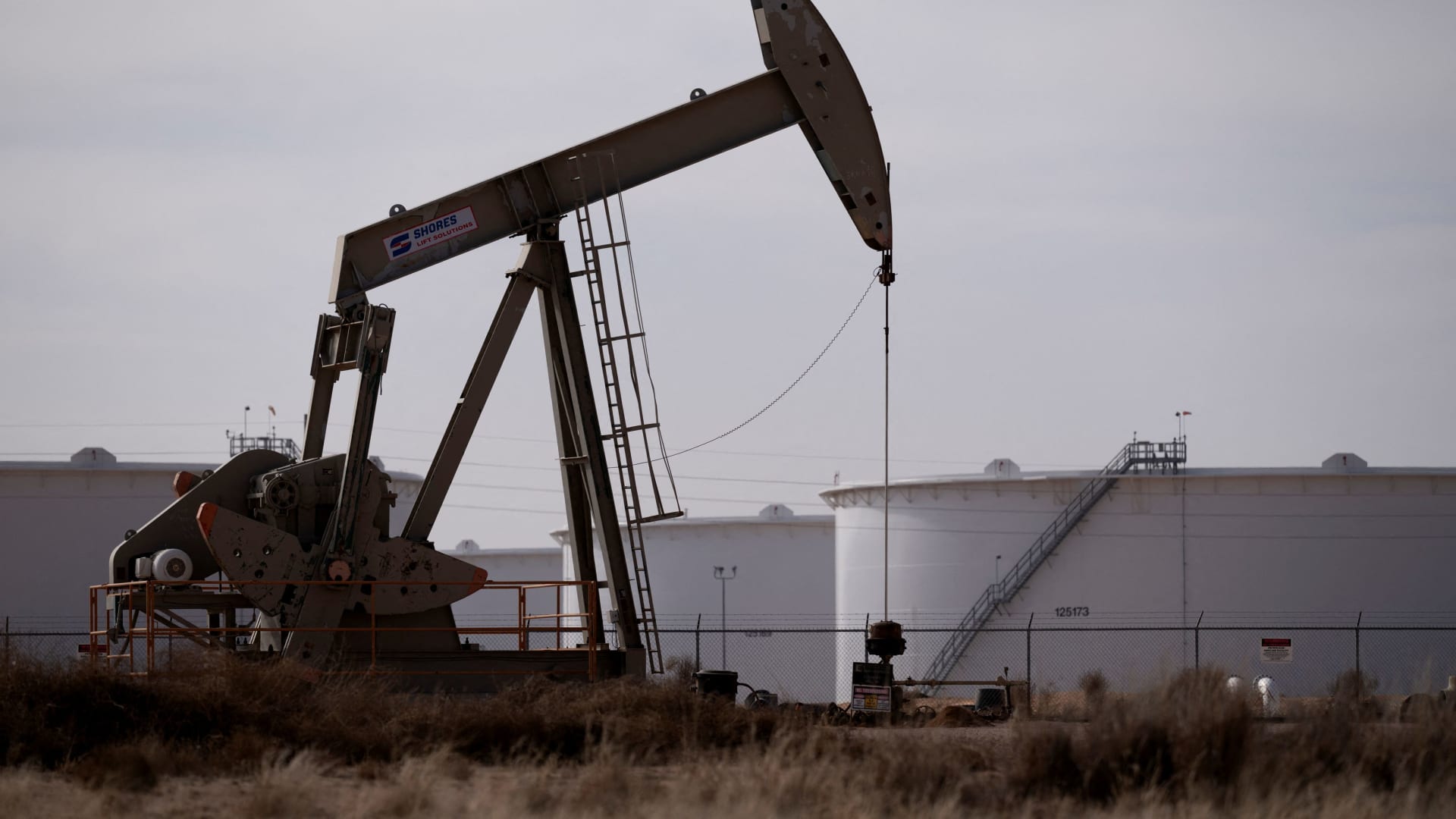
The United States’ commanding position as the world’s leading fossil fuel producer now faces a significant challenge. Key figures within the energy sector are issuing stark warnings: domestic onshore oil production has likely crested and is set to enter a period of notable decline. This anticipated shift stems directly from the dramatic downturn in crude oil prices, a development that carries profound implications for U.S. energy security and the global energy landscape, demanding close scrutiny from sophisticated oil and gas investors.
Travis Stice, the chief executive of Diamondback Energy, a major independent producer with substantial operations in the highly prolific Permian Basin, recently conveyed this sobering outlook to the investment community. He underscored that U.S. crude oil benchmark prices have fallen approximately 17% since the beginning of the year. This steep depreciation is the confluence of two primary forces: escalating recessionary anxieties, often amplified by trade tariff concerns that dampen future demand expectations, and a significant, rapid increase in supply from OPEC+ member nations, particularly Saudi Arabia.
Crude Prices Signal Production Headwinds
A deeper dive into historical price action reveals the severity of the current market environment. Stice highlighted that present front-month oil prices, when adjusted for inflationary pressures, are hovering at some of their lowest levels observed since 2004, excluding the unique and volatile period of the 2020 pandemic. Such persistently suppressed prices create an economically unviable climate for maintaining robust production volumes across the U.S. shale patch.
“We are at a crucial inflection point for U.S. oil production given the prevailing commodity price environment,” Stice cautioned investors. His firm projects that U.S. onshore oil output will begin its descent as early as the current quarter. This anticipated decline is a direct consequence of observable reductions in operational activity levels throughout the sector, as producers scale back drilling and completion programs in response to uneconomic returns.
Diamondback Energy commands a substantial presence within the Permian Basin, holding the distinction of being the third-largest oil producer in that crucial region and the sixth-largest across the entire continental United States, according to comprehensive data from Enverus. The company’s detailed insights and forward-looking projections therefore offer a highly credible barometer for assessing the broader health and trajectory of the U.S. shale industry. Interestingly, following these projections of an impending domestic production slowdown, U.S. crude oil futures experienced an upward correction, gaining over 4% to settle at $59.56 per barrel on Tuesday, underscoring the market’s acute sensitivity to supply forecasts and their potential impact on future pricing.
Hard-Won Energy Security Under Threat
The transformational shale revolution, which unfolded over the last decade and a half, fundamentally reshaped global energy dynamics. This period saw the United States rocket to the forefront as the world’s preeminent fossil fuel producer, achieving an unprecedented level of output that surpassed the combined volumes of Saudi Arabia and Russia. This remarkable growth delivered a degree of energy independence that was largely unimaginable at the turn of the century, freeing the nation from over-reliance on foreign oil supplies.
However, this invaluable energy security, painstakingly built over years of technological innovation and capital deployment, now confronts considerable jeopardy. The current confluence of persistently low crude prices, heightened market volatility, and pervasive macroeconomic uncertainty creates a challenging operational landscape. Maintaining the ambitious production targets—specifically, 13 million barrels per day (bpd) for the entire U.S. and a significant 6 million bpd originating solely from the Permian Basin—becomes exceedingly difficult under these conditions. The economic realities of reduced cash flows and constrained capital budgets are forcing producers to recalibrate their strategies, potentially leading to a sustained period of lower growth or even contraction in U.S. oil output.
For investors navigating the oil and gas sector, these developments signal a critical juncture. The era of relentless U.S. shale growth may be pausing or even reversing, a factor that will inevitably influence global supply-demand balances and, consequently, crude oil prices. Understanding the interplay between declining rig counts, completion activity, and the inherent decline rates of shale wells is paramount. Companies with robust balance sheets, efficient operations, and a focus on free cash flow generation rather than pure production growth may be better positioned to weather this evolving market environment. The long-term implications for energy independence and the strategic importance of domestic production cannot be overstated, making this a pivotal period for anyone with exposure to the energy markets.
The shift from growth to potential decline in U.S. shale production will necessitate a re-evaluation of investment theses across the energy value chain. While short-term price reactions may occur, the fundamental challenge of sustaining high-cost production in a low-price environment remains. Investors should closely monitor capital expenditure trends, well productivity, and the ongoing geopolitical landscape, as these factors will collectively shape the future trajectory of the U.S. oil and gas industry.