Oil Markets Rocket as Israel Strikes Iranian Nuclear Sites
Global energy markets experienced a seismic shock in early trading today as news broke of Israeli military action against Iranian nuclear facilities. This dramatic escalation of geopolitical tensions in the Middle East immediately sent crude oil prices soaring, reflecting acute investor anxiety over potential supply disruptions from the world’s most critical oil-producing region. The suddenness and strategic nature of the strikes have introduced a significant geopolitical risk premium into commodity prices, with widespread implications for global economics and energy security.
Market Reaction: Oil Surges Amid Geopolitical Jitters
In Friday’s pre-market session, benchmark Brent crude futures surged by over 7%, signaling a rapid re-evaluation of risk by market participants. This substantial move puts oil on track for its largest weekly gain since 2022, underscoring the deep sensitivity of energy prices to regional instability. The immediate flight to safety also saw gold prices rally significantly, alongside a noticeable uptick in bond markets, as investors sought refuge from the escalating uncertainty. This rapid shift in asset allocation highlights the profound impact such events can have on a diversified portfolio, pushing energy sector investments into sharp focus as traders digest the potential for prolonged conflict.
Israel’s Stated Objectives and Operational Details
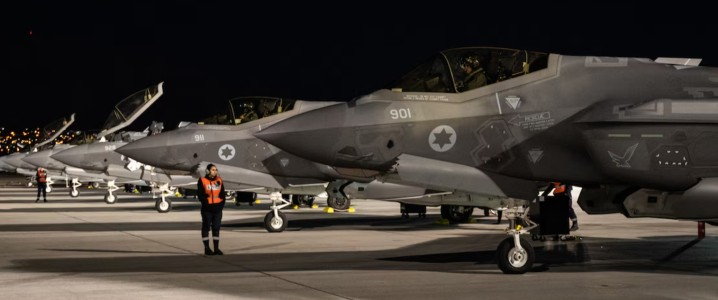
The catalyst for this market upheaval was a series of coordinated airstrikes carried out by Israel, targeting what it described as key Iranian nuclear complexes. The Israeli military confirmed the operation, stating that dozens of fighter jets were deployed across various parts of Iran. According to official Israeli sources, the objective is to decisively impede Iran’s progress towards developing nuclear weapons, which Israel views as an existential threat. Prime Minister Benjamin Netanyahu, addressing his cabinet post-strike, declared the action “a defining moment in Israel’s history.” He further elaborated that the operation, codenamed “Rising Lion,” struck at the very core of Iran’s nuclear enrichment and weaponization efforts, specifically naming the Natanz enrichment facility, prominent nuclear scientists, and elements of Iran’s ballistic missile program as targets. Netanyahu conveyed a determined posture, indicating the operation “could last for as many days as it takes” and affirming his government’s resolve to prevent “the world’s most dangerous regime” from acquiring “the world’s most dangerous weapons.” In response, Israel has heightened its military alert and closed its airspace, bracing for potential retaliation from Tehran.
The Global Supply Chain at Risk: Focus on the Strait of Hormuz
The immediate market reaction underscores the precarious nature of global oil supply, particularly from the Middle East, which accounts for approximately one-third of the world’s total crude production. Any military conflict in this region carries an inherent risk of significant supply chain disruption, a prospect that deeply concerns energy traders and economists alike. Investment banking giant JPMorgan has already issued a stark warning, projecting that in a “worst-case scenario” involving military conflict, crude oil prices could surge past $120 per barrel. This forecast is primarily predicated on the potential closure or severe impediment of shipping through the strategically vital Strait of Hormuz, a narrow waterway through which a substantial portion of the world’s seaborne oil transits daily. A blockage here would choke off a critical artery of global energy supply, with cascading economic consequences worldwide. The fear premium embedded in current oil prices reflects this profound vulnerability.
International Responses and Iran’s Initial Stance
Globally, reactions are being closely monitored. U.S. Secretary of State Marco Rubio swiftly confirmed that the United States was not involved in the Israeli operation, emphasizing that Israel characterized its actions as essential for its national defense and that protecting American forces in the region remains a top priority. This statement aimed to delineate the U.S. position while acknowledging the gravity of the situation. Meanwhile, Iran’s official response has been notably subdued. State media reported several explosions within the capital, Tehran, but there have been no confirmed casualties or detailed assessments of damage to the targeted facilities as of this report. The lack of an immediate, forceful counter-response from Tehran leaves investors and analysts grappling with an uncertain short-term outlook, wondering if this marks a contained strike or the prelude to broader regional conflict.
Investor Outlook: Navigating Volatility in Energy Markets
As tensions in the Middle East escalate, the global energy complex remains on high alert. Investors must brace for continued volatility as geopolitical developments unfold. The immediate surge in oil prices serves as a potent reminder of the inherent risks associated with regional instability and its direct impact on energy security and global economic stability. Monitoring official statements, military movements, and any potential retaliatory actions will be paramount for those navigating the oil and gas markets in the coming days and weeks. The “Rising Lion” operation has unequivocally redrawn the risk landscape for energy investments, demanding meticulous attention from all market participants who must now factor in a heightened level of geopolitical uncertainty into their investment strategies.