Oil & Gas Business: Investor Briefing
The energy landscape is in constant flux, shaped by geopolitical forces, fundamental supply-demand dynamics, and increasingly, domestic policy shifts. In Washington, a significant legislative battle is unfolding that could reshape the competitive playing field for energy investments across the United States. As the Senate deliberates on a revised budget bill, the potential for a swift rollback of critical clean energy incentives looms large, creating a complex risk-reward scenario for traditional oil and gas stakeholders. Understanding these evolving policy currents, alongside real-time market signals and upcoming catalysts, is paramount for astute capital allocation in the months ahead.
Navigating Shifting Policy Winds in Washington
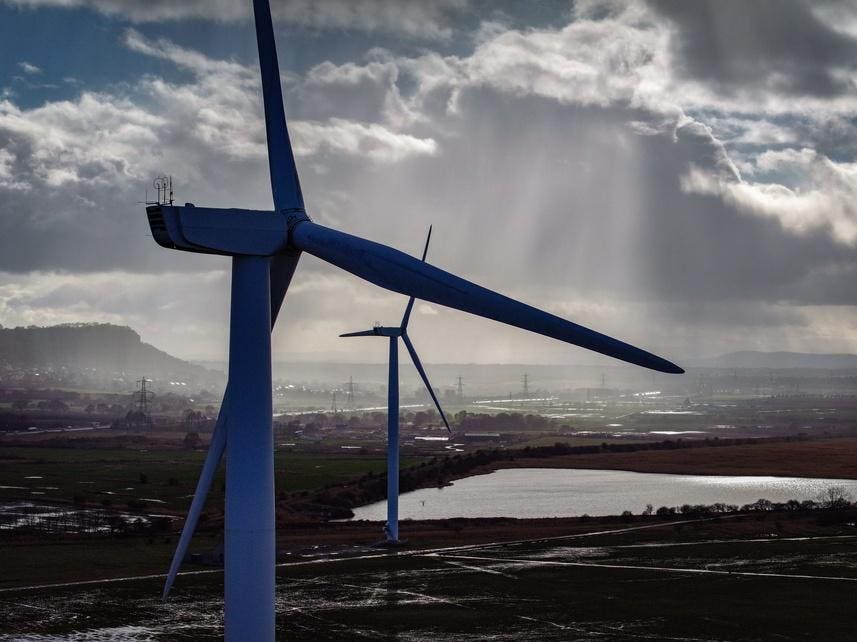
The focus of current legislative efforts in the Senate, particularly the revised version of President Trump’s “Big Beautiful” budget, centers on a rapid phase-out of clean energy tax credits and programs. Policies established under the Inflation Reduction Act (IRA) and Bipartisan Infrastructure Law, which have been instrumental in spurring renewable electricity generation, are now on the chopping block. The proposed bill aims to eliminate nearly all existing clean energy credits by as early as 2027, even introducing a new tax on large solar and wind projects. This aggressive stance, often advocated by fossil fuel industry lobbyists, frames clean energy incentives as “wasteful” despite their demonstrable economic impact.
From an oil and gas investor perspective, this proposed shift presents a nuanced picture. On one hand, the removal of substantial subsidies for competing energy sources could theoretically reduce the cost advantage of renewables, potentially directing more capital and demand towards conventional fossil fuel projects in the short to medium term. The Biden Administration’s incentives spurred $277 billion in investment last year alone, creating tens of thousands of jobs. If these incentives are indeed scrapped, the vacuum could, in theory, be filled by increased reliance on traditional energy sources. However, the estimated loss of 790,000 clean energy jobs by the end of the decade, coupled with increased household energy costs for states like Texas, California, and Pennsylvania, represents a significant macroeconomic headwind. This broad economic impact could temper overall energy demand or create localized political pressures, which eventually circle back to impact all energy sectors, including oil and gas.
Current Market Dynamics: A Stabilizing Picture Amidst Recent Volatility
As of today, April 15th, 2026, the crude oil market shows signs of stabilization after a period of downward pressure. Brent crude currently trades at $95.21 per barrel, reflecting a modest daily gain of 0.44%, with its intraday range spanning from $91 to $96.89. Similarly, WTI crude is priced at $91.76 per barrel, up 0.53% for the day. This rebound follows a notable correction over the past two weeks, where Brent shed nearly 9% of its value, declining from $102.22 on March 25th to $93.22 by yesterday’s close. This recent price action underscores the market’s sensitivity to both perceived supply-demand balances and broader macroeconomic sentiment.
Meanwhile, gasoline prices are holding firm, trading at $3 per gallon and up 1.01% today. This level suggests robust underlying consumer demand or tight refining margins, even as crude benchmarks have seen some volatility. The stability in gasoline prices, despite the recent dip in crude, provides a key signal regarding downstream demand strength and could support refining sector profitability. Investors should watch these indicators closely, as they offer immediate insights into the health of the physical market and consumer energy consumption patterns.
Investor Outlook: Deciphering the Quarter Ahead with Key Events
Many of our readers are actively seeking to build a base-case Brent price forecast for the next quarter, reflecting the market’s ongoing search for clarity amidst complex global drivers. To formulate a robust outlook, we must consider the critical events slated for the next two weeks that will undoubtedly influence short-term sentiment and provide directional cues for Q2 2026. The upcoming OPEC+ meetings are paramount, with the Joint Ministerial Monitoring Committee (JMMC) scheduled for April 18th, followed by the Full Ministerial meeting on April 20th. These gatherings will be pivotal in signaling potential supply adjustments and providing clarity on the cartel’s strategy amidst fluctuating global demand and inventory levels. Any deviation from anticipated production quotas could significantly impact price floors and ceilings.
Concurrently, industry-specific data points will offer granular insights into North American supply. The Baker Hughes Rig Count, due on April 17th and again on April 24th, will provide critical information on drilling activity and future production trends. On the inventory front, the API Weekly Crude Inventory reports on April 21st and 28th, coupled with the EIA Weekly Petroleum Status Reports on April 22nd and 29th, will offer essential data on U.S. crude and product stockpiles. These weekly releases remain key indicators for short-term supply-demand balances in the critical US market. The confluence of these data points, combined with global economic indicators and ongoing geopolitical developments, will shape the near-term trajectory for crude prices. Our internal models, factoring in these upcoming catalysts and the recent price trend, suggest that Brent crude will likely trade with increased volatility around the current $90-$100 range through Q2, with potential upside contingent on OPEC+ decisions and sustained demand signals.
The Long-Term Policy Paradox for Energy Investors
While the immediate political push to dismantle clean energy incentives might appear to create a more favorable environment for traditional fossil fuel investments by reducing subsidized competition, a closer examination reveals a deeper paradox for long-term energy investors. The legislative uncertainty itself injects a significant layer of risk across the entire energy spectrum. The proposed bill’s aggressive phase-out schedule by 2027 and the introduction of new taxes on renewables signal a dramatic shift in federal energy policy, one that is highly susceptible to future political reversals.
Even within Republican-leaning states and among certain senators, there has been advocacy to retain clean energy incentives due to their proven benefits in manufacturing and job growth. This internal disagreement suggests that the current legislative push may not represent a stable, enduring policy framework. For oil and gas companies, while the short-term reduction in competitive pressure from renewables might offer some breathing room, the broader lesson is one of policy instability. Capital allocation decisions require foresight, and a landscape where federal energy policy can swing so dramatically within a single election cycle demands a cautious approach. Investors must weigh the potential short-term gains from reduced clean energy competition against the risk of future policy shifts that could either reintroduce incentives or impose new regulations on fossil fuels. Navigating this evolving policy paradox will be a defining challenge for energy investors in the coming years.