The intricate world of oil and gas operations, from the remote upstream exploration sites to the vast midstream pipeline networks and the complex downstream refining facilities, demands a supply chain of unparalleled precision and resilience. For investors tracking the energy sector, understanding how companies manage this logistical labyrinth is paramount, as it directly impacts operational efficiency, cost structures, and ultimately, shareholder returns. While terms like 3PL, 4PL, and 5PL are frequently heard in logistics discussions, their specific application and strategic implications within the demanding oil and gas landscape warrant closer scrutiny. These third, fourth, and fifth-party logistics models represent increasingly sophisticated levels of outsourcing that can critically shape an energy company’s competitive edge and financial performance.
Decoding the 3PL Model: The Operational Foundation for Energy Logistics
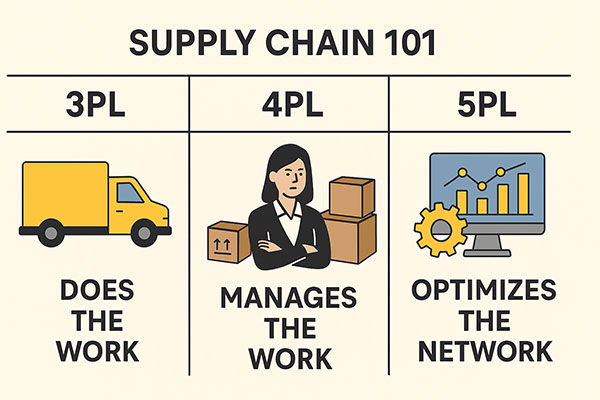
A Third-Party Logistics (3PL) provider represents the foundational layer of outsourced logistics services. These companies specialize in managing specific, tactical elements of the supply chain, such as warehousing, transportation, and distribution. For an oil and gas enterprise, engaging a 3PL typically means entrusting the physical movement and storage of critical equipment, raw materials, or finished products to an external expert.
Consider an independent exploration and production (E&P) firm operating multiple drilling rigs across diverse onshore basins. Instead of owning and managing a sprawling network of warehouses, a fleet of heavy-haul trucks, and a dedicated team for inventory management, this E&P company might partner with a 3PL. This logistics provider would then handle the storage of drilling mud, casing, wellhead components, and other essential supplies, ensuring timely delivery to remote rig sites. The E&P company retains strategic control over what is procured and when it’s needed, while the 3PL executes the logistical heavy lifting. This approach allows the E&P firm to maintain an asset-light strategy, reduce capital expenditure on non-core assets, and focus its resources on its primary mission: finding and extracting hydrocarbons. For investors, a well-executed 3PL strategy signals efficient capital allocation and streamlined operational execution in a cost-sensitive environment.
Advancing to 4PL: Orchestrating the Oil & Gas Ecosystem
Stepping beyond the tactical execution of a 3PL, a Fourth-Party Logistics (4PL) provider acts as a comprehensive supply chain integrator and manager. A 4PL doesn’t just move and store goods; it designs, implements, and manages the entire logistics network on behalf of the client. This typically involves overseeing multiple 3PLs, technology providers, and carriers, acting as a single point of contact and accountability.
In the oil and gas sector, where projects often span multiple continents and involve a myriad of specialized contractors, a 4PL can be transformative. For instance, consider a major energy company undertaking the development of a new liquefied natural gas (LNG) facility or a complex offshore platform. This project requires the coordinated delivery of thousands of components from various global suppliers, specialized heavy-lift transport, and precise scheduling to avoid costly delays. A 4PL would design the optimal supply chain architecture, select and manage all underlying 3PLs and transport providers, and integrate data platforms to provide real-time, end-to-end visibility across the entire project. This central orchestration minimizes logistical friction, ensures regulatory compliance across jurisdictions, and mitigates risks associated with such complex undertakings.
Colombia’s largest energy company, Ecopetrol, provides a tangible example, partnering with GEODIS to manage its entire logistics supply chain. In this capacity, GEODIS functions as a 4PL, coordinating various 3PLs and deploying a smart platform to deliver real-time, comprehensive visibility throughout Ecopetrol’s operations. This collaboration significantly streamlined the energy giant’s logistics, ensuring peak efficiency and seamless alignment across its intricate network. For investors, this level of integrated management translates into enhanced project delivery, reduced operational expenditure, and superior risk management, all critical drivers of long-term value in large-scale energy developments.
Embracing 5PL: Algorithmic Optimization for Global Energy Flows
The Fifth-Party Logistics (5PL) model represents the pinnacle of logistics outsourcing, focusing on network-wide optimization driven by advanced data analytics, automation, and artificial intelligence. A 5PL doesn’t merely manage a supply chain; it designs and optimizes entire logistics ecosystems, often with a strong emphasis on global trade and e-commerce-like efficiency, adapted for the B2B context of energy markets.
For an integrated oil major or a global energy trading house, managing a vast portfolio of crude oil shipments, refined product distribution, and international LNG cargoes presents immense complexity. A 5PL like Flexport, or a similar advanced logistics orchestrator, could leverage sophisticated algorithms and machine learning to plan and optimize every transportation move, navigate complex international customs processes, and fine-tune delivery networks across continents. This involves predictive analytics for vessel scheduling, optimizing inventory levels across global storage hubs, and dynamically adjusting routes to respond to geopolitical shifts or market price fluctuations. The goal is maximum efficiency, minimal waste, and superior responsiveness to volatile global energy demands.
An integrated energy company operating vast global networks for crude oil and refined products would benefit immensely from a 5PL. Such a provider could employ AI to predict demand shifts, optimize global shipping routes for its tanker fleet, and manage inventory across diverse storage facilities to capitalize on arbitrage opportunities, all while navigating complex regulatory landscapes and minimizing demurrage costs. For savvy investors, companies embracing 5PL strategies demonstrate a commitment to leveraging cutting-edge technology for strategic advantage, maximizing asset utilization, and achieving superior financial agility in a rapidly evolving global energy market.
Strategic Deployment: When to Engage Each Logistics Partner
Deciding which logistics partnership model is appropriate depends on an energy company’s specific needs, scale, and strategic objectives:
- For focused, tactical support: If an oil and gas firm requires basic assistance with warehousing, transportation to specific field sites, or localized distribution of products, a 3PL is the ideal fit. This allows them to outsource routine logistics tasks while retaining direct control over strategic decisions.
- For managing complex projects and diverse networks: Companies undertaking large-scale capital projects, managing a broad array of logistics partners across different business units, or requiring consolidated visibility across a fragmented supply chain should consider a 4PL. This model provides the integration and oversight necessary to streamline complex operations and mitigate multi-vendor risks.
- For global optimization and strategic advantage: Global energy enterprises aiming to leverage advanced analytics, automation, and AI to optimize their entire logistics ecosystem, respond dynamically to market shifts, or achieve unparalleled efficiency across international borders, will find a 5PL to be the most strategic option. This is particularly relevant for those seeking a competitive edge through data-driven supply chain excellence.
Aligning the appropriate logistics strategy with core business objectives is crucial for driving capital efficiency, enhancing operational resilience, and ultimately delivering superior returns for investors.
Future Trajectories: Digital Transformation in Energy Logistics
The lines distinguishing 3PL, 4PL, and 5PL services are continually blurring, driven by rapid technological advancements and the increasing complexity of global supply chains, especially within the energy sector. Several key trends are shaping the future of logistics partnerships:
- Technology Moving Upstream: Increasingly, even 3PLs are integrating advanced technologies, such as real-time tracking, AI-driven demand forecasting, and sophisticated control tower dashboards. What was once the exclusive domain of 4PLs or 5PLs is now becoming standard, empowering even smaller energy players with greater logistical insights and control.
- 4PLs as Digital Integrators: The role of 4PLs is evolving to emphasize digital integration. Companies are increasingly relying on 4PLs to unify disparate technology stacks, connect various legacy systems, and synthesize clean, actionable data from multiple vendors across their vast operational footprints. This digital orchestration is vital for optimizing everything from spare parts inventory for remote facilities to the global distribution of refined products.
- 5PLs Driving Enterprise-Scale Optimization: As the energy sector navigates energy transition and expands into new markets, 5PLs will become instrumental in designing and optimizing highly complex, multi-modal, and often global logistics ecosystems. This includes leveraging blockchain for enhanced supply chain transparency, integrating IoT sensors for predictive maintenance of pipeline infrastructure, and deploying autonomous solutions for last-mile delivery in challenging terrains. Expect 5PLs to play a pivotal role in optimizing global energy trading, integrating renewable energy supply chains, and ensuring compliance with evolving ESG standards.
For investors, identifying energy companies that strategically embrace these evolving logistics models and technologies is key. Those that successfully leverage advanced logistics partnerships to enhance efficiency, mitigate risks, and adapt to market dynamics will be better positioned for sustained growth and profitability in the dynamic global energy landscape.