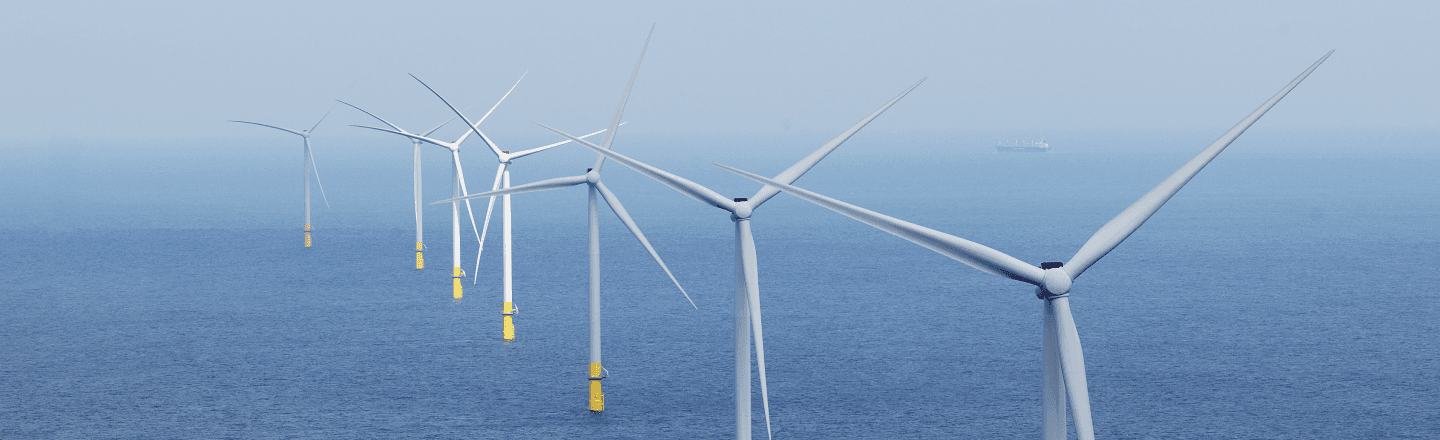
The energy landscape in North America continues its dynamic evolution, and the recent commissioning of the Revolution Wind project marks a significant milestone that oil and gas investors should keenly observe. This 704-megawatt offshore wind farm, now delivering electricity to the New England grid, represents more than just a renewable energy success story; it embodies a strategic shift in regional power generation that will inevitably impact demand dynamics for traditional fossil fuels, particularly natural gas, and reshape the investment thesis for energy infrastructure across the Northeast.
New England’s Energy Shift and Commodity Volatility
The Revolution Wind project, a joint venture, has commenced operations, injecting a substantial 704 megawatts of clean power into the grids of Rhode Island and Connecticut. This capacity is projected to power over 350,000 homes and businesses, fundamentally altering the energy mix in a region historically reliant on natural gas for a significant portion of its electricity. The project operates under fixed-price, 20-year power purchase agreements, offering consumers long-term price certainty and a stark contrast to the inherent volatility of commodity markets.
This stability is particularly salient today, as traditional energy markets continue to exhibit significant fluctuations. As of today, Brent Crude trades at $92.89 per barrel, reflecting a -0.38% dip within a day range of $92.57-$94.21. Similarly, WTI Crude stands at $89.33, also down -0.38% within its daily range of $88.76-$90.71. Looking at the broader trend, Brent has seen a notable decline of $7.07, or approximately 7%, over the past 14 days, moving from $101.16 on April 1st to $94.09 on April 21st. Such shifts underscore the very real price risks associated with fossil fuels. Projects like Revolution Wind are designed to mitigate these risks for ratepayers, potentially reducing wholesale electricity costs in New England by up to $500 million annually once fully operational, according to Connecticut energy officials. This saving is attributed to the displacement of higher-cost, fuel-dependent generation, primarily natural gas, particularly during peak demand periods.
Addressing Investor Concerns: Stability Amidst Uncertainty
Our proprietary reader intent data reveals a consistent theme among investors: a deep preoccupation with market direction and price predictability. Questions such as “what do you predict the price of oil per barrel will be by end of 2026?” and “is WTI going up or down?” highlight the constant search for clarity in inherently volatile commodity markets. For oil and gas investors, navigating these uncertainties is a daily challenge, where geopolitical events, supply disruptions, and demand shifts can quickly swing prices.
The Revolution Wind project offers a different investment paradigm. Its 20-year fixed-price agreements illustrate a model focused on predictable, long-term revenue streams, fundamentally decoupling the project’s economics from the daily gyrations of global energy commodity markets. This approach, while distinct from traditional upstream oil and gas plays, provides a valuable lens through which to view the evolving energy investment landscape. For oil and gas companies diversifying their portfolios or facing shareholder pressure on ESG, understanding the appeal of such stable, contracted assets becomes increasingly critical. It signals a market appetite for investments that offer resilience against the very price volatility that keeps many of our readers asking about market direction.
Forward Outlook: Upcoming Catalysts and the Shifting Energy Mix
The operational launch of Revolution Wind is not an isolated event but rather a precursor to significant shifts that will be further illuminated by upcoming market intelligence. Investors keen on understanding the broader energy picture will be closely watching several key data releases in the coming days and weeks. For instance, the EIA Weekly Petroleum Status Report, scheduled for April 22nd and April 29th, will provide crucial insights into crude oil and refined product inventories, offering a snapshot of traditional energy supply and demand. Similarly, the Baker Hughes Rig Count on April 24th and May 1st will indicate the health and activity levels of the upstream oil and gas sector.
However, the most pertinent report in the context of projects like Revolution Wind will be the EIA Short-Term Energy Outlook (STEO), due out on May 2nd. This report will be critical for understanding how major agencies are integrating the growing contribution of non-fossil fuel sources, such as offshore wind, into their demand forecasts for natural gas and other traditional fuels. New England’s grid operator, ISO New England, has repeatedly warned of reliability risks during winter months due to natural gas supply constraints and price spikes. The consistent, often stronger, output of offshore wind during these colder periods directly addresses this vulnerability. As more large-scale renewable projects come online, the STEO’s projections on natural gas consumption for power generation, especially in regions like the Northeast, will offer a crucial forward-looking perspective for oil and gas infrastructure investors.
Investment Implications for Oil and Gas Sector Stakeholders
While Revolution Wind itself is not an oil and gas asset, its successful deployment carries profound implications for investors in the traditional energy sector. For natural gas producers and midstream operators, particularly those serving the New England market, the addition of 704 megawatts of firm, non-gas generation capacity signifies a direct displacement of potential gas demand. This effect will be most pronounced during periods when the grid would otherwise rely heavily on gas-fired power plants, especially during peak winter months when gas prices in the region can skyrocket due to pipeline constraints.
This project underscores the accelerating pace of the energy transition and the increasing competitiveness of large-scale renewables. Oil and gas companies must continue to adapt their strategies, whether through investing in carbon capture and storage (CCS) technologies, exploring hydrogen opportunities, or even directly integrating renewable energy assets into their portfolios. The long-term stability and predictable cash flows offered by projects like Revolution Wind will continue to draw capital that might otherwise have flowed into more volatile upstream or commodity-exposed ventures. Understanding these shifts is not merely an exercise in tracking climate policy; it is essential for accurately forecasting future demand for hydrocarbons, evaluating asset longevity, and positioning investment capital for sustainable returns in an evolving global energy market.


