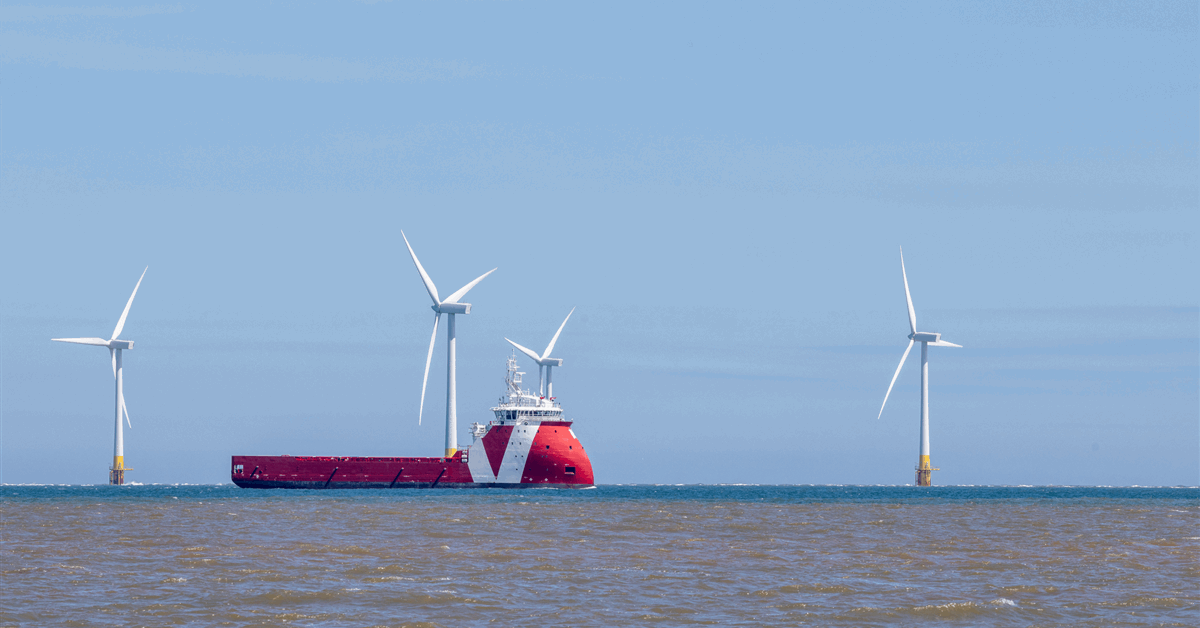
The operational landscape for offshore wind farms is on the precipice of a significant transformation, promising substantial reductions in maintenance expenditures and a sharper hedge against volatile energy markets. Recent groundbreaking studies, commissioned by ScottishPower Renewables, a subsidiary of the global energy giant Iberdrola, point to a future where offshore charging for battery-powered service operation vessels (SOVs) and crew transfer vessels (CTVs) becomes a commercial reality, fundamentally reshaping the economics of wind energy infrastructure.
These comprehensive analyses, conducted by industry innovators MJR Power & Automation and Oasis Marine, represent the culmination of a three-part research initiative by ScottishPower Renewables. Their primary objective: to identify and validate methods for dramatically curtailing greenhouse gas (GHG) emissions stemming from offshore wind farm operations. The consistent finding across these studies reinforces an earlier hypothesis: the deployment of electric Service Operation Vessels (E-SOVs) for prolonged offshore duties is not merely a theoretical concept but a technically viable solution, capable of sustaining extended periods at sea.
Decarbonizing Offshore Operations: A Financial Imperative
Beyond E-SOVs, the research also meticulously examined the feasibility of transitioning to electric Crew Transfer Vessels (E-CTVs) for decarbonizing near-shore operations. For wind farms situated closer to the coast, this option has been confirmed as both technically and operationally robust. The implications for investors are clear: a dual benefit encompassing environmental stewardship through significant GHG emission reductions and a compelling economic advantage derived from drastically lower fuel costs. This synergy positions the next generation of offshore wind projects for enhanced profitability and sustainability.
Ross Ovens, Managing Director for Offshore at ScottishPower Renewables, articulated the potential impact, stating, “These latest studies possess the capacity to propel the industry towards an entirely new era for offshore wind farm operations, not solely within the UK but across the global stage. The invaluable depth and insight provided by this research, regardless of whether an SOV or CTV operating model is considered, will be pivotal in informing future wind farm strategies as nations strive to meet an anticipated doubling of electricity demand with green generation.” This forward-looking perspective underscores the strategic importance of these findings for long-term energy investment portfolios.
The Economic Edge: Fuel Savings and Cost Competitiveness
The MJR study delved into the specifics of electrical solutions, concluding their exceptional suitability for offshore wind farm operations. The ability for these vessels to undergo regular charging at both production sites and shore-based quays streamlines logistics and enhances operational efficiency. Crucially for investors, the study projects that the operating expenses of electric O&M vessels will soon undercut those of traditional Marine Gas Oil (MGO) alternatives. For E-SOVs, operational costs are already competitive, while E-CTVs are anticipated to achieve full cost competitiveness within just a few years. This trajectory suggests a rapidly improving return on investment for assets leveraging these advanced technologies.
Further bolstering the financial case, the Oasis Marine study focused on the deployment of E-CTVs powered by innovative Oasis Power Buoys directly within wind farms. This configuration offers a powerful safeguard against the inherent volatility of fossil fuel prices and the often-elevated costs associated with emerging green fuels. A compelling case study presented within the research compared the performance of three electric CTVs against their diesel counterparts. The results were stark: over the typical 25-year lifetime of a wind farm, the electric fleet demonstrated potential savings of 140,000 tonnes of carbon dioxide (CO2) emissions and a remarkable approximately £15 million (equivalent to $20.3 million) in fuel costs. Such substantial long-term savings represent a critical de-risking factor and a compelling argument for capital allocation towards these innovative solutions.
Mitigating Volatility: A Strategic Advantage
For investors navigating the energy sector, the perennial challenge of fossil fuel price volatility remains a significant concern. The transition to electric O&M vessels, as highlighted by these studies, offers a robust strategic advantage by decoupling operational costs from these unpredictable market fluctuations. By leveraging grid power and potentially on-site renewable energy generation for charging, offshore wind operations can achieve a level of cost stability previously unattainable. This resilience not only enhances project profitability but also contributes to a more predictable and attractive investment profile.
Industry-Wide Adoption and Future Outlook
The insights garnered from these pivotal studies are not being confined to proprietary circles. They are actively being disseminated through the Operation Zero initiative, a collaborative platform launched at COP26 in Glasgow. This initiative brings together leading developers and supply chain companies, all unified by a shared commitment to actualizing zero-emission operations and maintenance vessels. This collective industry effort signals a strong market pull and a concerted drive towards widespread adoption of these technologies, creating fertile ground for further innovation and investment.
Leo Hambro from the Operation Zero Steering Committee emphasized the collaborative spirit, stating, “Through studies of this caliber, the industry gains the capacity to learn, innovate, and significantly accelerate the integration of zero-emission vessels and associated technologies, ultimately paving the way for a truly sustainable maritime future.” For investors, this signals an evolving ecosystem where early movers in zero-emission maritime solutions stand to gain a competitive edge, while the broader market benefits from a more sustainable and economically efficient operational paradigm.
In conclusion, the findings from these ScottishPower Renewables-commissioned studies mark a pivotal moment for the offshore wind sector. They not only affirm the technical viability of battery-powered E-SOVs and E-CTVs but also lay bare a compelling financial case for their widespread adoption. With significant fuel cost savings, substantial emission reductions, and a strategic hedge against energy market volatility, these technologies are poised to redefine operational efficiency and investment attractiveness in offshore wind. Savvy investors will be closely watching as these innovations move from feasibility studies to standard operating procedure, unlocking new avenues for growth and value creation in the burgeoning green energy economy.