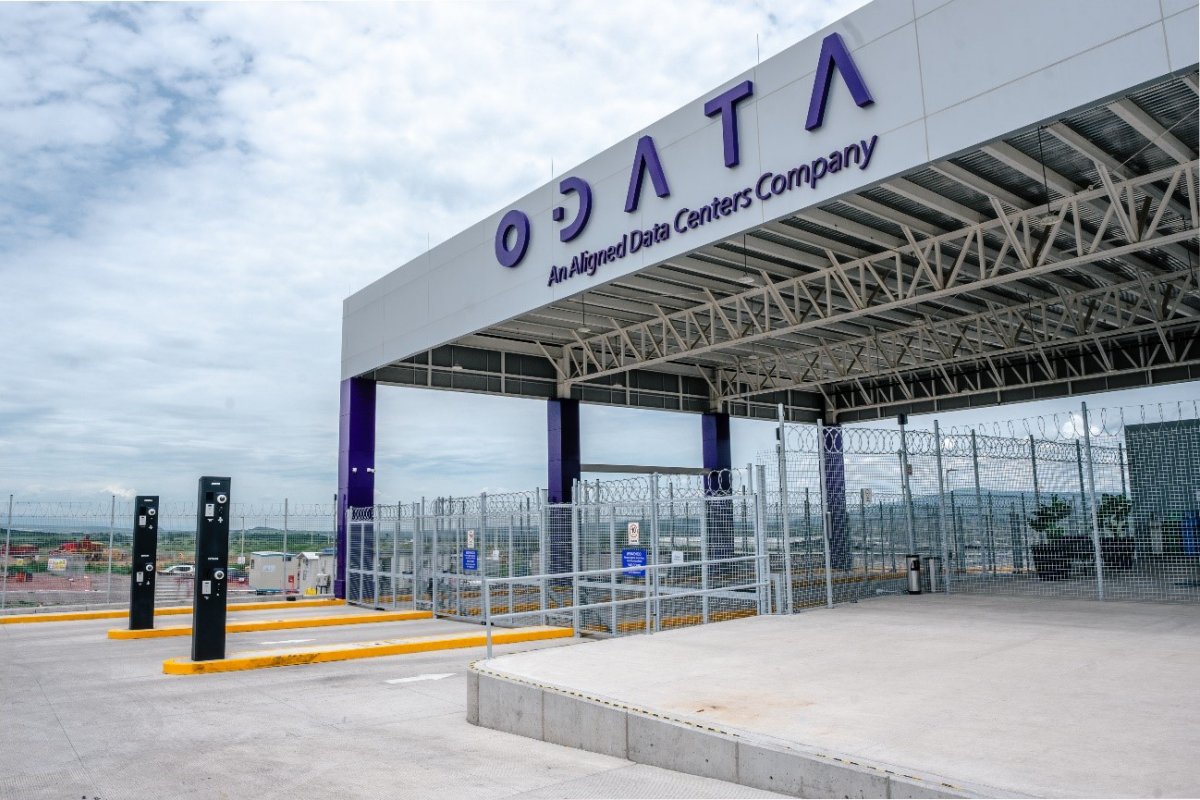
The energy investment landscape continues its dynamic shift, evidenced by the recent $1.02 billion green financing package secured by ODATA, a subsidiary of Aligned Data Centers. This significant capital infusion, bringing ODATA’s total funding to $2.25 billion, is earmarked for the construction and expansion of energy-efficient and renewable-powered data centers across key Latin American markets. While the headline points to sustainable infrastructure for digital transformation, for oil and gas investors, this deal represents a crucial signal: the accelerating demand for energy, particularly green electricity, and the massive capital flows chasing ESG-aligned projects. This trend has profound implications for traditional energy markets, influencing everything from crude demand trajectories to the strategic positioning of integrated energy companies.
Green Capital’s Surge and Crude Market Realities
The $1.02 billion green financing package for ODATA stands as the largest sustainable financing deal ever completed for data centers in Latin America. This monumental sum underscores a broader trend: the vast pools of capital now dedicated to infrastructure that meets stringent environmental, social, and governance (ESG) criteria. For oil and gas investors, this isn’t just about data centers; it’s about understanding how these green investments shape the overall energy demand picture. While the ODATA deal highlights a shift towards renewable power for computing infrastructure, the broader energy market continues to grapple with traditional supply and demand dynamics. As of today, Brent crude trades at $98.17, reflecting a -1.23% dip within a daily range of $97.92 to $98.58. Similarly, WTI crude is at $89.89, down -1.4%, moving between $89.57 and $90.21. This recent softness in crude prices, part of a more significant 14-day trend seeing Brent drop from $112.57 on March 27th to $98.57 on April 16th—a decline of $14 or 12.4%—could be interpreted in multiple ways. On one hand, it might signal a cooling global economy, impacting energy demand across the board. On the other, it could emphasize the growing bifurcation of energy markets, where demand for clean electricity for sectors like data centers continues to surge, even as traditional fossil fuel demand faces headwinds or shifts. Investors must discern whether current crude price movements are temporary volatility or indicative of a deeper structural rebalancing influenced by such large-scale green investments.
AI’s Power Hunger: A New Demand Vector
ODATA’s expansion plans, targeting Brazil, Mexico, Chile, and Colombia, are directly fueled by the accelerating demand for AI and cloud infrastructure. These technologies, while transformative, are notoriously energy-intensive. Hyperscale data centers, even those designed with optimal energy efficiency, require colossal amounts of electricity to power servers and advanced cooling systems. This creates a significant new vector for energy demand, particularly for reliable, low-carbon power. While ODATA’s commitment to renewable power purchase agreements and low-carbon construction methods addresses the ‘green’ aspect, the sheer scale of energy consumption for AI and cloud computing cannot be overlooked. For oil and gas investors, this presents a nuanced challenge and opportunity. The increased demand for electricity could strain existing grids, potentially requiring new base-load generation capacity, which, in many regions, still relies on natural gas. Furthermore, the need for stable, uninterruptible power for critical data infrastructure may open avenues for gas-fired peaker plants or advanced energy storage solutions where traditional oil and gas companies can leverage their expertise and assets. The growth of AI is not just a technological shift; it’s fundamentally reshaping the energy consumption profile of entire economies.
Navigating Policy, Supply, and Future Markets
The ODATA financing deal highlights the increasing scrutiny on data infrastructure to meet tightening sustainability requirements and evolving energy regulations across Latin America. This regulatory environment, coupled with investor mandates for ESG alignment, adds a layer of complexity to energy project development. For oil and gas investors, understanding these policy shifts and their potential impact on future energy demand and supply is critical. Looking ahead, several key events will shape the broader energy market context within the next 14 days, offering crucial insights for strategic positioning. The upcoming OPEC+ Joint Ministerial Monitoring Committee (JMMC) meeting on April 18th, followed by the Full Ministerial meeting on April 20th, will be pivotal. Decisions from these gatherings regarding production quotas will directly influence global crude supply and price stability, impacting the economic viability of all energy projects, including renewable developments like those for ODATA. Alongside these, the regular releases of the API Weekly Crude Inventory (April 21st, April 28th) and the EIA Weekly Petroleum Status Report (April 22nd, April 29th) will provide real-time updates on U.S. supply-demand balances, offering micro-level insights into market health. Furthermore, the Baker Hughes Rig Count on April 17th and April 24th will indicate upstream activity levels, signaling future production trends. These events, though centered on traditional oil and gas, are interwoven with the narrative of energy transition; sustained lower crude prices, for instance, could accelerate the competitiveness of renewable power solutions for energy-intensive sectors like data centers, influencing long-term capital allocation.
Investor Questions: Seeking Clarity in a Shifting Landscape
The significant capital flowing into green data infrastructure like ODATA’s projects resonates deeply with the questions currently occupying investors’ minds. Our proprietary intent data indicates that investors are keenly focused on understanding market fundamentals and the tools to navigate them. Questions such as “What are OPEC+ current production quotas?” and “What is the current Brent crude price and what model powers this response?” are top of mind. These queries underscore a persistent demand for transparent, real-time data and robust analytical frameworks to make informed decisions. The ODATA deal, while ostensibly in the tech sector, directly ties into these concerns by illustrating a massive new energy demand stream that will require both traditional and renewable sources. Investors are effectively asking: How will the traditional oil and gas supply picture (influenced by OPEC+ and crude prices) adapt to and potentially benefit from the burgeoning demand for electricity driven by AI and data centers? The convergence of these trends necessitates a sophisticated understanding of both macro energy policies and granular market data. As capital continues to flow into sectors like sustainable data centers, oil and gas investors must leverage advanced analytical platforms to model the interplay between evolving energy demand, supply dynamics, and the accelerating energy transition, ensuring their portfolios are positioned for future growth.


