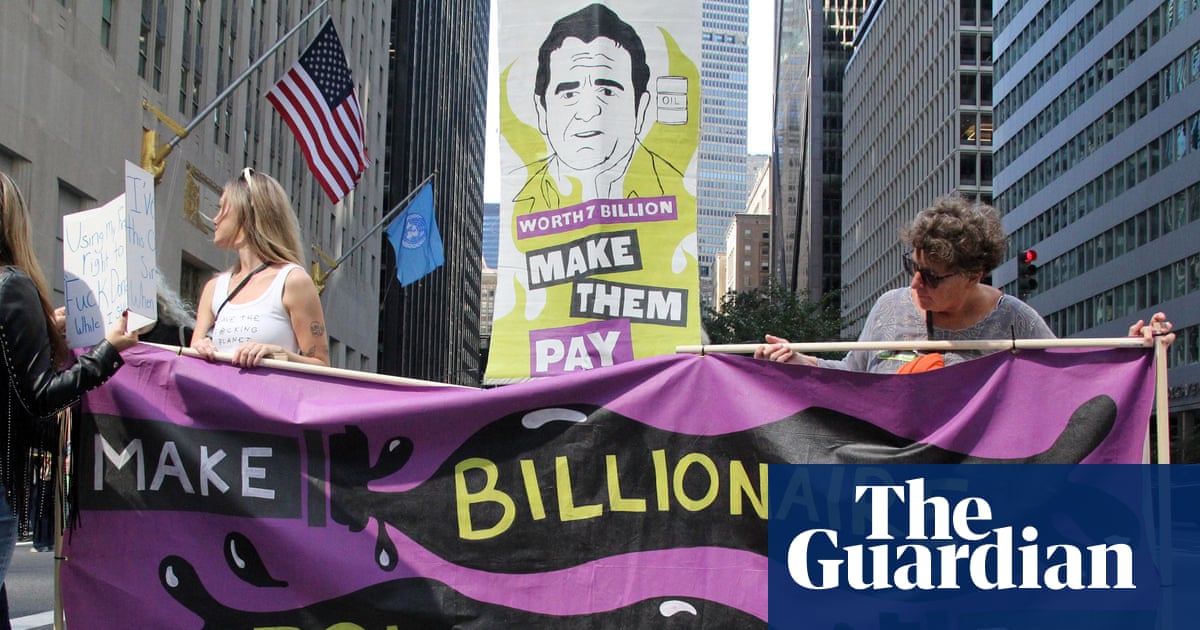
The Renewable Push: A Growing Headwind for Oil & Gas Investors
A recent surge in environmental activism, exemplified by a “day of action” rallying for solar power in New York City, serves as a potent reminder of the accelerating energy transition and its implications for oil and gas portfolios. While immediate market fundamentals often dictate daily trading, these organized efforts underscore a profound, long-term shift in public sentiment and policy direction that savvy O&G investors cannot afford to overlook. This isn’t just about environmental idealism; it’s about the increasing economic and political momentum behind alternatives, creating tangible headwinds for traditional hydrocarbon demand.
Market Volatility Meets Long-Term Transition Signals
The energy market currently presents a complex picture of short-term volatility against a backdrop of undeniable long-term transition. As of today, Brent crude trades at $98.22, marking a 1.18% decline for the day, with its range oscillating between $97.92 and $98.67. Similarly, WTI crude sits at $89.69, down 1.62%, having moved between $89.50 and $90.26. This immediate softness follows a more substantial trend: over the past two weeks, Brent has shed over $14, declining from $112.57 on March 27th to $98.57 by April 16th – a significant 12.4% drop. Concurrently, gasoline prices are holding at $3.08, down slightly by 0.32% today. This price action unfolds precisely as environmental groups amplify their message, highlighting that renewable sources accounted for over 90% of global energy expansion last year, and the U.S. generated less than half its energy from fossil fuels for the first time this past March. For investors, this juxtaposition means that even as they navigate the daily swings of crude prices, the foundational demand narrative is being incrementally, yet persistently, reshaped by the rising tide of renewables.
Policy Crosscurrents and the Investor’s Search for Clarity
The energy transition is not a linear path, and current policy environments reflect significant crosscurrents. While the recent “Sun Day” events projected an optimistic vision for renewables, they also occurred amidst ongoing efforts to roll back climate protections and slow the renewable energy build-out. Despite these political challenges, activists and public officials at the New York City event emphasized the undeniable global momentum towards clean energy, citing its economic benefits in lowering utility bills and creating jobs. This creates a difficult landscape for forecasting, a concern echoed by many of our readers. Our proprietary intent data indicates that investors are keenly asking about the reliability of market data and the mechanisms powering our responses. They want to know what data sources and APIs fuel our market insights, reflecting a deep need for trusted information in a volatile and politically charged environment. The question of whether governmental shifts can truly derail the global renewable trajectory, or merely introduce short-term friction, remains a critical one for long-term O&G investment strategies.
Upcoming Events: Short-Term Drivers vs. Long-Term Trends
For oil and gas investors, the immediate future holds several key events that will likely drive market sentiment, even as the broader energy transition narrative gains traction. The market’s attention will be firmly fixed on the upcoming OPEC+ Joint Ministerial Monitoring Committee (JMMC) meeting on April 17th, followed by the full Ministerial meeting on April 18th. With the recent significant decline in Brent crude, investors are particularly interested in OPEC+ production quotas, a topic frequently surfacing in our reader questions. Any adjustments or signals from these meetings could significantly impact short-term supply expectations and price stability. Following these pivotal discussions, the API Weekly Crude Inventory reports on April 21st and 28th, alongside the EIA Weekly Petroleum Status Reports on April 22nd and 29th, will offer crucial insights into U.S. supply-demand dynamics. Furthermore, the Baker Hughes Rig Count on April 24th and May 1st will provide an up-to-date assessment of North American drilling activity. While these events are critical for near-term positioning, investors must integrate them into a broader context where activist pushes for renewables signal a persistent, growing challenge to the long-term demand profile for fossil fuels. The question is not just ‘what will OPEC+ do?’, but ‘how will their decisions interplay with the undeniable global push towards alternatives?’.
The Evolving Investment Thesis: Beyond Supply and Demand
The messaging from the NYC solar advocates, focusing on the affordability and job creation potential of clean energy, directly challenges the traditional economic arguments often underpinning fossil fuel investments. This is a crucial distinction for investors: the headwinds are not solely about environmental impact, but increasingly about economic competitiveness and societal value. For oil and gas companies, this means the investment thesis must evolve beyond simple supply and demand fundamentals. It must encompass a comprehensive understanding of evolving public policy, technological advancements in renewables, and shifting capital flows. Companies that are diversifying their portfolios, investing in carbon capture, or actively engaging in the energy transition may find themselves better positioned to weather these growing headwinds. Conversely, those heavily reliant on legacy assets without a clear transition strategy face increasing pressure from both market forces and societal expectations. The activism witnessed in New York City is a clear signal that the energy landscape is not just changing; it is being actively reshaped, demanding a dynamic and forward-looking approach from every O&G investor.


