The relentless march of artificial intelligence is reshaping industries across the globe, and at its core lies a critical, yet often overlooked, driver of growth for the energy sector. While technology giant Nvidia dominates the headlines for its groundbreaking advancements in AI hardware, shrewd investors in the oil and gas space recognize that this digital revolution carries a profound and ever-increasing demand for power. The energy footprint of the burgeoning data center industry, fueled by Nvidia’s powerful Graphics Processing Units (GPUs), presents a compelling investment thesis for traditional energy producers and infrastructure providers.
Nvidia’s AI Dominance: A Primer for Energy Investors
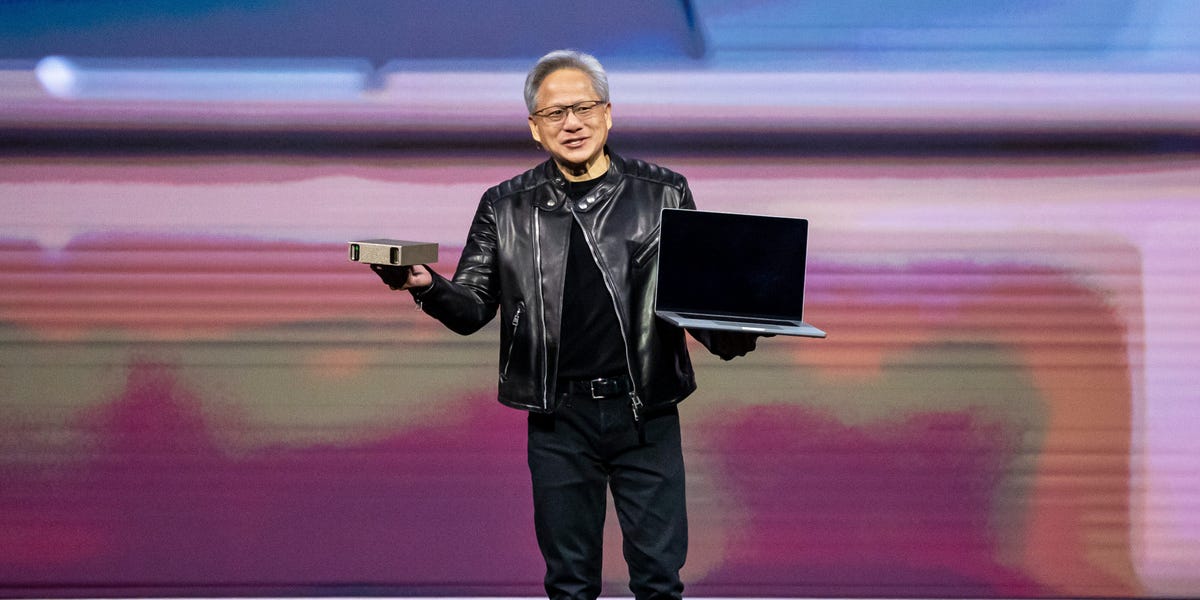
Nvidia, initially a pioneer in gaming semiconductors, has skillfully pivoted to become the undisputed leader in artificial intelligence. Its specialized GPUs are the computational backbone of the AI boom, particularly within high-powered data centers. These massive, temperature-controlled warehouses, packed with racks of interconnected GPUs, are the engine rooms of modern AI. Nvidia’s early innovation with its Volta generation chips, launched in 2017, laid the groundwork. Crucially, the company also introduced its Deep GPU Xceleration (DGX) systems, offering a complete technology stack designed to maximize GPU performance within data center environments. This comprehensive approach set a new industry standard, prompting other players like Dell and Supermicro to develop their own scaled GPU solutions.
The rapid evolution of Nvidia’s chip architectures directly correlates with escalating power requirements. The Ampere generation, introduced in 2020, significantly advanced AI capabilities and still underpins many data center operations today. Notably, Ampere also supported the initial iteration of Nvidia’s Omniverse, a simulation platform envisioned as foundational for a future where robots seamlessly integrate with human workflows. Such ambitious technological visions, while exciting, inherently signal exponentially greater energy consumption down the line.
Accelerating AI, Accelerating Power Demand
The true inflection point for large language models and broader AI innovation arrived with Nvidia’s Hopper generation of GPUs. Debuting in 2022, the Hopper series, including the highly sought-after H100 and H200 models, remains central to today’s most sophisticated AI applications. The H200, with its enhanced capacity, has proven indispensable as AI models swell in size, complexity, and computational demands. This continuous push for more powerful and capable silicon directly translates into a voracious appetite for electricity. Each successive generation of chips, while more efficient per computation, enables vastly more computations, leading to a net increase in overall energy usage.
The latest leap forward in accelerated computing arrived in 2024 with the announcement of Nvidia’s Blackwell architecture at the GTC developers conference. Although its rollout has faced initial hurdles, Blackwell racks are now becoming available through major cloud providers. This constant cycle of innovation, delivering ever-increasing computational horsepower, means that the energy sector must continuously adapt and expand to support the foundational infrastructure of the AI revolution. While Nvidia faces competition from industry stalwarts like AMD, Intel, and Huawei in the data center space, its commanding market share for AI computing ensures its product roadmap will continue to be a primary driver of global electricity demand.
The Energy Nexus: AI’s Direct Impact on Oil & Gas
For astute investors in the oil and gas industry, Nvidia’s technological advancements represent a powerful, long-term tailwind. The proliferation of AI-powered data centers necessitates an enormous and reliable supply of electricity. These facilities operate 24/7, consuming staggering amounts of power not only for computation but also for their elaborate cooling systems. This burgeoning demand puts significant strain on existing power grids, compelling utilities and energy companies to invest heavily in new generation capacity and transmission infrastructure.
Natural gas, with its flexibility, relative affordability, and lower emissions profile compared to coal, stands as a primary beneficiary of this trend. It is a critical fuel for dispatchable power plants that can quickly ramp up generation to meet the fluctuating, yet consistently high, power demands of data centers. As AI continues its explosive growth, the need for stable, scalable power sources will only intensify, solidifying natural gas’s role in the global energy mix. This translates into increased demand for natural gas exploration, production, and pipeline infrastructure, creating tangible investment opportunities.
Investment Currents: Capitalizing on AI’s Energy Footprint
Beyond natural gas for power generation, the ripple effects of AI’s energy demands extend across the broader oil and gas investment landscape. The construction of new data center campuses, power plants, and associated transmission lines requires vast quantities of materials, equipment, and logistical support, much of which relies on petroleum-derived products and services. From specialized lubricants for heavy machinery to fuels for transportation fleets, the industrial ecosystem supporting AI’s physical infrastructure inadvertently boosts demand for various segments of the oil and gas value chain.
Furthermore, the drive for energy efficiency within these power-hungry data centers is also leading to innovations in cooling technologies and infrastructure, potentially creating new markets for specialized industrial gases or advanced materials that oil and gas chemical divisions might supply. The overarching theme for oil and gas investors is to recognize that the AI boom is not just a digital phenomenon; it is a profoundly physical one, tethered to the fundamental requirement for abundant and reliable energy. Companies positioned to provide that energy, whether directly through natural gas sales or indirectly through supporting infrastructure, are poised for significant long-term growth.
Navigating the Future of Energy and AI
The symbiotic relationship between advanced computing and energy supply is set to define a significant portion of the global economy for decades to come. Nvidia’s ongoing leadership in AI hardware will continue to drive unprecedented demand for electrical power, and by extension, for the foundational energy resources that make that power possible. For investors in the oil and gas sector, understanding this dynamic is crucial. The capital flowing into AI innovation by technology giants like Nvidia is, in essence, also a powerful financial current directed towards energy infrastructure and commodity producers. By recognizing and strategically positioning themselves within this intricate energy-tech nexus, oil and gas investors can unlock substantial value in the unfolding AI-driven future.