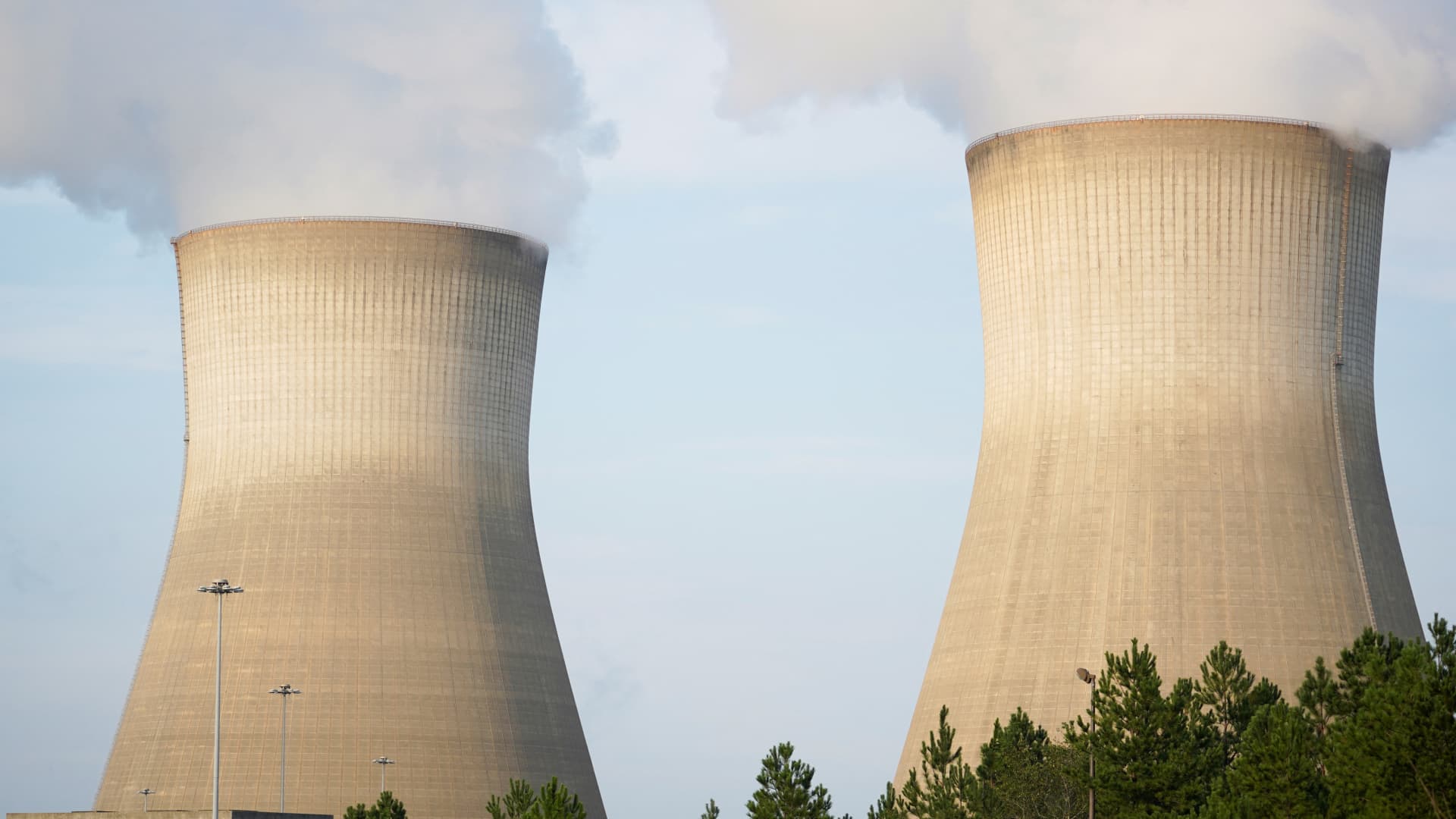
Nuclear Energy Stocks Ignite as White House Signals Strong Policy Backing
The U.S. nuclear energy sector witnessed a significant upward revaluation on Friday, as reports emerged indicating that former President Donald Trump intends to sign executive orders aimed at accelerating the construction of new nuclear reactors and bolstering domestic supply chains for critical materials. This policy pivot, if enacted, could redefine America’s energy security landscape and presents compelling new considerations for investors across the entire energy spectrum, including those traditionally focused on oil and gas.
Pre-market trading saw notable gains across key players. Advanced reactor developers like Oklo and NuScale Power each experienced an approximate 8% surge, signaling strong investor confidence in the future of next-generation nuclear technology. Constellation Energy, the nation’s largest nuclear plant operator, saw its shares climb by 2%, reflecting optimism for a more favorable operating environment. Meanwhile, Cameco Corp., a global leader in uranium mining, registered an increase of more than 4%, underscoring the renewed focus on securing essential nuclear fuel inputs.
Executive Action to Confront Geopolitical Energy Dependencies
Sources familiar with the matter suggest these presidential directives could be signed as early as Friday afternoon, with a scheduled Oval Office event at 1 p.m. ET. Central to these orders is the invocation of the Defense Production Act, a critical legislative tool that would declare a national emergency. This emergency declaration would specifically address the United States’ current vulnerabilities stemming from its reliance on Russia and China for enriched uranium, crucial nuclear fuel processing capabilities, and various inputs vital for advanced reactor development.
The strategic intent behind these actions is clear: to fortify America’s energy independence and mitigate geopolitical risks inherent in sourcing critical nuclear materials from rival nations. For investors assessing the long-term stability of the U.S. energy matrix, reducing reliance on external, potentially volatile, suppliers represents a significant derisking factor, aligning nuclear power more closely with domestic oil and gas production in terms of supply security.
Streamlining Development and Identifying Strategic Sites
Beyond securing supply chains, the anticipated executive orders are also expected to mandate federal agencies to streamline the often-arduous process of permitting and siting new nuclear facilities. This directive aims to cut through bureaucratic red tape, which has historically been a major impediment to nuclear project development in the United States, leading to extensive delays and cost overruns that deter private investment.
Furthermore, the Departments of Energy (DoE) and Defense (DoD) will reportedly be tasked with identifying federal lands and facilities where nuclear power generation can be strategically deployed. This proactive approach to site selection and development streamlining could unlock significant potential for new nuclear capacity, particularly for smaller, modular reactors (SMRs) and other advanced designs that require less land and shorter construction timelines than traditional gigawatt-scale plants. For the broader energy infrastructure landscape, this implies a potential acceleration in diversifying grid power sources.
Implications for the Broader Energy Investment Landscape
From an oil and gas investor’s perspective, this renewed federal backing for nuclear energy warrants careful consideration. While nuclear power serves as a baseload, carbon-free electricity source and is not a direct substitute for crude oil or natural gas in all applications, its expansion significantly impacts the overall energy mix and capital allocation within the sector. Increased nuclear capacity could dampen demand for natural gas in electricity generation, particularly in regions where both compete for grid supply, influencing future gas price dynamics and infrastructure investment decisions.
Moreover, the emphasis on domestic nuclear fuel and component production points to a broader trend toward energy supply chain resilience. This echoes similar national security considerations often applied to domestic oil and gas extraction and refining. Investors should evaluate how this policy shift might attract capital toward nuclear infrastructure, potentially diverting some funds that might otherwise target conventional energy projects. The long-term impact on energy prices, grid stability, and the competitive landscape for baseload power will be critical to monitor.
A Strategic Shift Towards Energy Independence and Innovation
The potential executive actions highlight a significant strategic pivot, recognizing nuclear power not just as a clean energy source but as a cornerstone of national security and economic stability. By addressing both the development bottlenecks and supply chain vulnerabilities, the administration aims to position the U.S. as a leader in advanced nuclear technology and a more self-reliant energy powerhouse. This could foster a domestic industry capable of producing next-generation reactors and the necessary fuel, creating new investment opportunities in engineering, manufacturing, and specialized services.
This development underscores the ongoing evolution of global energy markets, where geopolitical considerations increasingly intersect with technological advancements and environmental goals. For sophisticated energy investors, understanding the potential for accelerated nuclear deployment and its ripple effects across commodities, infrastructure, and technology will be paramount in navigating the complex and dynamic energy investment landscape for years to come.