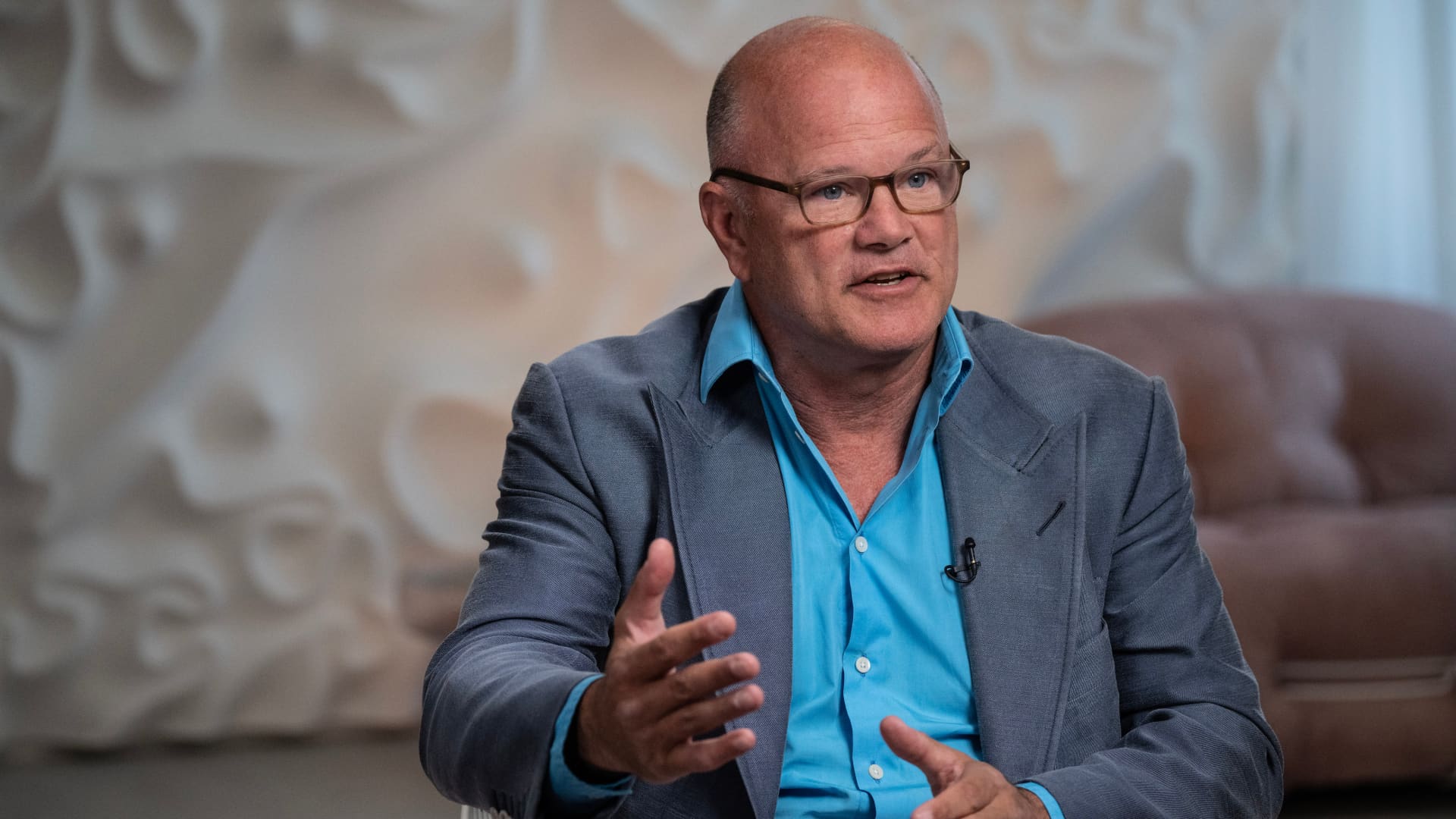
The journey of digital asset firm Galaxy Digital to a Nasdaq listing has culminated in a significant milestone, with founder Mike Novogratz finally set to ring the opening bell. This event marks the company’s debut on U.S. public markets under the ticker GLXY, following an arduous, multi-year regulatory odyssey that underscores the challenges and eventual triumphs facing innovative companies in evolving sectors. For investors accustomed to the traditional capital expenditures and regulatory landscapes of the energy sector, Galaxy Digital’s path offers a compelling case study in navigating the complex interplay of innovation, regulation, and market access.
A Protracting Regulatory Gauntlet to US Markets
Novogratz openly chronicled the intensely frustrating four-year quest to bring Galaxy Digital public in the United States. What might typically be a 45 to 90-day process stretched into an astounding 1,320 days, consuming over $25 million in the endeavor. He described the experience as “un-American, unfair, and infuriating,” highlighting the bureaucratic hurdles faced by pioneering firms in the digital asset space. The Securities and Exchange Commission (SEC) engaged in no fewer than nine rounds of comments, demanding extensive clarifications and compliance measures. This prolonged scrutiny underscores a critical insight for any burgeoning industry: robust capitalization and a formidable corporate structure are not merely advantageous, but absolutely essential to withstand the regulatory pressures and remain a viable contender in the market.
The financial journalist’s lens, often focused on the capital-intensive nature of oil and gas exploration, finds a parallel in the immense resources required to navigate nascent regulatory environments. Novogratz revealed that Galaxy’s auditing costs soared significantly higher than those of established financial entities like Jefferies. This disparity is a direct consequence of the heightened regulatory caution surrounding crypto companies. However, with the Nasdaq listing now secured, Novogratz anticipates a substantial reduction in these compliance-related fees, potentially by as much as 40%. This expected efficiency gain could significantly improve the firm’s operational leverage and profitability, a factor keenly observed by investors assessing any growth-oriented enterprise.
Resilience Forged in Regulatory Fire
Far from breaking the company, the protracted regulatory battle appears to have fortified Galaxy Digital. Novogratz famously quipped that “scarcity makes you tougher,” a testament to the firm’s resilience and strategic financial management. Unlike many startups heavily reliant on external capital injections, Galaxy largely funded its operations through astute investment gains and strategic trading activities. This self-sustaining growth model, born out of necessity, showcases a robust internal capital formation capability that can instill confidence in investors looking for durable business models, regardless of the sector.
Galaxy Digital’s experience is not an isolated incident. Novogratz pointed to eToro, the Israeli trading platform, which also recently achieved a Nasdaq listing. This event signifies a broader shift, marking one of the first major fintech public offerings since 2021. The successful listings of these digital asset-adjacent firms indicate a discernible return of investor appetite, signaling a potential thawing of the cautious sentiment that prevailed for years amidst regulatory uncertainty and market volatility. For investors monitoring broader market trends, this suggests a renewed openness to innovative financial technologies and their underlying assets.
From Toronto to Nasdaq: Unlocking Deeper Capital Pools
Prior to its U.S. debut, Galaxy Digital found its public market home on the Toronto Stock Exchange (TSX) in 2020. Canada, with its comparatively more accommodating regulatory stance towards digital assets, has long served as a crucial proving ground for firms unable to gain immediate traction in American markets. This cross-border dynamic allowed U.S. investors to access these companies, albeit indirectly, while American regulators maintained their cautious watch. However, for a visionary like Novogratz, the Canadian market was always a stepping stone, not the ultimate destination.
His ambition was unequivocally fixed on the United States, recognizing its unparalleled depth and liquidity. Novogratz articulated this disparity starkly: the U.S. market offers 30 times the visibility, volume, and notoriety compared to its Canadian counterpart. He posited that had Galaxy operated within the U.S. markets from the outset four years ago, it would be “a different company” today, implying a trajectory of significantly accelerated growth and market capitalization. This highlights the critical importance of market access and liquidity for companies seeking to scale and attract substantial institutional capital, a principle well understood by stakeholders in any capital-intensive industry.
Washington’s Shifting Sands: Crypto’s Political Ascent
Beyond the financial markets, the political landscape in Washington D.C. has also witnessed a remarkable evolution in the perception and influence of crypto. Novogratz, a former hedge fund manager known for his direct communication style, has observed this transformation firsthand. He recounted attending the Vice President’s inaugural ball as a representative Democrat, a gathering of approximately 300 attendees. What struck him was the presence of around 20 crypto CEOs in the room – a powerful illustration of the industry’s burgeoning political clout.
This “shocking” level of crypto representation in D.C. during the inauguration did not go unnoticed by policymakers, particularly among Democrats. Novogratz believes this signifies a genuine and growing recognition within a core, and potentially majority, group of Democrats that the digital asset industry warrants serious engagement rather than outright dismissal. For investors, particularly those in highly regulated sectors like energy, understanding the political currents and the increasing lobbying power of emerging industries is crucial for anticipating future regulatory frameworks and potential market shifts. The journey of Galaxy Digital to Nasdaq is more than just a listing; it’s a testament to perseverance, strategic navigation of financial and political landscapes, and the relentless drive to unlock new frontiers of capital and innovation.