The European natural gas market has received a significant boost with the successful restart of Norway’s Hammerfest Liquefied Natural Gas (LNG) facility. After an extended period of scheduled maintenance, the critical export plant on the island of Melkøya has resumed operations, a development that immediately reverberated through energy trading floors and contributed to a notable dip in Europe’s benchmark natural gas prices this Monday. For investors tracking the volatile commodity sector, this resumption signals a crucial step towards greater supply stability, albeit one tempered by the plant’s chequered operational history.
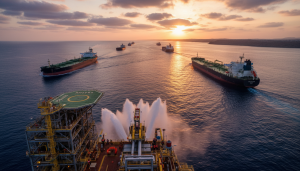
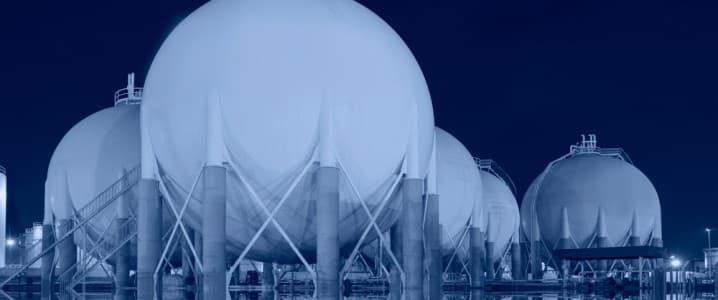
Hammerfest LNG, a cornerstone of European energy infrastructure, plays a pivotal role, particularly since Norway assumed the mantle of Europe’s leading pipeline gas supplier following shifts in the geopolitical landscape in 2022. As Europe’s pioneering LNG export facility, its reliable operation is paramount. The plant processes natural gas sourced from the Snøhvit field, transported via an undersea pipeline from the Barents Sea. While representing approximately 5% of Norway’s total natural gas exports, its annual capacity of 6.5 billion cubic meters (bcm) of LNG is substantial. This volume translates into a consistent flow of shipments, with LNG tankers typically calling at Melkøya every five days to load cargoes destined for European and global markets.
A History of Operational Hurdles and Market Volatility
The facility’s return to service follows more than three months of planned downtime. Originally slated for completion by mid-July, the maintenance period saw extensions twice since its initial target restart date of July 19. Equinor, the Norwegian energy major overseeing the plant, confirmed the restart on Sunday, August 3, as reported on Monday. While routine maintenance is essential for long-term reliability, these delays underscore the inherent operational risks in large-scale energy infrastructure, which can induce market uncertainty and price fluctuations.
Hammerfest LNG’s operational track record has been far from smooth, presenting a recurring challenge for supply stability and investor confidence. The plant experienced unexpected outages earlier this year, including compressor failures and other technical issues that brought operations and exports to a halt during the peak winter demand season. Looking further back, the facility faced a significant incident in September 2020 when a major fire forced a complete shutdown for a year and a half. It eventually recommenced operations in March 2022, only to experience an intermittent schedule since then due to various technical glitches and gas leaks. These recurring disruptions highlight the complexities of managing a high-pressure, capital-intensive energy asset and serve as a reminder of the potential for unforeseen events to impact global energy flows.
Norway’s Strategic Importance in European Energy Security
The consistent output from Hammerfest LNG is critical within the broader context of Europe’s energy matrix. Norway’s role as a reliable energy provider has become indispensable for the continent, particularly as European nations seek to diversify their energy sources and reduce reliance on other suppliers. Last year, Norwegian natural gas accounted for a substantial 30% of Europe’s total natural gas imports and approximately 9% of all European energy consumption. This strategic position makes every operational nuance at facilities like Hammerfest a point of keen interest for energy traders, policymakers, and long-term investors.
According to Gassco, Norway’s natural gas export system operator, the nation’s gas exports reached an unprecedented level in 2024. Furthermore, projections indicate that these exports are expected to maintain near this all-time high over the next several years. This forecast underscores Norway’s commitment and capability to remain a cornerstone of European energy security. For investors, this trajectory suggests a robust and sustained demand for Norwegian gas, reinforcing the long-term value proposition of assets within the country’s energy sector, including crucial liquefaction facilities.
Market Implications and Investor Outlook
The timely and stable operation of Hammerfest LNG is more than just a technical achievement; it carries significant implications for the commodity markets. A reliable supply stream from a major producer like Norway can help moderate price volatility, offering a degree of predictability in an otherwise unpredictable global energy landscape. For energy companies, stable operations mean consistent revenue generation and greater confidence in forward planning. For industrial consumers, it implies more predictable input costs, while for households, it can contribute to more stable energy bills.
However, investors must weigh the positive impact of increased supply against the plant’s history of operational challenges. While Equinor’s successful restart is a positive signal, the repeated delays and past incidents suggest that monitoring the facility’s ongoing performance will be crucial. Future technical issues could quickly reverse any market gains derived from the current operational status. Therefore, while the immediate outlook for European gas supply is improved, a cautious long-term perspective, accounting for potential outages and maintenance schedules, remains prudent for those investing in or exposed to the European natural gas market.
In conclusion, the return of Hammerfest LNG to full operational capacity is a welcome development for Europe’s energy security and a positive driver for natural gas market stability. As Norway continues to solidify its role as a vital energy partner, the performance of its key export infrastructure will remain under intense scrutiny from global energy markets. For astute investors, this event underscores both the critical importance of supply reliability and the inherent risks associated with large-scale energy production.