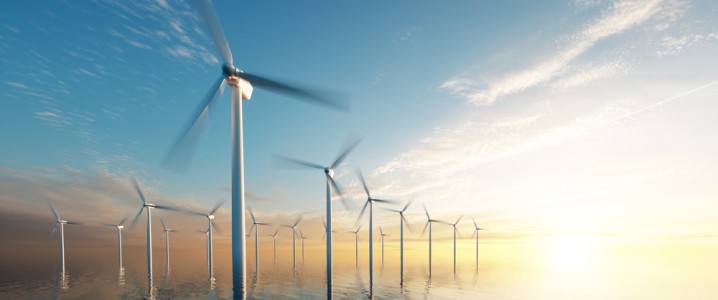
Norway, a nation long synonymous with vast offshore hydrocarbon wealth, is making an unequivocal commitment to pioneering the next frontier in renewable energy: floating offshore wind. In a highly anticipated move, the Norwegian Ministry of Energy has officially launched a tender for three distinct project areas dedicated to this innovative technology, marking the country’s inaugural competitive process for floating wind power.
This strategic pivot underscores a decisive policy shift, prioritizing floating wind over its fixed-bottom counterpart, particularly for its ability to unlock deeper waters and more robust wind resources. The competition centers on the Utsira Nord area, situated off the coast of Rogaland in southwestern Norway, an region recognized for its significant wind potential.
Norway’s Ambitious Floating Wind Strategy Takes Shape
Each of the three designated project areas within Utsira Nord is capped at an installed capacity of 500 megawatts (MW), signaling a substantial scale for these initial developments. Prospective developers have until September 15, 2025, to submit their applications, initiating a multi-year process designed to foster innovation and drive down costs.
Crucially for investors, the Norwegian government is backing these projects with a substantial financial commitment. A state aid cap of $3.4 billion (equivalent to 35 billion Norwegian crowns) has been allocated for the Utsira Nord initiatives. Winning bidders will initially secure project areas and then embark on a two-year maturation phase. Following this, an auction for direct state aid grants is scheduled for 2028 or 2029, a model specifically tailored to support the nascent floating offshore wind industry.
Energy Minister Terje Aasland emphasized that this allocation and support framework, developed in close consultation with the offshore industry, aims to accelerate both technological advancements and cost efficiencies. The long-term vision is for these early projects to pave the way for more economically viable subsequent developments, solidifying Norway’s leadership in this complex renewable sector.
A Strategic Pivot from Fixed-Bottom to Floating
The decision to vigorously pursue floating wind is not made in isolation. Earlier this year, Norway explicitly shelved plans for a fixed-bottom offshore wind tender at the Sørvest F area, which was initially slated for 2025. The primary rationale behind this reversal was the prohibitive cost associated with connecting fixed-bottom installations in that particular region to the national grid.
Instead, the Norwegian government has redirected its focus, prioritizing floating wind projects that can utilize radial links to the grid. This strategic realignment highlights a pragmatic approach to energy transition, where technological feasibility and economic viability drive investment decisions. For investors, this signals a clear governmental preference and support structure for floating technology, potentially de-risking early-stage participation in this specialized segment.
Navigating Global Headwinds in Offshore Wind Development
Norway’s ambitious floating wind tender unfolds against a backdrop of significant global challenges for the broader offshore wind industry. Developers worldwide are grappling with a complex confluence of supply chain disruptions, evolving regulatory landscapes, and adverse macroeconomic conditions. These headwinds are manifesting in escalating costs, project delays, and even cancellations, impacting the financial outlook for many players in the sector.
Illustrating these difficulties, Ørsted, a global leader in offshore wind project development, recently issued a cautionary statement regarding the continued challenging environment. The company cited higher input costs and rising interest rates as key factors influencing its decision to discontinue the development of the Hornsea 4 offshore wind project in the UK in its previously planned form. This high-profile cancellation serves as a stark reminder of the financial pressures facing even the most established developers.
Investment Implications for the Energy Market
For investors tracking the global energy transition, Norway’s calculated leap into floating offshore wind presents both compelling opportunities and inherent risks. On one hand, the substantial state subsidies and a clear governmental strategy provide a robust foundation for early-stage investment, particularly for companies with expertise in offshore engineering, maritime operations, and advanced materials.
The focus on technology development and cost reduction also positions Norway as a potential hub for innovation, attracting specialized firms and fostering a new ecosystem within the energy sector. Companies involved in turbine manufacturing, foundation design, installation logistics, and grid integration stand to benefit from this concentrated effort.
On the other hand, the global industry’s struggles, as exemplified by Ørsted, underscore the scale of the challenges. Floating offshore wind, while promising, remains a relatively nascent technology compared to fixed-bottom installations. It entails higher upfront capital expenditures, complex engineering solutions for dynamic loads, and still-evolving supply chains. Investors must carefully weigh the significant government backing against the technological learning curve and the broader economic pressures affecting project finance and execution.
Norway, with its deep-seated experience in complex offshore operations from its oil and gas legacy, is uniquely positioned to tackle these challenges. The existing infrastructure, skilled workforce, and regulatory expertise developed over decades in the North Sea provide a strong foundation. This initiative represents not just a renewable energy play, but also a strategic diversification for a nation keen to leverage its industrial strengths in the evolving global energy landscape, offering compelling prospects for those willing to invest in the future of offshore power generation.