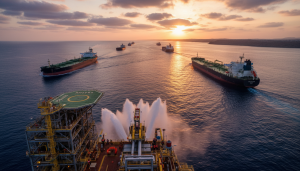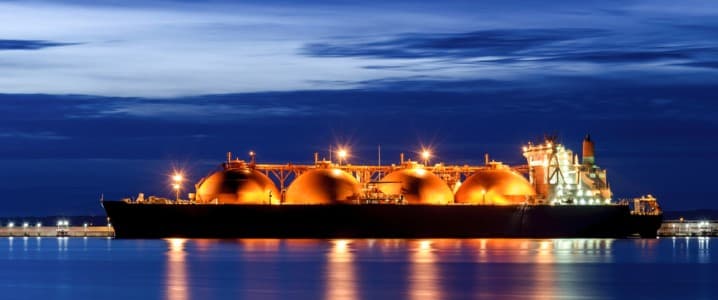
The government of New Zealand has shortlisted proposals to have its first LNG import terminal operational by early 2028 as it looks to boost energy security amid falling domestic gas supply, Energy Minister Simon Watts said on Monday.
New Zealand’s natural gas buffer has all but vanished in the past decade, as production has slumped and an offshore exploration ban was in place between 2018 and 2025.
Last year, New Zealand reopened for oil and gas exploration, ready to receive applications for exploration projects after a seven-year pause, following the lifting of a ban on such activity installed by the previous government.

The upstream policy reversal, however, will not lead to new supply in the near and medium term, so New Zealand’s government has turned to the LNG option to secure its gas supply.
The Government has shortlisted leading proposals and is progressing to commercial contracting, with the aim of signing a contract by mid-2026. The LNG import facility could be operational as soon as 2027 or early 2028.
Following extensive analysis and the first stage of procurement, the government will contract to build an LNG import facility, “in a critical step to strengthen New Zealand’s energy security and support economic growth,” Watts said.
“New Zealand is experiencing a renewable electricity boom, but a rapidly declining gas supply has left our electricity sector exposed during dry years, when our hydro lakes run low,” the minister added.
The depleting gas supply has actually made New Zealand more reliant on coal and diesel, with ultimately higher prices pressuring both households, businesses, and industry, according to Watts.
The LNG import facility in the coastal Taranaki region of New Zealand’s North Island is expected to provide a reliable backup fuel source, reducing the impact of dry-year risk on electricity pricing and stabilizing electricity costs, the government says.
“Access to LNG is also expected to protect around 2000 jobs from the economic impact of rising energy prices and gas shortages,” Minister Watts noted.
By Tsvetana Paraskova for Oilprice.com
More Top Reads From Oilprice.com