The global energy transition is no longer a distant aspiration; it is an economic reality reshaping investment landscapes across even the most carbon-intensive sectors. Mining, a foundational industry for everything from critical minerals to industrial metals, finds itself at the vanguard of this shift. Historically reliant on heavy diesel machinery and off-grid power generation, mining operations are increasingly embracing innovative green technologies, not merely as an ESG mandate but as a clear path to operational efficiency and cost reduction. For oil and gas investors, understanding this pivot within a crucial industrial consumer of traditional fuels is paramount to navigating the evolving energy ecosystem.
The Shifting Economics of Industrial Power
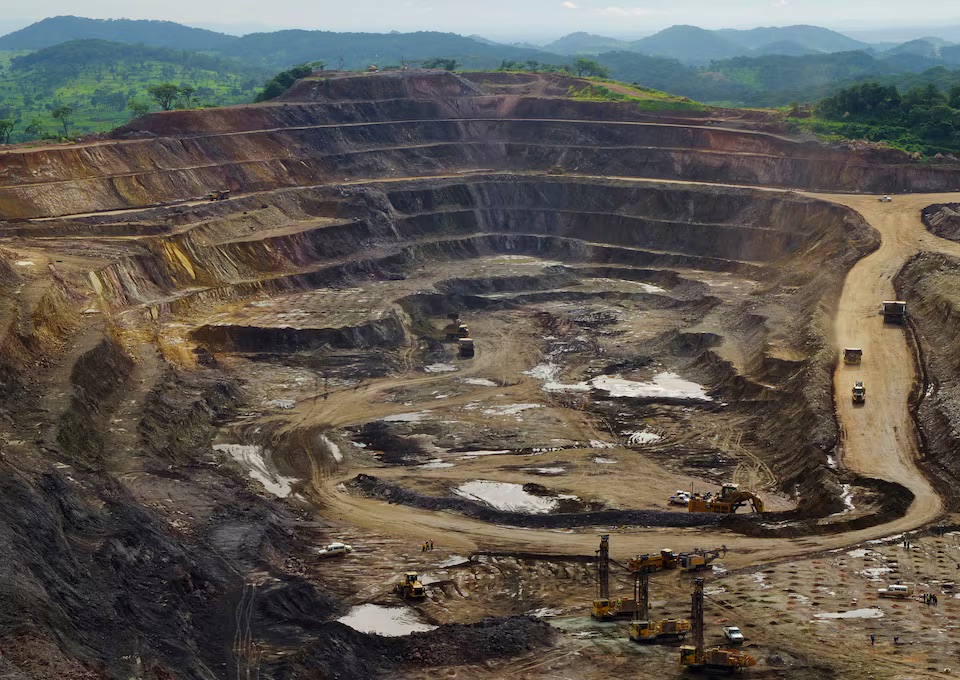
For decades, remote mine sites have relied on diesel generators for baseload power, a costly and carbon-intensive solution. However, the economics are rapidly turning this paradigm on its head. Companies like Kamoa Copper in the Democratic Republic of Congo illustrate this perfectly, opting for a large-scale solar and battery storage system built and operated by CrossBoundary Energy. This model eliminates upfront capital expenditure for the mine, replacing it with a predictable, cheaper-than-diesel electricity tariff. The projected reduction of 78,750 tonnes of carbon emissions annually is a significant environmental win, but the core driver is financial: reliable, carbon-free baseload power at a lower cost.
This shift is particularly compelling against a backdrop of fluctuating traditional energy prices. As of today, Brent crude trades at $95.27, up 0.51% within a day range of $91-$95.79, while WTI crude sits at $91.19, reflecting a slight dip of 0.1%. While these prices remain robust, the 14-day trend saw Brent decline from $102.22 to $93.22, a near 9% drop. Such volatility underscores the appeal of fixed-price, self-generated renewable power for long-term industrial operations. Many investors are currently asking for a base-case Brent price forecast for the next quarter and a consensus 2026 outlook, signaling a deep focus on future energy costs. The growing consensus points to a market where, even with potential price moderation, the structural cost advantages of renewables in remote industrial settings will continue to drive adoption, fundamentally altering demand patterns for traditional fuels.
Innovation as an Investment Catalyst
Beyond static power generation, the decarbonization of mobile mining equipment presents a massive opportunity. Fortescue, for instance, is demonstrating an aggressive timeline for technological development, transforming concepts into production-ready designs within months. Their innovations, such as regenerating battery technology for trains that harvest energy on descent and release it on ascent, or ammonia-powered locomotives, are not incremental improvements but transformative leaps. The CEO’s open invitation to competitors to witness their progress speaks volumes about the maturity and viability of these solutions.
This rapid innovation extends to the global fleet of approximately 28,000 gargantuan mining trucks, which collectively emit around 69 million tonnes of CO2 equivalent. The International Council on Mining and Metals (ICMM) is actively fostering partnerships between major mining firms and equipment manufacturers like Caterpillar, Komatsu, and Sandvik. These collaborations are crucial; they de-risk R&D, accelerate commercialization, and ensure scalability across the industry. For investors, this signals a fertile ground for companies involved in advanced battery technology, hydrogen infrastructure, green ammonia production, and specialized electric powertrains. The speed of development and the collaborative industry approach suggest that significant investment returns could be realized by backing the right innovators and early adopters in this space.
Navigating the Broader Energy Market Landscape
For oil and gas investors, these developments in the mining sector carry significant implications for long-term demand projections. While the immediate focus remains on short-term market dynamics — with the OPEC+ JMMC meeting scheduled for April 18th and the full Ministerial meeting on April 20th, alongside the upcoming API and EIA weekly crude inventory reports on April 21st/22nd and April 28th/29th — the structural shift in industrial energy consumption is a deeper trend. These upcoming events will undoubtedly influence crude pricing and market sentiment, but they operate within a broader context where key industrial sectors are actively seeking to reduce their reliance on fossil fuels. The Baker Hughes Rig Count, released on April 17th and 24th, offers a snapshot of upstream activity, yet even robust supply cannot negate demand erosion from sectors embracing cost-effective green alternatives.
This evolving landscape presents both challenges and opportunities for traditional energy companies. Those focused solely on hydrocarbon extraction without considering diversification into adjacent energy transition technologies might face headwinds in the long term. Conversely, oil and gas majors with capabilities in large-scale project development, hydrogen production, carbon capture, or even utility-scale renewable energy infrastructure could find new avenues for growth by partnering with or supplying the decarbonizing mining sector. The strategic value lies in anticipating where future energy demand will be generated and how it will be met, rather than simply reacting to weekly inventory figures or OPEC+ announcements.
De-risking and Value Creation through Decarbonization
Beyond direct cost savings, the push for net-zero mining is fundamentally a strategy for de-risking and enhancing shareholder value. In an era where Environmental, Social, and Governance (ESG) factors increasingly influence capital allocation, mining companies that proactively decarbonize gain a competitive edge. They secure better access to capital, often at lower rates, from a growing pool of ESG-mandated funds. Furthermore, reducing emissions improves their social license to operate, mitigating regulatory risks and enhancing community relations.
The shift to renewable energy and electrification also diversifies a mine’s energy supply, insulating it from geopolitical risks, supply chain disruptions, and the inherent volatility of global oil markets. This operational resilience translates directly into more stable earnings and a more attractive investment profile. For investors, identifying mining companies that are aggressively pursuing these decarbonization strategies, either through proprietary technology development or strategic partnerships, offers exposure to a sector undergoing a necessary and financially beneficial transformation. The intersection of economic imperative, rapid technological advancement, and strong ESG tailwinds makes net-zero mining a compelling area for astute investment analysis and capital deployment.


