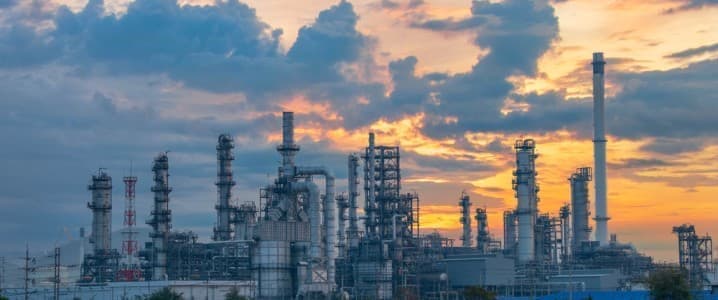
The global oil and gas landscape continues its relentless evolution, driven by geopolitical shifts and the pursuit of energy security. In this dynamic environment, Indian refiner Nayara Energy has demonstrated remarkable agility, effectively mitigating the operational fallout from recent EU sanctions. By pivoting to a rupee-based payment system for its Russian crude imports, Nayara not only secures its feedstock supply but also signals a growing trend towards alternative financial mechanisms in the commodity markets. This strategic maneuver warrants close examination by investors, particularly as market volatility persists and key supply-side decisions loom.
Navigating Geopolitical Headwinds: Nayara’s Rupee Gambit
Nayara Energy, a significant player accounting for approximately 8% of India’s total refining capacity, found itself squarely in the crosshairs of geopolitical tensions following the EU’s 18th sanction package. With 49% ownership by Russia’s Rosneft, the Vadinar refinery, India’s second-largest at 400,000 barrels per day (bpd), faced immediate operational disruptions. Tankers carrying its refined fuels were stranded, purchase orders canceled, and crucially, traditional crude suppliers like Saudi Aramco and Iraq’s SOMO halted sales. This created a critical supply void, threatening the refinery’s operational continuity.
In a bold and pragmatic response, Nayara, with support from the Indian government, has reportedly commenced paying for its Russian crude imports in rupees through local banks, including the State Bank of India. This innovative financial solution bypasses Western financial systems, effectively insulating Nayara’s crude procurement from the direct impact of EU sanctions. The strategy has allowed the company to significantly boost its intake of Russian Urals crude, ensuring feedstock for its Vadinar facility, which is now operating at a rising 75% of capacity. This decisive action highlights the increasing ingenuity employed by entities caught between geopolitical pressures, and its success provides a compelling case study for investors monitoring supply chain resilience in sanctioned environments.
Operational Resilience and Strategic Reorientation
Beyond the financial engineering, Nayara’s response to sanctions reflects a broader strategic reorientation designed to bolster operational resilience. Faced with disrupted export routes and traditional supplier withdrawals, the company has doubled down on its domestic market presence. Nayara supplies over 6,500 fuel stations across India and has begun selling more refined products to fellow domestic refiner Hindustan Petroleum Corp. This pivot to internal demand not only stabilizes revenue streams but also reduces exposure to international trade complexities exacerbated by sanctions.
Furthermore, Nayara has adopted tactical measures to manage its export challenges, including increasing the use of floating storage for crude and refined products, and reportedly utilizing tankers operating under Western sanctions. While these measures carry their own set of risks, they demonstrate a determined effort to maintain operational throughput and market access wherever possible. For investors, this aggressive adaptation illustrates a company committed to sustaining operations and market share, even when navigating an increasingly fragmented global energy trade landscape. The ability to shift focus and leverage alternative logistics is a key indicator of adaptability in today’s volatile market.
Market Implications and Forward Outlook for Investors
The implications of Nayara’s strategy extend far beyond its immediate operational recovery, offering valuable insights for the broader oil and gas investment community. Investors are keenly focused on understanding future oil price trajectories and the stability of global supply, with frequent inquiries seen on platforms like ours regarding predictions for oil prices by the end of 2026 and the specifics of OPEC+ production quotas. Nayara’s actions provide a real-world example of how individual players are adapting to secure supply in an era of fluctuating prices and geopolitical realignments.
Consider the current market context: As of today, Brent crude trades at $90.38, marking a significant 9.07% decline, while WTI sits at $82.59, down 9.41%. This substantial daily downturn underscores the volatile environment in which refiners operate. Moreover, the broader trend shows Brent crude dropping nearly 19.9% over the past two weeks, falling from $112.78 to $90.38. This sustained pressure on crude prices highlights the importance of securing discounted feedstocks, a benefit Nayara’s Rupee-based Russian crude purchases likely afford. Such arrangements can buffer refining margins against wider market fluctuations, making Nayara’s supply strategy particularly advantageous.
Looking ahead, the upcoming OPEC+ Ministerial Meeting on April 19th is a critical event that will undoubtedly influence global crude supply and pricing. While the outcome will impact the broader market, Nayara’s established Rupee-based supply chain with Russia provides a degree of certainty for its feedstocks, potentially insulating it from some of the immediate supply shocks or price adjustments stemming from OPEC+ decisions. Similarly, upcoming API and EIA weekly inventory reports on April 21st, 22nd, 28th, and 29th, alongside the Baker Hughes Rig Count data on April 24th and May 1st, will offer further insights into demand and drilling activity. However, Nayara’s bilateral arrangements demonstrate a powerful mechanism for mitigating external market volatility, a lesson not lost on investors seeking stable returns in a turbulent sector.
Beyond Sanctions: The De-dollarization Trend and Future Risks
Nayara’s shift to Rupee payments is more than just a sanction workaround; it’s a tangible manifestation of a growing de-dollarization trend in global commodity trade. As nations seek to reduce reliance on the US dollar for international transactions, alternative payment mechanisms and local currency settlements are gaining traction. For investors, this signals a potential fragmentation of financial flows in energy markets, introducing both new opportunities and complexities. While Nayara’s strategy provides immediate stability, the long-term viability of such arrangements is subject to evolving geopolitical landscapes and potential secondary sanctions, which remain a persistent risk for entities dealing with sanctioned crude.
The success of Nayara’s maneuver could inspire similar strategies in other regions or sectors facing comparable geopolitical pressures. However, the unique circumstances of India’s strong economic relationship with Russia, coupled with its immense energy import needs, provide a specific context. Investors must carefully weigh the benefits of insulated supply chains against the inherent risks of increased reliance on a single, potentially embattled, supplier and the challenges associated with non-traditional payment systems. The ongoing dynamism in crude prices, with gasoline also seeing a significant daily drop of 5.18% to $2.93, further underscores the need for robust, yet adaptable, operational and financial strategies in the refining sector.


