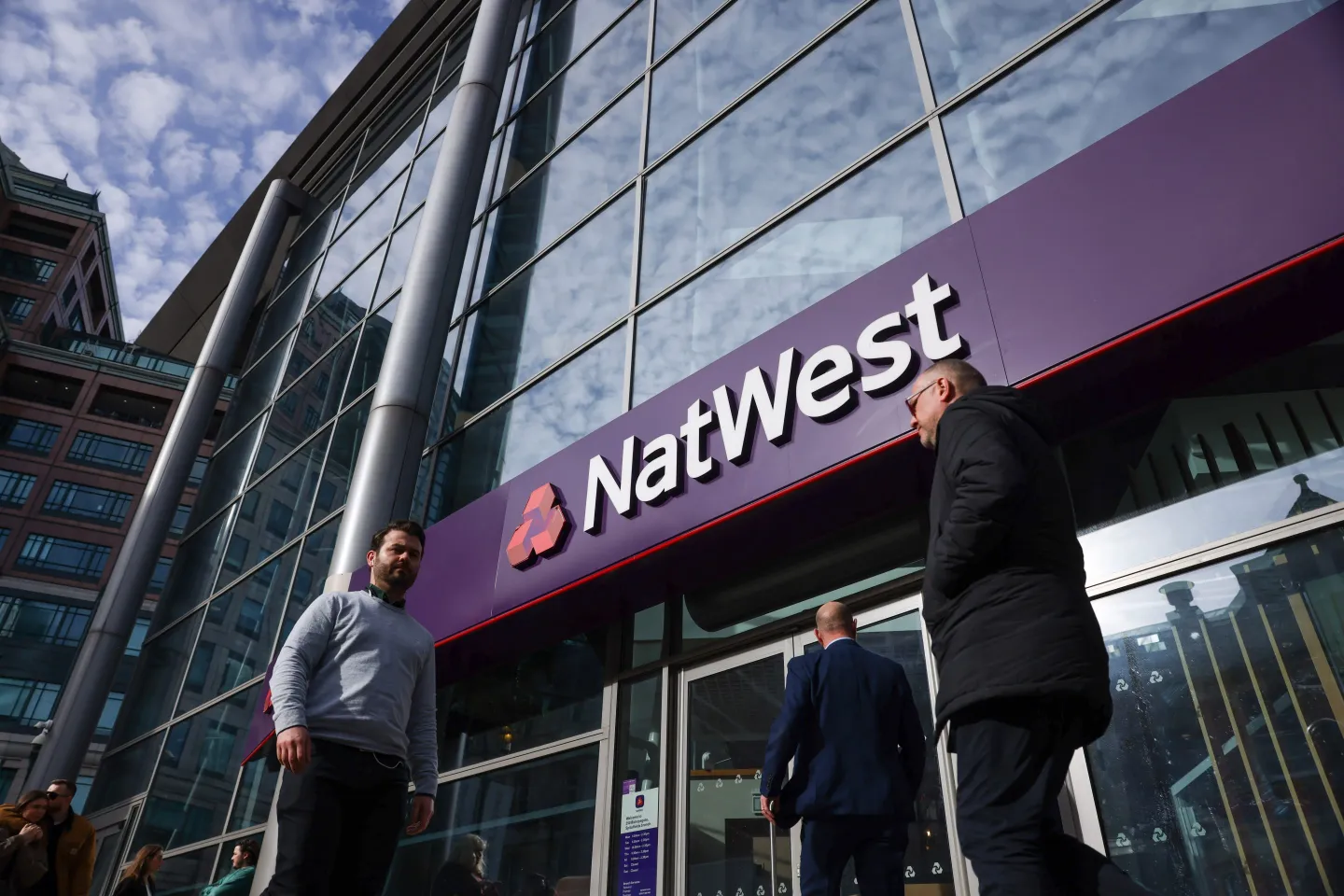
The global energy landscape continues its dynamic evolution, driven by both market forces and strategic financial commitments. In a significant move set to reshape the flow of capital into decarbonization efforts, NatWest has announced a substantial increase in its climate transition financing, pledging $268 billion between July 2025 and the end of 2030. This ambitious target represents a doubling of its previous commitment and signals a critical shift in focus towards supporting ‘hard-to-abate’ sectors within the real economy. For oil and gas investors, this development is not merely an environmental footnote; it represents a powerful force influencing future demand curves, technological adoption, and the long-term viability of various energy assets. Understanding where this capital is directed, and how it intersects with current market volatility and upcoming industry catalysts, is paramount for strategic portfolio positioning.
A Pivotal Shift in Transition Finance Strategy
NatWest’s newly unveiled Climate and Transition Finance (CTF) Framework marks a strategic pivot, moving beyond traditional ‘green’ financing to embrace a broader, more complex spectrum of decarbonization. The $268 billion commitment, slated for disbursement over five and a half years, significantly surpasses the bank’s previous £100 billion goal, which was achieved ahead of schedule by Q2 2025. What truly distinguishes this new framework is its explicit inclusion of high-emission sectors such as iron and steel, cement, and aviation, which have historically posed immense challenges for decarbonization. Furthermore, the framework extends support to critical enabling technologies like nuclear power generation and gas with carbon capture and storage (CCS) solutions. This expansion acknowledges that achieving net-zero goals requires not just investing in new renewable capacity, but fundamentally transforming existing industrial processes that are heavily reliant on fossil fuels. For investors, this signifies a recognition of the immense capital required to de-risk and scale technologies that can reduce emissions from conventional energy sources, potentially creating new avenues for investment in infrastructure and innovation within the oil and gas ecosystem.
Navigating Volatility: Investor Sentiment and Market Dynamics
This long-term financial commitment from a major institution arrives amidst a period of pronounced short-term market volatility. As of today, Brent crude trades at $90.38 per barrel, experiencing a significant decline of over 9% within the trading day, with prices ranging from $86.08 to $98.97. WTI crude followed suit, settling at $82.59, also down substantially by over 9.4% in a single session. This sharp daily move compounds a challenging two weeks for crude, where Brent has shed over $20 per barrel, representing an 18.5% drop since late March. Against this backdrop of significant price swings, our proprietary reader intent data reveals a keen focus on the future trajectory of oil prices, with many investors actively seeking predictions for crude per barrel by the end of 2026. This underscores a broader investor anxiety about the interplay between immediate supply-demand fundamentals and the accelerating pace of energy transition. NatWest’s substantial investment in transition finance, particularly in areas like gas with CCS, suggests a belief in the necessity of cleaner hydrocarbon solutions in the medium term, potentially influencing long-term price expectations by extending the demand horizon for certain fossil fuel derivatives, even as overall demand shifts.
The Roadmap Ahead: Strategic Implications and Upcoming Catalysts
The timing of NatWest’s announcement, layered against a packed calendar of upcoming energy events, provides a unique lens through which to assess its immediate market impact and forward-looking implications. With the critical OPEC+ Joint Ministerial Monitoring Committee (JMMC) and full Ministerial Meetings scheduled for this weekend on April 18th and 19th respectively, the market is on high alert for any signals regarding production quotas. Our reader intent data highlights this urgency, with investors frequently asking about current OPEC+ production levels, directly linking supply-side decisions to broader market stability. While OPEC+ decisions primarily influence short-term crude supply, they indirectly affect the economic viability of new energy projects, including those supported by transition finance. Furthermore, upcoming API and EIA Weekly Petroleum Status Reports on April 21st, 22nd, 28th, and 29th, alongside the Baker Hughes Rig Count on April 24th and May 1st, will offer crucial insights into current drilling activity and inventory levels. These immediate data points will help investors gauge the prevailing sentiment and potential market responses as NatWest’s $268 billion commitment begins to shape investment flows into technologies that seek to decarbonize existing fossil fuel-intensive industries, creating a complex interplay between traditional and transitional energy investments.
De-risking Transition: Opportunities in Hard-to-Abate Sectors
The explicit focus on ‘hard-to-abate’ sectors within NatWest’s new framework presents a significant opportunity for investors looking beyond conventional renewable energy plays. Industries such as iron, steel, cement, and aviation are notoriously difficult to decarbonize due to their high energy intensity and process emissions. By channeling $268 billion into these areas, NatWest is effectively de-risking early-stage and scaling technologies that can make a substantial impact on global emissions. This includes the financing of gas projects paired with carbon capture and storage (CCS) – a technology critical for reducing the carbon footprint of natural gas, a significant component of the global energy mix – as well as nuclear power generation, recognized as a stable, low-carbon baseload energy source. The bank’s acknowledgement that the definition of “transition” remains dynamic, subject to evolving low-carbon solutions, suggests an agile and pragmatic approach to funding. For investors, this opens doors to companies developing innovative solutions in industrial decarbonization, advanced materials, hydrogen production for heavy industry, and carbon management infrastructure. The strategic decision to remove ‘social financing’ from the updated framework further sharpens its focus purely on climate-related financial outcomes, emphasizing tangible emissions reductions and a more direct alignment with science-based net-zero goals, as independently reviewed by DNV Business Assurance Services UK Limited.


