The Indian natural gas market is currently experiencing a dynamic shift, primarily characterized by a significant upswing in overall gas availability. This surge, however, is not a testament to burgeoning domestic production but rather an amplified reliance on imported liquefied natural gas (LNG). For investors eyeing the South Asian energy landscape, understanding these underlying supply and demand fundamentals is crucial for navigating future opportunities and risks within the oil and gas sector.
Recent provisional data, reflecting performance in April 2025, highlights a robust 9.7 percent increase in natural gas availability for sale, reaching 5,416 million standard cubic metres (MMSCM). This marks a substantial rise from the 4,936 MMSCM recorded in April 2024. This growth trajectory is almost entirely attributable to a sharp escalation in LNG imports, painting a clear picture of India’s evolving energy security strategy and its increasing integration into global gas markets.
Surging LNG Imports Drive Availability Gains
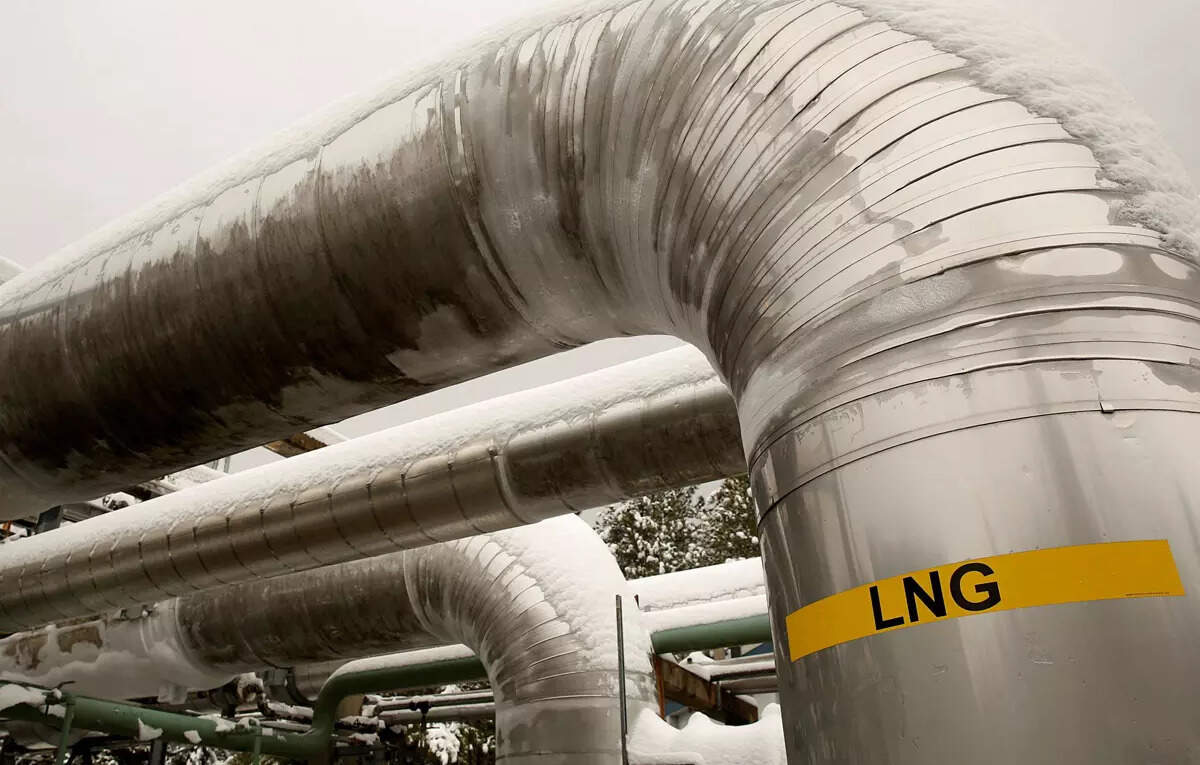
The primary engine behind India’s boosted gas availability is undoubtedly its growing appetite for LNG. Import volumes witnessed a remarkable 19.1 percent year-on-year increase, climbing to 2,977 MMSCM in April 2025 from 2,499 MMSCM during the same period last year. This substantial jump underscores the critical role international gas supplies play in bridging the gap between domestic production and escalating national energy demand. For energy companies involved in LNG trading, shipping, or regasification infrastructure, this trend signals continued favorable conditions and potential for growth in the Indian market.
The cumulative LNG imports for April 2025 mirrored this monthly trend, solidifying the observation that India’s energy mix is increasingly leaning on global gas resources. Investors should view this as a key indicator of India’s commitment to gas as a cleaner transition fuel, concurrently highlighting its vulnerability to international price volatility and geopolitical supply disruptions. Companies with robust LNG procurement strategies or those invested in domestic regasification capacity stand to benefit from this enduring import dependency.
Domestic Production Trends and Market Dynamics
While imported gas fills the void, India’s gross domestic natural gas production registered a slight contraction. Output in April 2025 stood at 2,908 MMSCM, a marginal 1.7 percent decline compared to 2,958 MMSCM in April 2024. This dip, though modest, reiterates the structural challenges faced by indigenous exploration and production efforts, including maturing fields and the high cost of new discoveries. Consequently, the net production available for sale remained largely stagnant, registering 2,439 MMSCM in April 2025, barely moving from 2,437 MMSCM in the year-ago period.
This persistent plateauing of domestic supply, coupled with rising demand, solidifies the long-term prognosis for continued reliance on LNG. For upstream investors, the focus shifts to companies with strong portfolios in gas-rich regions outside India or those actively pursuing unconventional gas plays within the country, though the latter often entails higher development costs and longer lead times. The sustained gap between consumption and domestic supply, which saw total gas consumption outstripping availability by 431 MMSCM in April 2025, reinforces the imperative for robust import channels.
Sectoral Demand Shifts: Winners and Losers
Total natural gas consumption for the month reached 5,847 MMSCM, revealing interesting shifts within key industrial and commercial sectors. The fertiliser sector, traditionally a major gas consumer, saw its share decline to 26 percent of total consumption, with absolute volumes falling from 1,652 MMSCM in April 2024 to 1,443 MMSCM in April 2025. This reduction could be influenced by various factors, including inventory levels, international fertiliser prices, or a shift in feedstock choices.
Conversely, the City Gas Distribution (CGD) sector demonstrated healthy growth, with consumption rising to 1,281 MMSCM from 1,213 MMSCM, now accounting for 23 percent of total demand. This expansion reflects ongoing urbanization, increasing penetration of piped natural gas (PNG) for domestic and commercial use, and growth in compressed natural gas (CNG) for transportation. Companies operating in CGD infrastructure and retail distribution are well-positioned to capitalize on this consistent demand expansion.
The power generation sector experienced a decrease in gas consumption, falling to 15 percent of the total (824 MMSCM) from 945 MMSCM in the previous year. This could be indicative of a greater reliance on other fuel sources like coal or renewables for electricity generation during this period, possibly driven by fuel economics or seasonal demand patterns. Refineries also showed reduced gas consumption, declining to 391 MMSCM from 453 MMSCM, capturing 7 percent of the total.
Perhaps the most significant sectoral shift was observed in petrochemicals, which registered a substantial increase in gas consumption. Volumes surged from 155 MMSCM in April 2024 to 297 MMSCM in April 2025, now comprising 5 percent of total gas demand. This nearly doubling of consumption signals robust growth in the Indian petrochemical industry, likely driven by new capacity additions or a strategic pivot towards gas as a preferred feedstock, offering opportunities for investors in companies supplying this rapidly expanding segment.
Regional Consumption Hotspots and Future Outlook
Geographically, certain regions continue to dominate India’s natural gas consumption landscape. Gujarat remains the leading consumer, utilizing 43.82 million standard cubic metres per day (MMSCMD). Following closely are Uttar Pradesh at 27.78 MMSCMD, Maharashtra at 25.11 MMSCMD, and Delhi at 7.93 MMSCMD. Offshore fields, particularly the western offshore, also contribute significantly, accounting for 6.66 MMSCMD.
These regional consumption patterns offer valuable insights for infrastructure development and investment. States with higher industrialization and population density, coupled with established CGD networks, present more immediate opportunities for gas infrastructure expansion and market penetration. Western offshore gas production remains a cornerstone of domestic supply, making any developments in this region particularly pertinent for upstream investors.
In conclusion, India’s natural gas market continues its trajectory of increasing reliance on LNG imports to meet burgeoning demand, even as domestic production faces headwinds. The sectoral shifts in consumption, with CGD and petrochemicals showing strong growth while fertilisers and power moderate, offer a nuanced view for investors. Companies engaged in LNG import infrastructure, city gas distribution, and those supplying the expanding petrochemical sector are likely to find compelling investment cases within India’s evolving energy landscape. The persistent gap between supply and demand underscores the long-term opportunity for global gas producers and infrastructure developers to play a crucial role in India’s energy future.