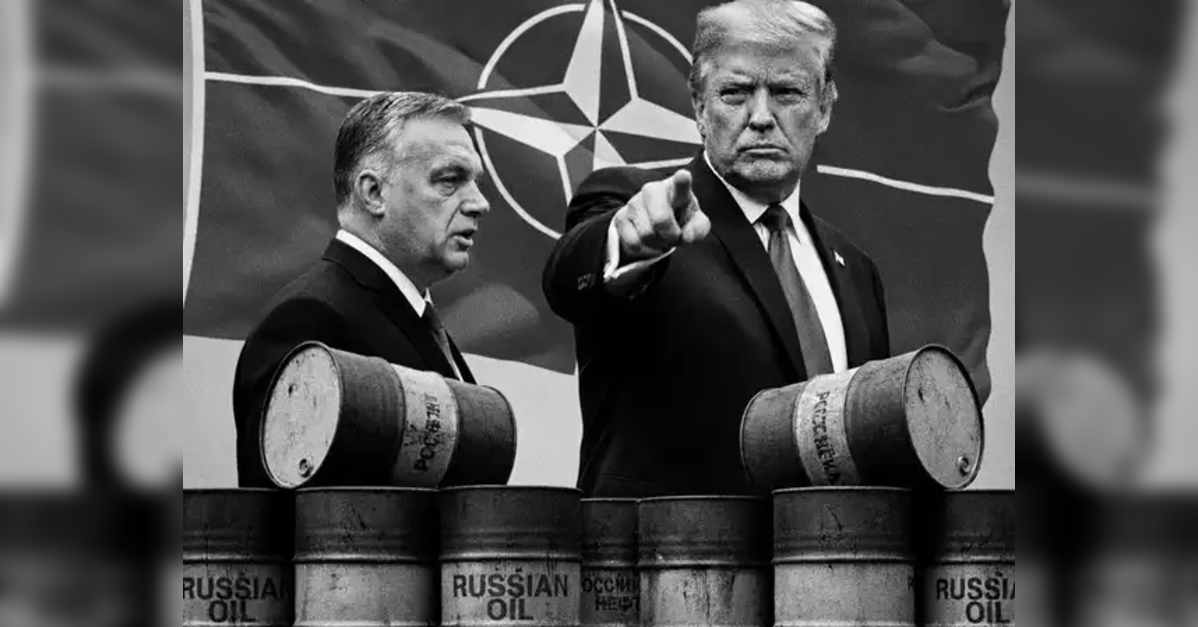
The global oil and gas landscape is currently a tapestry of diverging national interests, geopolitical friction, and market volatility. While the European Union has pushed aggressively to reduce its reliance on Russian fossil fuels, some NATO members continue to navigate complex energy security challenges, often leading to stark contrasts in policy. This divergence creates a dynamic environment for investors, where traditional alliances are tested by the pragmatic realities of energy supply and demand, and where the decisions of key players like Hungary and India directly impact global crude flows and price stability.
Hungary’s Enduring Reliance and NATO’s Internal Strife
Hungary stands as a notable outlier within the NATO alliance, maintaining a deep dependence on Russian crude oil and natural gas. With its crude imports from Moscow now exceeding 80% – a significant increase from 61% before the invasion of Ukraine to a reported 86% today – Budapest cites Soviet-era infrastructure and national energy security as primary justifications. This strategic imperative places Hungary at odds with broader EU and U.S. efforts to isolate Russia economically. Neighboring Slovakia also exhibits similar, if not greater, reliance, drawing nearly all of its crude from Russia. This continued dependence, even three years into the conflict, highlights the formidable challenge of disentangling deeply entrenched energy relationships, particularly where alternative infrastructure or supply routes are lacking. For oil and gas investors, this situation underscores the persistent geopolitical risk inherent in European energy markets, suggesting that while the continent generally moves away from Russian energy, pockets of strong demand will continue to support these flows, creating a complex and sometimes contradictory investment environment.
India’s Pragmatism Meets Tariff Pressures
On a different front, India has firmly articulated its stance on energy security, prioritizing access to the “best deal” for its 1.4 billion citizens above political pressures. Foreign Minister S. Jaishankar has repeatedly emphasized that national development and energy availability cannot be sacrificed for what he terms “political theatre.” This position has led India to become a significant purchaser of Russian oil, a move that has drawn strong criticism and punitive measures from the United States. Former U.S. President Donald Trump, for instance, imposed steep tariffs on Indian goods, including a 25% penalty specifically for transactions linked to Moscow, arguing that these purchases provide crucial funding for the ongoing conflict in Ukraine. From an investor’s perspective, India’s unwavering commitment to securing affordable energy, regardless of origin, positions it as a key driver of global oil demand. However, the associated geopolitical tensions and potential for trade disputes introduce an additional layer of risk and uncertainty into the investment calculus, impacting trade routes, shipping costs, and the overall liquidity of crude markets.
Current Market Volatility Amidst Geopolitical Crosscurrents
The intricate interplay of these geopolitical dynamics is clearly reflected in current market performance. As of today, Brent crude trades at $90.38 per barrel, marking a significant decline of 9.07% within the day’s range of $86.08 to $98.97. Similarly, WTI crude has experienced a sharp downturn, currently priced at $82.59, down 9.41% from a day range of $78.97 to $90.34. Gasoline prices are also feeling the pressure, sitting at $2.93, a 5.18% drop. This recent volatility follows a notable trend: Brent crude has seen an 18.5% decrease over the past 14 days, falling from $112.78 on March 30th to $91.87 on April 17th. This downward pressure on prices, despite persistent geopolitical tensions, raises critical questions for investors. Many in our community are asking about the trajectory of oil prices, with a frequent query being “what do you predict the price of oil per barrel will be by end of 2026?” The current market snapshot suggests a confluence of factors, including potential demand concerns, recent inventory data, and the market’s digestion of ongoing geopolitical complexities, all contributing to this pronounced price correction. Understanding these immediate movements is crucial for positioning portfolios effectively in a rapidly shifting landscape.
Forward Outlook: Key Events Shaping Future Oil Prices
Looking ahead, the next two weeks present several pivotal events that will undoubtedly influence crude oil prices and investor sentiment. The immediate focus is on the upcoming OPEC+ meetings. The Joint Ministerial Monitoring Committee (JMMC) convenes tomorrow, April 18th, followed by the Full Ministerial meeting on April 19th. These gatherings are critical, as investors are keen to understand “What are OPEC+ current production quotas?” and whether the alliance will adjust its output strategy in response to current market weakness and the ongoing geopolitical landscape. Any decisions on production cuts or increases will have an immediate and substantial impact on global supply and, consequently, on prices. Beyond OPEC+, weekly data releases will provide crucial insights into market fundamentals. The API Weekly Crude Inventory reports on April 21st and April 28th, along with the official EIA Weekly Petroleum Status Reports on April 22nd and April 29th, will offer a granular view of U.S. supply and demand dynamics. Furthermore, the Baker Hughes Rig Count on April 24th and May 1st will indicate future drilling activity and potential production trends. Investors should closely monitor these events for signals regarding global supply management, demand resilience, and the potential for a market rebalancing amidst the persistent geopolitical complexities highlighted by the actions of nations like Hungary and India.


