Strait of Hormuz Blockade Plan Sparks Deep Divisions Among Allies, Reroutes Oil Market Sentiments
Global energy markets are bracing for heightened volatility as the United States’ proposal for a maritime blockade of the critical Strait of Hormuz faces staunch opposition from key NATO allies. On Monday, April 14, 2026, the US administration, led by President Donald Trump, articulated plans for a naval operation intended to interdict all maritime traffic destined for or originating from Iranian ports. This escalation follows six weeks of unresolved conflict with Iran, posing significant questions for crude oil supply lines and international shipping security.
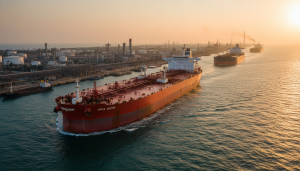
The Strait of Hormuz, a narrow choke point through which a staggering one-fifth of global crude supply typically transits, became a focal point for investor concern after the US military clarified that its blockade, set to commence at 1400 GMT on Monday, would specifically target vessels servicing Iranian ports. President Trump, in a Sunday post on Truth Social, signaled the impending action, stating, “The Blockade will begin shortly. Other Countries will be involved with this Blockade.” However, this assertion immediately ran into a wall of resistance from crucial European partners.
Britain and France, prominent NATO members, swiftly rejected any involvement in the US-led blockade. Their unified stance underscores a deep strategic divergence, emphasizing the imperative to reopen the waterway, which Iran has effectively disrupted since the conflict’s onset on February 28. This refusal to participate in a confrontational measure represents yet another fissure within the Western alliance, especially given President Trump’s previous threats to reconsider US commitment to NATO and his ongoing evaluation of troop deployments from Europe following resistance to US anti-Iran efforts, including denial of airspace for military planes.
Allied Pressure Mounts Against Escalation
The sentiment from London was unequivocal. British Prime Minister Keir Starmer directly addressed the issue on the BBC, stating, “We’re not supporting the blockade.” He further elaborated on the strategic decision, affirming, “My decision has been very clearly that whatever the pressure, and there’s been some considerable pressure, we’re not getting dragged into the war.” This public declaration highlights the significant internal and external pressures facing European leaders as they navigate the volatile Middle East landscape.
Reports from Reuters last week indicated that NATO Secretary General Mark Rutte has been pressing European governments for concrete commitments to help secure the Strait of Hormuz. Rutte, speaking on April 9, acknowledged the potential for NATO involvement, but only if all 32 member states could forge a consensus on the formation of a mission. This conditionality underscores the complex political dynamics and the challenge of aligning diverse national interests within the alliance, particularly when confronted with unilateral US actions.
Several European nations have expressed a willingness to contribute to stabilizing the strait, but their participation remains contingent on two critical prerequisites: a definitive end to hostilities and a clear agreement with Iran ensuring their vessels will not be targeted. This conditional engagement emphasizes a preference for de-escalation and diplomatic resolution over direct military confrontation, aiming to safeguard global energy flows without further inflaming regional tensions.
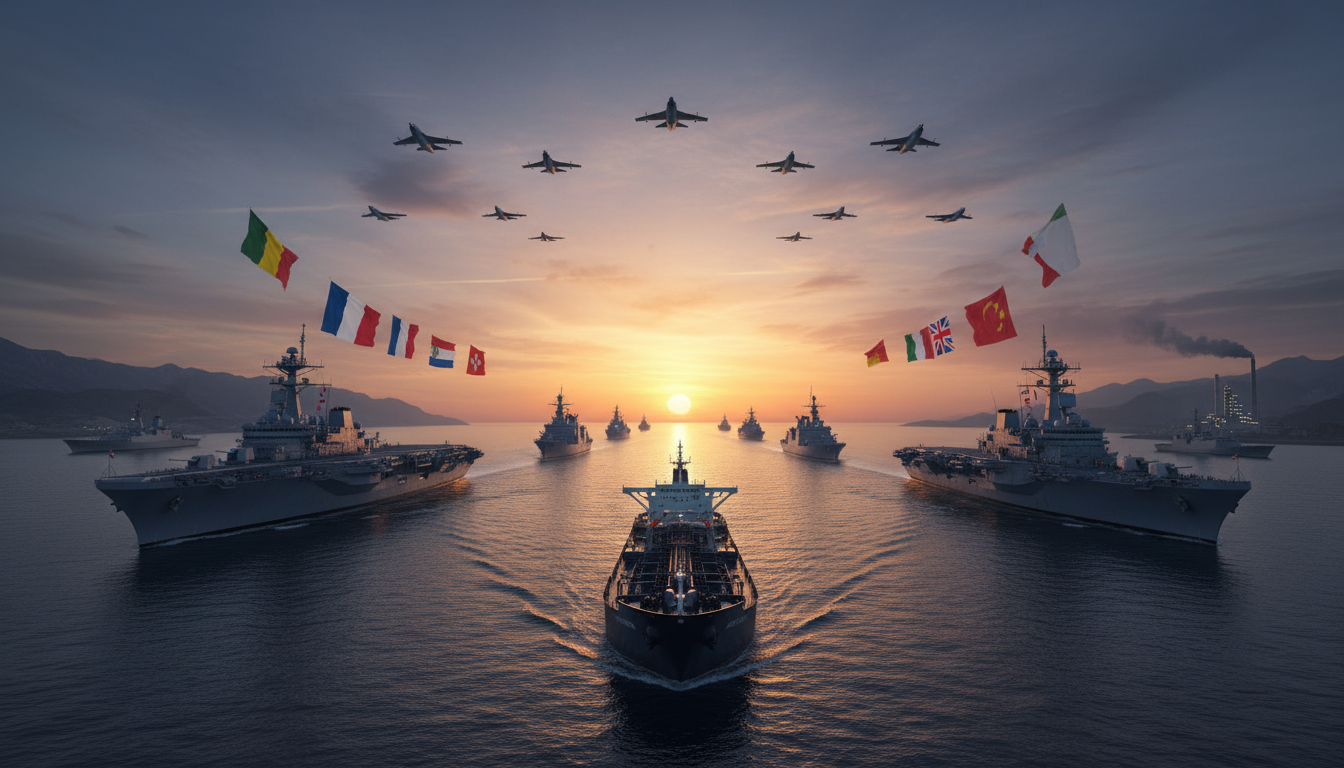
France has taken a proactive diplomatic step, with President Emmanuel Macron announcing on X on Monday that Paris would organize a conference with Britain and other nations. The objective is to establish a multinational mission aimed at restoring unrestricted navigation through the strait. Macron stressed the strictly defensive nature of this proposed mission, positioning it as distinct from any belligerent parties, and affirming its deployment would occur “as soon as the situation allows.” This initiative signals a concerted European effort to forge a path independent of the US blockade, focusing instead on collaborative security and de-escalation.
Further bolstering these diplomatic efforts, a senior European official revealed that Britain is actively exploring mechanisms to reduce insurance premiums for ships traversing the Strait of Hormuz, once an cessation of fighting has been secured. Such an initiative would directly address a key financial impediment to normal shipping operations, offering tangible relief to the maritime industry and, by extension, global oil consumers.
Adding another voice to the call for diplomacy, Turkish Foreign Minister Hakan Fidan stated on Monday that the Strait of Hormuz must be reopened through diplomatic channels. He cautioned against the complexity of creating an international force to oversee the waterway, while also urging NATO to utilize an upcoming summit in Ankara in July to reset its relationship with President Trump. These multi-faceted European and Turkish positions collectively highlight a profound international preference for negotiation and collective security arrangements over unilateral military action, influencing the strategic calculus for oil and gas investors closely monitoring the region’s stability.