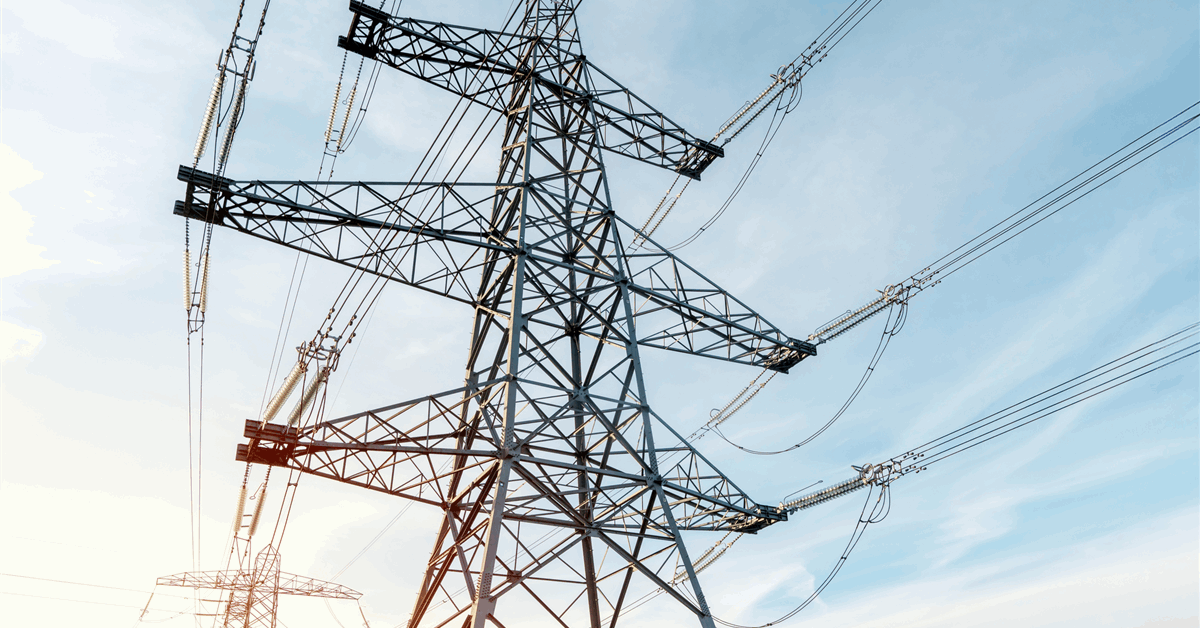
National Grid’s recent announcement of high voltage direct current (HVDC) agreements, valued at a substantial $16.2 billion (GBP 12 billion), marks a pivotal moment for the United Kingdom’s energy future and presents a significant opportunity for astute investors. This move represents the third and final tranche of its colossal $79.8 billion (GBP 59 billion) supply chain framework designed to underpin the Great Grid Upgrade and accelerate the nation’s energy transition. For investors tracking the evolution of the global energy landscape, this isn’t merely a utility spend; it’s a strategic long-term bet on electrified infrastructure that signals robust demand for specialized engineering, construction, and advanced technology, decoupling a significant portion of energy investment from the volatile commodity markets that often dominate headlines.
Anchoring the Future: The Scale of UK’s Energy Grid Transformation
The sheer scale of National Grid’s commitment to HVDC technology underscores the critical role it plays in connecting new renewable energy sources, particularly offshore wind farms, to demand centers across the UK. The recently awarded contracts are split into two major lots: approximately $12.2 billion (GBP 9.07 billion) for Lot 1, covering HVDC converter civil works, and an estimated $5 billion (GBP 3.7 billion) for Lot 2, focusing on HVDC onshore cable civil works. A diverse group of industry leaders has secured positions, including Balfour Beatty, BAM Nuttall, Galliford Try, Laing O’Rourke, Skanska, Taylor Woodrow, Murphy, and VolkerFitzpatrick. These agreements are not short-term engagements; they span a five-year term with a potential three-year extension, providing significant revenue visibility and a stable project pipeline for these contractors. The scope includes confirmed and anticipated projects such as Eastern Green Link 4, a collaboration with SP Energy Networks, and LionLink, a major interconnector with TenneT. This strategic, long-term partnership approach, as highlighted by National Grid’s Chief Engineer, Zac Richardson, is designed not only to deliver a secure, low-carbon energy future but also to stimulate tens of thousands of UK jobs and strengthen regional supply chains, a key component of national industrial strategy.
Navigating Volatility: Infrastructure as a Hedge Amidst Shifting Crude Markets
This substantial investment in energy infrastructure occurs against a backdrop of notable volatility in traditional oil markets, a trend that continuously shapes investor sentiment and capital allocation decisions. As of today, Brent Crude trades at $90.38 per barrel, reflecting a sharp 9.07% daily decline and a significant 18.5% drop from its $112.78 position just two weeks ago on March 30th. WTI Crude mirrors this trend, currently at $82.59, down 9.41% today. Gasoline prices have also seen a downturn, now at $2.93, a 5.18% drop. This recent market turbulence, with Brent’s daily range fluctuating between $86.08 and $98.97, starkly illustrates the unpredictable nature of fossil fuel prices. For investors, this volatility underscores the strategic imperative behind National Grid’s infrastructure push. While oil and gas investors grapple with fluctuating commodity prices and geopolitical risks, investments in stable, long-term energy transition projects like HVDC links offer a different risk-reward profile. The UK’s commitment to modernizing its grid aims to insulate its energy future from these external shocks, providing a more predictable and resilient investment environment within its borders, focused on the demand for reliable power delivery rather than the whims of global supply and demand for crude.
Investor Demand: De-Risking Supply Chains and Securing Long-Term Returns
Our proprietary reader intent data reveals that investors are keenly focused on understanding the future trajectory of energy markets, with frequent queries like “what do you predict the price of oil per barrel will be by end of 2026?” and “What are OPEC+ current production quotas?”. These questions highlight a pervasive desire for clarity and stability in an often-unpredictable sector. National Grid’s HVDC strategy directly addresses these investor concerns, albeit from a different angle. By strengthening its supply chain, particularly evidenced by Sumitomo’s decision to construct new HVDC cable production facilities in the UK—the first in over 20 years—National Grid is building deep, domestic resilience. This strategic emphasis on enhancing and expanding the supply chain, motivating new market players to boost manufacturing capabilities, reduces reliance on external geopolitical factors and global shipping bottlenecks. The long-term contracts, with their 5-year base term and potential 3-year extension with established players, provide revenue certainty and project stability, a welcome contrast to the often-cyclical and unpredictable commodity markets. For energy investors, this move demonstrates a clear path to de-risked revenue streams and sustained demand in the critical infrastructure segment, mitigating global supply chain vulnerabilities that have plagued many industries.
The Road Ahead: Upcoming Events and Strategic Project Rollouts
The immediate horizon brings several critical energy market signals that will influence investor sentiment across the sector. This weekend, the OPEC+ JMMC and Full Ministerial meetings on April 18th and 19th, respectively, are poised to dictate near-term crude supply decisions, potentially impacting global oil prices. Following these, API Weekly Crude Inventory reports on April 21st and 28th, alongside EIA Weekly Petroleum Status Reports on April 22nd and 29th, will offer granular insights into demand and production trends in the world’s largest consumer market. Furthermore, the Baker Hughes Rig Count on April 24th and May 1st will provide a barometer for upstream activity. While these events directly impact fossil fuel markets, their outcomes invariably influence capital flows and investor confidence across the broader energy sector. Strong oil prices might temporarily divert attention, but the strategic significance of National Grid’s projects, such as Eastern Green Link 4 (with SP Energy Networks) and LionLink (with TenneT), remains paramount. National Grid’s announcement that the first tender for shared southern works for Eastern Green Link 3 and 4 will soon begin further highlights the continuous pipeline of opportunities arising from this comprehensive framework. This sustained demand environment for specialized engineering services, regardless of short-term commodity swings, reinforces the long-term investment thesis for companies positioned within the energy transition infrastructure space.
Beyond the Grid: Broader Implications for Energy Investors
This colossal infrastructure spend isn’t merely for direct utility investors; it signals a robust, government-backed commitment to energy transition that creates significant ripple effects across the entire energy investment spectrum. For traditional oil and gas companies with diversified portfolios or those involved in engineering, procurement, and construction (EPC) services, these developments open new avenues for revenue generation and strategic pivot points. Investors should meticulously assess the exposure of their current holdings to this burgeoning energy infrastructure market. This requires looking beyond the traditional upstream and downstream segments to the “midstream of the future”—the transmission and distribution networks vital for a decarbonized economy. The sheer scale, long-term nature, and strategic importance of these HVDC commitments offer a compelling counter-narrative to the cyclicality and commodity price exposure often associated with fossil fuel investments. It underscores a future where grid modernization and energy transition infrastructure are not just environmental necessities but cornerstones of a resilient and predictable energy investment strategy, offering a compelling proposition for growth and stability in the evolving global energy landscape.


