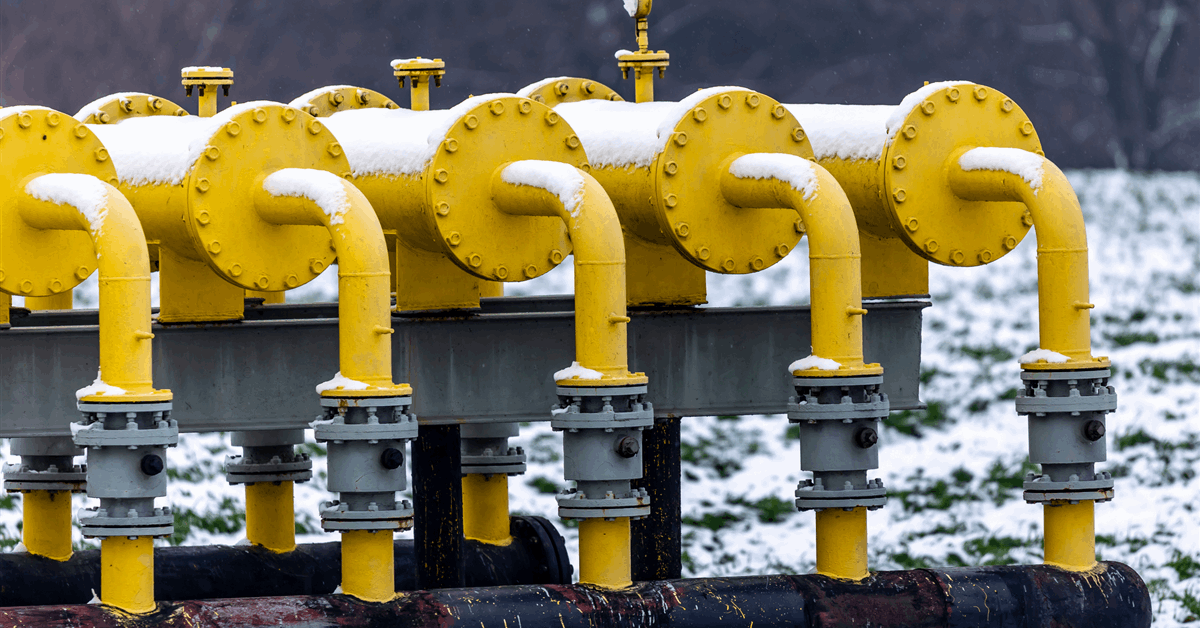
The geopolitical imperative for energy security continues to reshape Europe’s natural gas landscape. A significant recent development sees Ukraine’s state-owned Naftogaz Group solidifying its future liquefied natural gas (LNG) supply, strategically leveraging Greece as a new gateway for U.S. gas. This move, spearheaded by a letter of intent (LOI) with Greece’s DEPA Commercial SMSA for the 2025-26 winter, underscores a broader, coordinated effort to diversify gas sources and enhance regional energy resilience, particularly through the expansion of the Vertical Corridor.
Naftogaz Forges a New Hellenic Supply Chain for Winter 2025-26
Ukraine’s Naftogaz has taken a decisive step to bolster its energy security for the upcoming winters, signing an LOI with DEPA Commercial SMSA for the supply of U.S.-origin LNG for the 2025-26 winter period. This agreement builds upon an earlier pact this month with Atlantic-See LNG Trade SA, a joint venture formed by DEPA and Aktor Group, specifically designed to facilitate LNG importation from the U.S. into Ukraine and other European nations. Naftogaz’s statement on November 7 confirmed a joint commitment with Atlantic-See to develop these critical LNG supplies through Greek terminals and the Vertical Corridor infrastructure.
Konstantinos Xifaras, DEPA Commercial’s chief executive, emphasized the strategic importance of Atlantic-See, in which DEPA holds a 40 percent stake, as a key facilitator for U.S. LNG. This partnership is not merely a transactional arrangement; it represents the establishment of a robust, new energy artery for Southeast Europe, bypassing traditional and politically volatile supply routes. The focus on U.S. LNG highlights a deliberate strategy to broaden supply origins, moving away from past dependencies and enhancing overall supply chain stability for a region still navigating complex energy transitions.
The Vertical Corridor: Unlocking Multidirectional Gas Flows and Regional Integration
Central to this new supply strategy is the expansion and optimization of the Vertical Corridor, an existing network of gas infrastructure designed for multidirectional flow across seven European countries. The transport of LNG volumes originating from the U.S. is specifically expected to utilize ‘Route 1’ of this corridor, jointly offered by the gas transmission system operators (TSOs) of Greece (DESFA), Bulgaria (Bulgartransgaz), Romania (Transgaz), Moldova (VestMoldTransgaz), and Ukraine (GTSOU).
Further enhancing this infrastructure, TSOs recently requested regulatory approval for two additional routes, Routes 2 and 3, which would be available until April 2026. A joint letter from the TSOs on November 7 detailed plans for simultaneous provision of special capacity products for all three routes through competing auctions. To incentivize market adoption and facilitate diversified gas flows, the participating TSOs have agreed to implement significant tariff discounts, ranging from 25 percent to 50 percent across their interconnection points. These coordinated reductions, coupled with multiple route options, are designed to mitigate potential disruptions, ensure uninterrupted deliveries to Ukraine, and maximize the efficient use of existing infrastructure.
From an investor perspective, this infrastructure expansion and the associated tariff reductions present tangible opportunities. The European Commission has identified the Trans-Balkan corridor, a component of the Vertical Corridor, as vital to the EU’s strategy for diversifying gas transportation and phasing out reliance on Russian gas. The approval of Routes 2 and 3 aligns directly with this long-term strategy, leveraging LNG and Caspian gas to reinforce energy security and market integration across the continent. This forward-looking commitment to critical energy infrastructure suggests a stable, high-demand operational environment for the TSOs involved, potentially enhancing their long-term value propositions.
Navigating Market Volatility: Crude Dynamics and Gas Security
While Europe solidifies its long-term gas security, the broader energy market continues to exhibit volatility. As of today, Brent crude trades at $89.11, reflecting a significant 10.34% drop within the day, while WTI crude mirrors this decline, settling at $81.73. This recent dip, part of a broader 12.4% decline in Brent over the past 14 days, from $112.57 on March 27 to $98.57 on April 16, signals a period of heightened market sensitivity, often influenced by macroeconomic indicators and geopolitical tensions.
Our proprietary reader intent data reveals that investors are keenly asking about the long-term price trajectory of oil, with many seeking predictions for crude prices by the end of 2026. There’s also significant interest in OPEC+ current production quotas, especially with the OPEC+ JMMC and Full Ministerial meetings scheduled for April 17th and 18th, respectively, which will undoubtedly influence short-to-medium term crude supply decisions. However, the Naftogaz-DEPA agreement and the Vertical Corridor expansion provide a crucial counter-narrative for the gas market: a strategic focus on de-risking supply through diversification, rather than solely on price. For investors, this highlights a divergence in immediate strategic priorities between crude and natural gas in Europe. While crude markets react to daily supply/demand shifts and OPEC+ decisions, the gas sector is actively building long-term, resilient infrastructure to ensure fundamental supply security, insulating it somewhat from daily crude price swings and offering a more stable outlook for regional gas supply.
Investment Implications and the Future of European Energy Resilience
The strategic partnerships between Naftogaz and DEPA, coupled with the expansion of the Vertical Corridor, are pivotal for Europe’s long-term energy security. This initiative not only secures vital LNG supplies for Ukraine but also establishes Greece as an increasingly critical energy hub for Southeast Europe. The coordinated efforts by TSOs, including tariff reductions and capacity expansion, create a more attractive environment for gas traders and underscore the region’s commitment to energy independence from historically dominant suppliers.
For investors, this development signals a robust commitment to essential energy infrastructure and diversified supply chains. Companies involved in LNG terminal operations, pipeline development, and gas transmission across the Vertical Corridor are positioning themselves within a framework of sustained strategic importance. As Europe continues its energy transition, projects like these, which enhance reliability and offer competitive access to global LNG markets, represent compelling opportunities for capital seeking stable, infrastructure-backed returns in the evolving global energy landscape. The ongoing focus on securing diversified gas flows, even amidst fluctuating crude prices, indicates a long-term strategic pivot that will drive investment and reshape regional energy dynamics for years to come.


