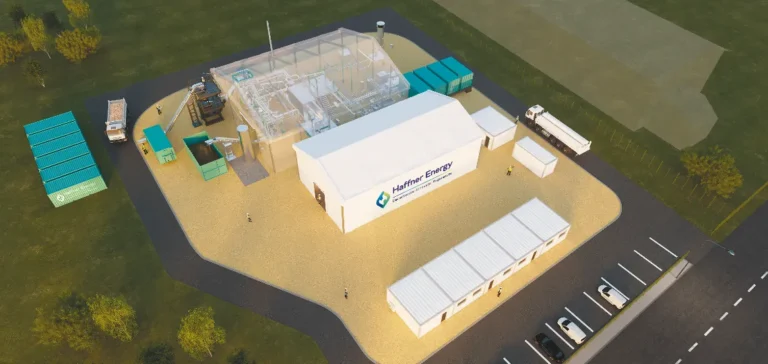
The energy transition is not just a global imperative but a mosaic of regional strategies, each designed to leverage local resources and address specific market dynamics. A recent strategic partnership between Quebec’s Mundi Énergies and France’s Haffner Energy stands out as a prime example, charting an ambitious course for renewable energy production across Quebec. This initiative, centered on deploying twenty multi-energy hubs, promises to transform agricultural and forestry residues into a trifecta of renewable gas, green electricity, and biogenic carbon dioxide. For investors navigating a volatile global energy landscape, this localized, resource-agnostic approach offers a compelling case for stability and growth within the broader energy diversification narrative.
Quebec’s Renewable Resilience Amidst Market Swings
In a world where energy markets remain acutely sensitive to geopolitical shifts and supply-demand imbalances, the strategic pivot towards localized, renewable resource utilization gains significant traction. The Mundi Énergies and Haffner Energy joint venture underscores this imperative, planning a network of twenty biomass-to-energy hubs that will convert readily available agricultural and forestry residues. This integrated model is designed to bolster regional energy security and drive industrial decarbonization across Quebec, injecting renewable natural gas directly into existing grids and generating green electricity.
As of today, April 18, 2026, the backdrop for this initiative is particularly striking. Brent crude trades at $90.38 per barrel, experiencing a sharp 9.07% daily decline, with its intraday range spanning from $86.08 to $98.97. Similarly, WTI crude has fallen 9.41% to $82.59, moving between $78.97 and $90.34. This significant downturn is not an isolated event; Brent crude has plummeted by $20.91, or 18.5%, from $112.78 on March 30 to $91.87 just yesterday, April 17. Such pronounced volatility in the conventional oil market highlights the inherent risk and unpredictability associated with fossil fuel dependence. In contrast, the Quebec project’s reliance on stable, domestically sourced biomass offers a compelling hedge against these external market shocks, providing a more predictable and resilient energy pathway. The initial 5 MW project, scheduled for Q1 2026 with an order valued at at least $4.58 million, represents a tangible step towards this stability.
A Scalable Model for Canadian Energy Security and Economic Anchoring
The joint venture, structured with Mundi Capital holding a 51% stake and Haffner Energy 49%, is more than just a technology deployment; it’s a blueprint for scalable energy independence. Haffner Energy contributes its proprietary biomass thermolysis technology, while Mundi Énergies, affiliated with Machinerie Dubois, leads local commercialization and project development. This division of labor ensures both cutting-edge technical expertise and deep regional market understanding. Each hub is designed to be modular, allowing for the integration of additional renewable sources like solar generation and anaerobic digestion, tailoring production to local resource availability and grid requirements. This flexibility maximizes efficiency and ensures alignment with Canada’s broader climate and energy priorities.
Beyond energy production, these hubs are poised to become critical anchors for local economies. By creating stable demand for agricultural and forestry residues—often a disposal challenge for local operators—the project transforms waste into valuable energy products. This approach is intended to circulate economic benefits within host regions, fostering local job creation and strengthening rural communities. This focus on distributed, community-centric energy production distinguishes it from centralized models, aligning energy infrastructure with regional economic development goals.
Navigating the Future: Renewable Stability vs. Crude Volatility
Investors frequently inquire about the future trajectory of global energy markets. A recurring question we see from our readers is, “What do you predict the price of oil per barrel will be by the end of 2026?” and “What are OPEC+ current production quotas?” These questions underscore a pervasive concern about the stability and predictability of traditional oil and gas investments. In this context, initiatives like the Quebec biomass project present a distinct investment thesis.
While the broader energy market will undoubtedly be influenced by upcoming events—such as the OPEC+ JMMC and Full Ministerial Meetings on April 18th and 19th, respectively, or the regular API and EIA weekly crude inventory reports on April 21st and 22nd—these events primarily dictate the dynamics of fossil fuel supply and pricing. Renewable energy projects, particularly those leveraging local biomass, offer a different risk profile. Their revenue streams are often tied to long-term power purchase agreements or renewable natural gas contracts, providing a level of insulation from the daily price swings of crude. The commitment to twenty hubs and the initial Q1 2026 project timeline demonstrate a long-term vision that contrasts sharply with the immediate, often speculative, reactions to OPEC+ decisions or inventory reports. This offers investors a pathway to diversify portfolios away from the direct exposure to crude price volatility that defines much of the traditional oil and gas sector.
Investment Implications and Regional Economic Catalysts
The Mundi-Haffner partnership offers a compelling investment narrative focused on regional energy self-sufficiency and sustainable economic development. For investors seeking exposure to the energy transition, this model provides a tangible, scalable framework that de-risks deployment through local resource integration and a proven technology transfer mechanism. The modular design ensures adaptability, meaning each of the twenty planned hubs can optimize its energy output based on specific local biomass availability and energy demands, further enhancing project viability.
Moreover, the project’s emphasis on creating a “template for a scalable biomass-to-energy model” suggests significant replication potential beyond Quebec, both within Canada and internationally. This systematic approach to decarbonization and energy security, starting with a concrete initial order and a clear Q1 2026 target for the first 5 MW facility, provides a solid foundation for future growth. As investors continue to scrutinize the sustainability and resilience of their energy holdings, particularly given the ongoing market volatility and the prevailing interest in long-term oil price forecasts, projects like these in Quebec represent a strategic allocation towards a more diversified and secure energy future.


