Solar Funding Breakthrough Signals Enduring Profitability Amidst Policy Shifts
The global energy investment landscape continues its dynamic evolution, a reality keenly felt by stakeholders across the oil and gas sector. While federal policy signals a renewed emphasis on traditional hydrocarbons, a recent successful capital raise in the solar power arena underscores a critical truth for investors: financial viability remains king, regardless of the political winds. This development offers a compelling case study for those navigating the complex interplay between energy policy, market sentiment, and tangible returns.
Aligned Climate Capital, a cleantech fund overseeing a substantial $2 billion portfolio, recently announced a significant achievement, securing $240 million for its latest solar power fund. This impressive figure not only exceeded its initial $200 million target by a healthy 20% but also emerged during a period widely characterized by hesitancy in clean energy fundraising. Since the current administration’s inception, a discernible chill has settled over capital flows into renewable projects, largely attributed to regulatory rollbacks and a declared intent to dismantle federal incentives that historically supported the transition away from fossil fuels.
Peter Davidson, CEO of Aligned Climate Capital, acknowledged the broader market slowdown. “The whole flow of capital to reinvest in funds has been slower, across the board. That’s not just climate funds,” Davidson observed. However, he quickly pointed to an amplified reluctance among investors in climate-focused funds due to the perceived federal pivot. Against this backdrop, the oversubscription of Aligned Climate Capital’s fund provides a powerful counter-narrative, suggesting that well-structured, profitable renewable ventures can still command significant investor interest.
De-Risked Community Solar Drives Returns
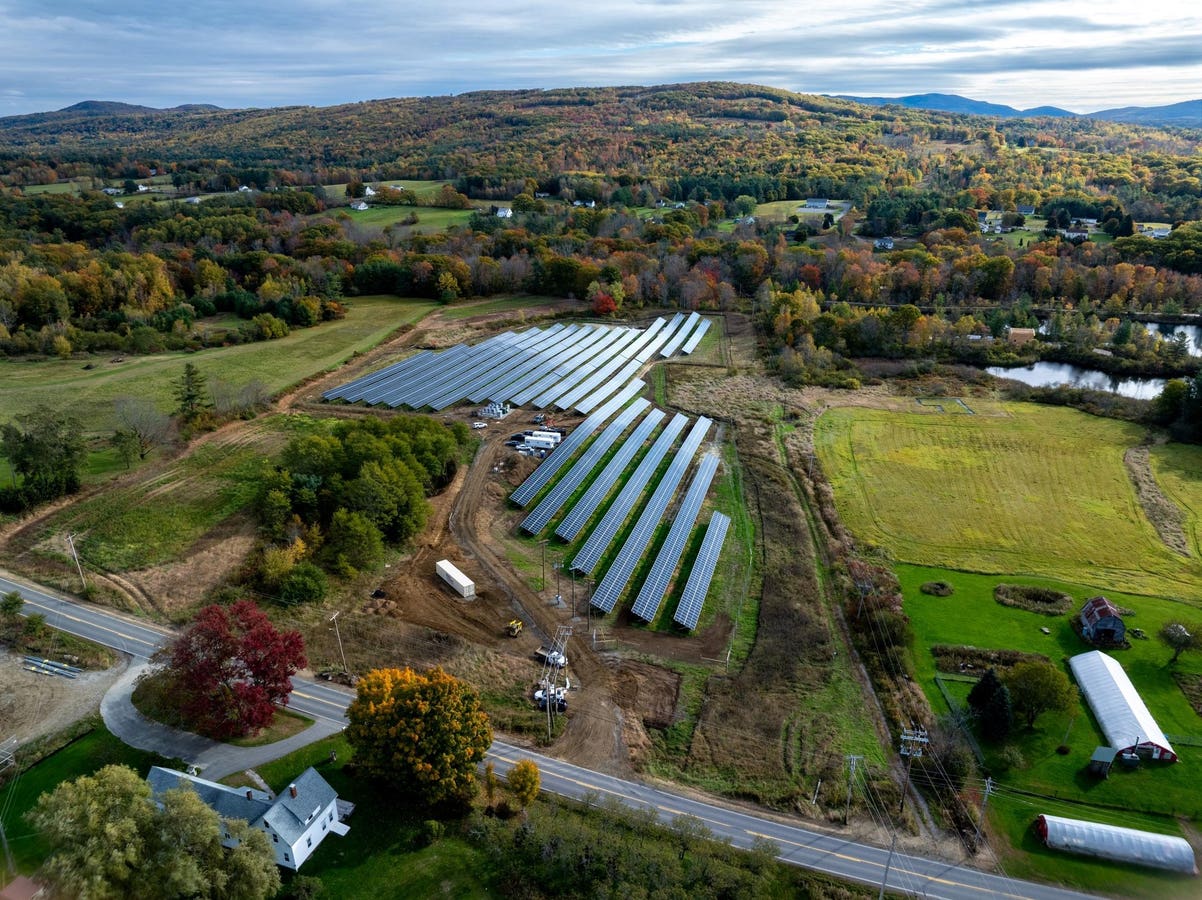
A key differentiator for Aligned Climate Capital’s success lies in its strategic focus on “community solar” projects. These are not the sprawling, utility-scale installations often associated with complex land acquisition and protracted grid connection challenges. Instead, community solar farms typically boast a generation capacity of up to 10 megawatts, designed to supply local power systems. This smaller scale inherently simplifies development, reduces regulatory hurdles, and mitigates the grid integration headaches that can plague larger endeavors.
For oil and gas investors accustomed to evaluating projects based on proven reserves and predictable cash flows, the operational model employed by Aligned Climate Capital presents an interesting parallel. Davidson elaborated on their approach: “Overwhelmingly, we’re community solar power plant owners and operators. We build them. We have our whole team that oversees construction, and we do operations and management, and we’re running green power plants. By the time we purchase them, they’re fully de-risked. We know the revenue so we have a very good sense when we transact exactly what the return of the assets is going to be.” This emphasis on de-risked assets and transparent revenue streams is a language that resonates across all capital markets, including the energy sector.
The fund’s geographic distribution further highlights a pragmatic, return-driven strategy. While it operates some solar systems in California, a traditional hub for renewable energy, a significant portion of its projects are concentrated in less obvious locales such as Maine, New Hampshire, and Delaware. This suggests a methodical pursuit of markets with favorable local regulations, robust demand, and potentially less competitive development environments, rather than simply chasing perceived “hotbeds” of solar activity. This diversified, opportunistic approach is a hallmark of successful investment strategies across various industries.
Implications for Oil and Gas Investment Strategies
For investors deeply entrenched in the oil and gas sector, these developments offer several insights. Firstly, they reaffirm that even amidst a policy environment seemingly more amenable to fossil fuels, the pursuit of profitable energy projects, regardless of their source, remains a constant. The success of Aligned Climate Capital underscores that capital will flow where strong, predictable returns are demonstrated. This challenges any simplistic notion that renewables are solely dependent on federal largesse; rather, market-driven profitability is a potent magnet for investment.
Secondly, the model of de-risked, localized energy generation could offer strategic lessons for diversified energy companies or those looking to future-proof their portfolios. The ability to identify, develop, and operate assets with clear revenue visibility and manageable operational complexities, even if smaller in scale, presents a viable path to consistent returns. Oil and gas firms, with their extensive experience in project management, infrastructure development, and operational efficiency, could potentially leverage similar strategies to integrate specific renewable assets into their broader energy portfolios, enhancing resilience and diversifying revenue streams.
Finally, the enduring appeal of “moneymaking” clean energy projects means that competition for energy capital will remain fierce. While the current administration’s stance may provide tailwinds for increased oil and gas extraction, the underlying market mechanisms for profitable renewable energy continue to mature and attract investment. This evolving dynamic means that investors in traditional energy must remain vigilant, continuously assessing the competitive landscape and ensuring their own assets deliver superior financial performance to maintain their position in a fiercely contested capital market.
In conclusion, while the federal government may be signaling a pivot back towards traditional energy sources, the capital markets are telling a more nuanced story. The oversubscribed solar fund by Aligned Climate Capital is a testament to the fact that well-executed, financially sound renewable energy projects can thrive even in challenging policy environments. For oil and gas financial journalists and investors, this serves as a crucial reminder: the enduring principle of generating strong, predictable returns ultimately dictates where smart money will flow, irrespective of prevailing political rhetoric.