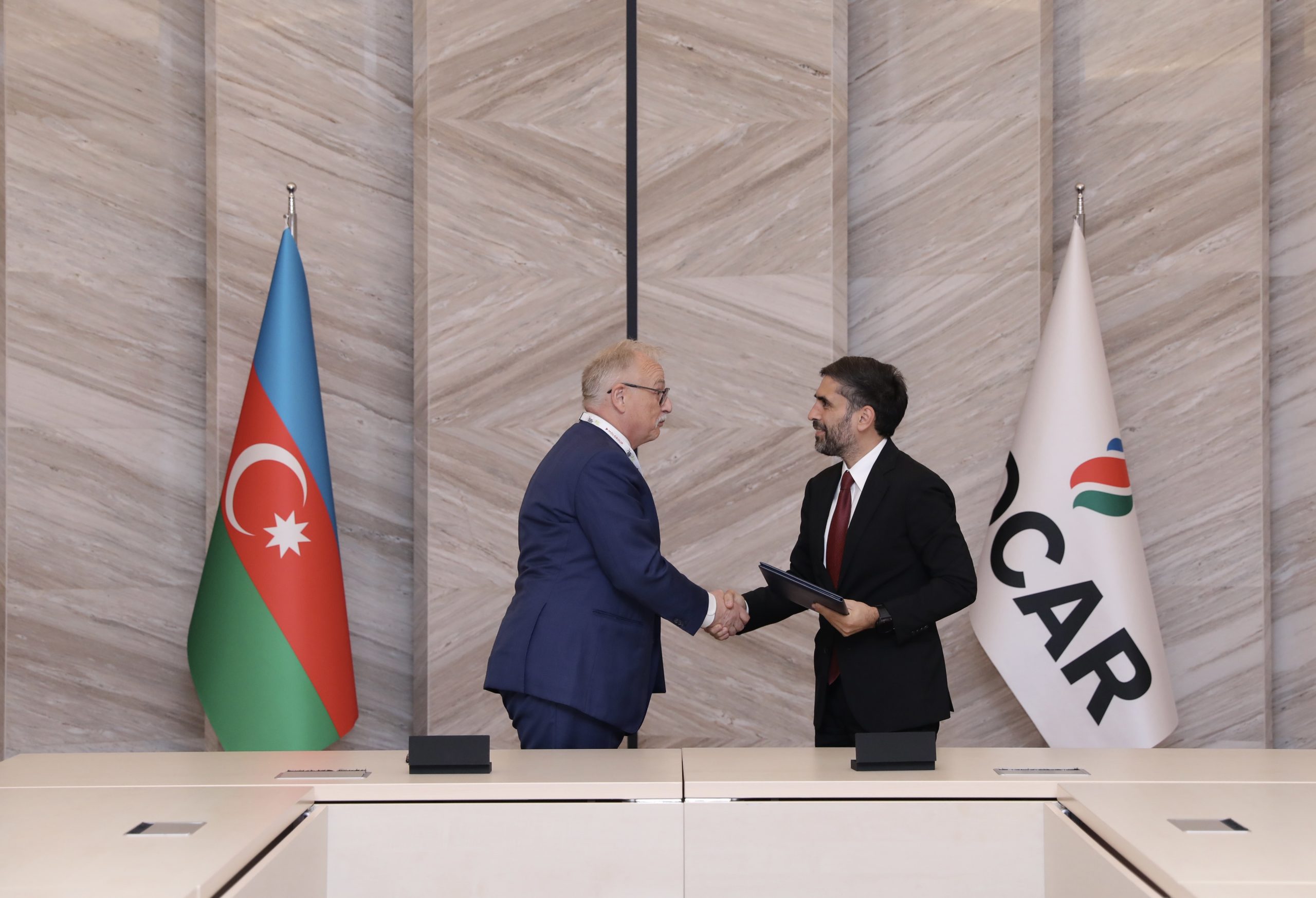
The global oil and gas landscape continues to demand strategic foresight, and MOL Group’s latest move in Azerbaijan exemplifies a long-term vision amidst prevailing market volatility. The Hungarian energy giant, in partnership with Azerbaijan’s state oil company SOCAR, has formally inked a comprehensive exploration, development, and production sharing agreement for the onshore Shamakhi-Gobustan region. This deal, with MOL taking a 65% operating interest, solidifies a preliminary understanding reached in June 2025 and significantly expands MOL’s upstream footprint in the Caspian region, marking a pivotal moment for both companies as they look to unlock new hydrocarbon potential in an underexplored basin.
Navigating a Volatile Market for Long-Term Gains
This substantial investment by MOL and SOCAR comes at a fascinating juncture for crude oil markets, highlighting a strategic commitment that transcends immediate price fluctuations. As of today, Brent crude trades at $91.87 per barrel, reflecting a notable 7.57% decline in intraday trading, with its range stretching from $86.08 to $98.97. Similarly, WTI crude sits at $84, down 7.86%, moving between $78.97 and $90.34. The downward pressure is part of a broader trend; Brent has shed $20.91, or 18.5%, from its $112.78 high just two weeks ago on March 30th. This current market softness, alongside a 4.85% drop in gasoline prices to $2.95 today, underscores the inherent volatility that upstream investors must navigate. Despite these short-term headwinds, MOL’s decision to deepen its commitment to Azerbaijani exploration signals a belief in the long-term fundamentals of oil and gas demand and the strategic value of diversified, secure energy supplies. This move is a classic example of an operator leveraging a potentially lower-cost environment for future resource capture, betting on a recovery and sustained demand in the years to come.
MOL’s Deepening Caspian Footprint and Strategic Rationale
MOL Group’s strategic expansion in Azerbaijan is a calculated move, building upon an already established and significant regional presence. The company initially entered Azerbaijan in 2020 through the acquisition of a stake in the prolific Azeri-Chirag-Gunashli (ACG) field, a cornerstone of its current production and reserves portfolio. Concurrently, MOL secured an effective interest in the Baku-Tbilisi-Ceyhan (BTC) pipeline, a critical artery for delivering crude to its Central and Eastern European refining system. The new Shamakhi-Gobustan onshore block further solidifies this footprint. As the operator with a 65% working interest, MOL is poised to leverage its technical expertise in reservoir management and production optimization within a region considered largely underexplored. The Shamakhi-Gobustan area offers considerable potential for new onshore discoveries, particularly with the application of modern seismic and drilling techniques. This partnership with SOCAR not only supports Azerbaijan’s continued hydrocarbon resource development but also aligns perfectly with MOL Group’s strategy of fostering long-term energy security and enhancing its international upstream portfolio diversification.
The Road Ahead: Exploration Timelines and Market Influences
The Shamakhi-Gobustan project unfolds with a clear, albeit phased, timeline. Following the formal agreement, the partners are set to commence seismic acquisition in early 2026, a critical first step to delineate potential hydrocarbon traps. Exploration drilling would then follow at a later stage, contingent on promising seismic results and necessary regulatory approvals. This forward-looking schedule positions the project within a dynamic global energy market, heavily influenced by upcoming events that could reshape the investment landscape. For instance, tomorrow, April 18th, marks a pivotal OPEC+ Ministerial Meeting. The outcome of this meeting, particularly regarding production quotas, will directly impact global supply and, consequently, crude oil price trajectories, influencing the economic viability of future production from projects like Shamakhi-Gobustan. Furthermore, the regular cadence of API Weekly Crude Inventory reports on April 21st and 28th, EIA Weekly Petroleum Status Reports on April 22nd and 29th, and the Baker Hughes Rig Count on April 24th and May 1st, will provide crucial insights into supply-demand balances and drilling activity, all of which inform long-term investment decisions for new upstream ventures.
Investor Sentiment and the 2026 Outlook
Our proprietary reader intent data reveals a consistent theme among investors: a keen interest in the future trajectory of crude oil prices. A prominent question this week centers on “what do you predict the price of oil per barrel will be by end of 2026?” This reflects the strategic challenge of making long-term commitments in a cyclical industry. MOL’s investment in Shamakhi-Gobustan, with exploration drilling slated for beyond early 2026, inherently represents a bullish long-term bet on future oil prices and sustained global demand. While current prices hover around $91.87 for Brent, a project with a multi-year development horizon is predicated on a belief that prices will remain robust enough to justify significant capital expenditure. Investors are also actively inquiring about “OPEC+ current production quotas,” underscoring the direct link between cartel policy and future price stability. The success of MOL’s venture will depend not only on geological potential but also on an international market shaped by these very factors. This deep-seated inquiry into 2026 price predictions suggests that investors view upstream deals like the Shamakhi-Gobustan agreement as indicators of industry confidence in the medium to long-term outlook for crude, even as short-term market volatility persists.


