Algeria’s Strategic Hydrocarbon Push: Midad Energy’s $5.4 Billion Bet and Broader Implications for Global Supply
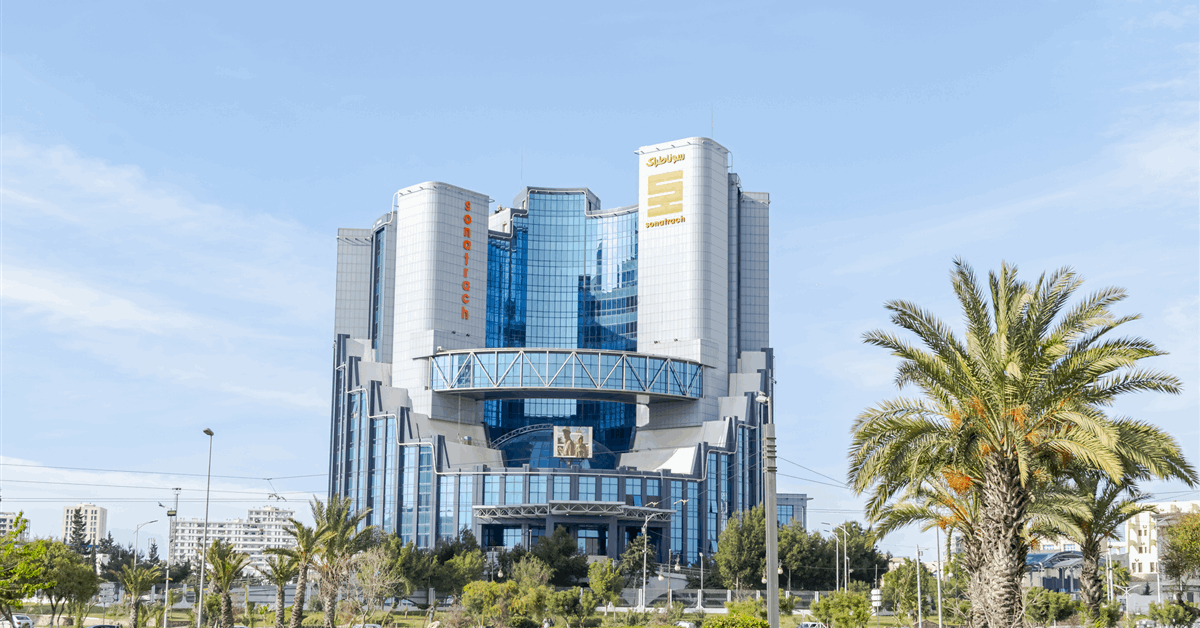
Algeria is rapidly positioning itself as a compelling frontier for oil and gas investment, underscored by Sonatrach’s recent $5.4 billion production sharing contract (PSC) with Midad Energy North Africa BV for the Illizi South area. This substantial commitment, along with a flurry of other international partnerships, signals a decisive pivot by the North African nation to unlock its vast hydrocarbon potential. For savvy investors tracking global supply dynamics and long-term energy security, these developments in Algeria are far more than mere headlines; they represent a significant opportunity to gain exposure to a resurgent producer with a clear strategy for growth and a welcoming stance towards foreign capital.
The Midad-Sonatrach Partnership: Unpacking the Illizi South Development
The 30-year PSC signed with Midad Energy, a Saudi company operating through its Netherlands-based subsidiary, is a cornerstone of Algeria’s renewed drive. Valued at an impressive $5.4 billion, this investment covers the full exploration and development cost for the Illizi South area, situated approximately 100 kilometers south of In Amenas. A significant portion, $288 million, is earmarked for the initial exploration phase, which is set to span seven years. The ambitious project targets an aggregate production of 993 million barrels of oil equivalent (MMboe) over its lifespan. This includes a substantial 125 billion cubic meters (4.41 trillion cubic feet) of gas designated for market sale, alongside 204 million barrels of liquids, comprising 103 million barrels of liquefied petroleum gas (LPG) and 101 million barrels of condensate. Such long-term, high-volume commitments are a powerful indicator of Midad Energy’s confidence in Algeria’s geological prospects and the favorable investment environment established by the country’s updated hydrocarbons law. Furthermore, Sonatrach has emphasized the integration of cutting-edge technological and digital solutions, alongside a prioritization of local content and subcontracting with national suppliers, ensuring that the economic benefits extend throughout the Algerian economy.
Algeria’s Broader Investment Offensive: A Magnet for International Capital
The Midad Energy deal is not an isolated event but rather a key piece in Algeria’s comprehensive strategy to revitalize its hydrocarbon sector. Just prior to this agreement, Sonatrach announced the signing of five additional hydrocarbon contracts stemming from the 2024 bidding round, the first under Algeria’s new Hydrocarbons Law No19-13. These partnerships demonstrate a broad international appeal, attracting major players from across the globe. QatarEnergy and France’s TotalEnergies SE secured the Ahara block in Illizi province, while China Petroleum and Chemical Corp (Sinopec) took Guern El Guessa II. Toual II went to Austria’s Zangas Hoch- und Tiefbau GmbH and Switzerland’s Filada AG, and Zerafa II was awarded to China’s Zhongman Petroleum and Natural Gas Group Corp Ltd. Italy’s Eni SpA and Thailand’s PTT Exploration and Production Public Co Ltd partnered for Reggane II. Collectively, these five contracts represent a minimum investment of $606 million for exploration activities over their 30-year terms, also including a seven-year exploration phase. This wave of foreign direct investment, totaling over $6 billion across these recent agreements, unequivocally signals investor confidence in Algeria’s substantial untapped potential and validates the attractiveness of the new Hydrocarbons Law No19-13, designed to streamline and incentivize international participation.
Market Realities and Investor Focus Amidst Supply Expansion
Against the backdrop of Algeria’s expanding production outlook, the broader crude oil market continues to exhibit significant volatility, a primary concern for our investor community. As of today, Brent crude trades at $90.38 per barrel, marking a notable decline of 9.07% within the day, with its price oscillating widely between $86.08 and $98.97. Similarly, WTI crude stands at $82.59, down 9.41% from its open, fluctuating between $78.97 and $90.34. This recent intraday volatility follows a more significant downward trend over the past two weeks, where Brent crude has shed approximately 19.9%, dropping from $112.78 on March 30th to its current level. Our proprietary reader intent data reveals a keen interest in these price movements, with many investors actively asking about the predicted price of oil per barrel by the end of 2026. While short-term fluctuations can be jarring, large-scale, long-term investments like the Midad deal offer a bullish counter-narrative, signaling confidence in sustained global demand that can absorb increased supply over time. The substantial gas component of Algeria’s new projects is also crucial, as natural gas continues to play a vital role in the global energy transition, providing a stable revenue stream independent of crude oil’s more volatile price swings.
Navigating Future Catalysts: OPEC+ and Algeria’s Evolving Role
Looking ahead, the immediate market focus will inevitably shift to a series of critical events. The upcoming OPEC+ Joint Ministerial Monitoring Committee (JMMC) Meeting on April 19th, swiftly followed by the full OPEC+ Ministerial Meeting on April 20th, will be paramount. Our proprietary data indicates that investors are closely monitoring these gatherings, particularly given frequent inquiries about current OPEC+ production quotas. Any adjustments to output policy from these meetings could significantly impact price trajectories in the short to medium term. Additionally, the regular API Weekly Crude Inventory reports (April 21st, 28th) and the EIA Weekly Petroleum Status Reports (April 22nd, 29th), alongside the Baker Hughes Rig Count releases (April 24th, May 1st), will provide crucial insights into immediate supply-demand balances within North America. While Algeria is an OPEC+ member, the long-term nature of these new production sharing contracts underscores its ambition to become a more significant and reliable global supplier. This increased output, even if phased in over years, will contribute to global supply stability, potentially influencing future OPEC+ discussions and diversifying non-OPEC+ supply sources. For investors, Algeria’s strategic push offers a compelling opportunity for long-term growth and diversification within an evolving global energy landscape, balancing short-term market volatility with the promise of future supply security.


