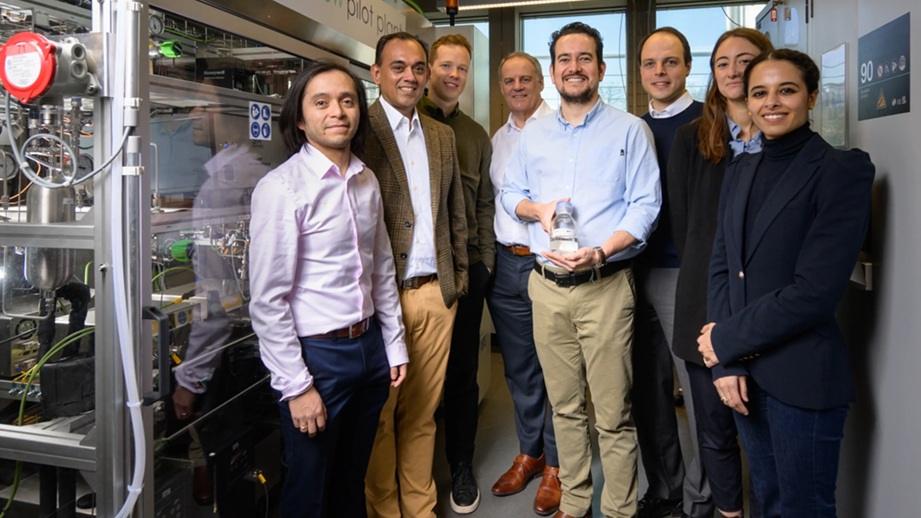
The aviation sector faces an undeniable imperative: decarbonization. While sustainable aviation fuel (SAF) is widely recognized as a critical pathway to achieving this, challenges around cost and feedstock availability have hampered its widespread adoption. This context makes the recent announcement of Metafuels’ $24 million Series A funding round particularly noteworthy for energy investors. The Zurich-based aviation technology startup is accelerating the commercialization of its synthetic sustainable aviation fuel (e-SAF) technology, which ingeniously converts green methanol into jet fuel. This investment underscores a growing investor appetite for innovative solutions that can truly scale, making e-SAF cost-competitive with conventional jet fuel and thereby reshaping the future of flight.
The e-SAF Investment Thesis: Bridging the Cost and Supply Gap
Metafuels’ approach directly confronts two of the most significant barriers to SAF proliferation: high production costs and feedstock constraints. Traditional SAF pathways often rely on waste oils and agricultural residues, resources with inherently limited supply and fluctuating costs. Metafuels, founded in 2021, sidesteps this challenge by developing technology to produce synthetic jet fuel from captured CO₂ and green hydrogen. This “methanol-to-jet” process offers a virtually limitless feedstock pool, ensuring long-term scalability that is essential for aviation-scale decarbonization.
The company’s promise of making e-SAF cost-competitive with fossil jet fuel over the long term is a game-changer. Historically, the premium on SAF has been a major deterrent for airlines. By developing a more efficient and cost-effective production process, Metafuels aims to eliminate this premium, making sustainable options economically viable without operational changes for carriers. The fresh capital injection will support the development of its methanol-to-jet demonstration plant in Switzerland and fund plans for a commercial-scale e-SAF facility at the Port of Rotterdam, where its “aerobrew” e-SAF product will see its initial industrial deployment. This concrete roadmap from pilot to commercial scale signals a mature and actionable investment opportunity in the burgeoning sustainable fuels market, capable of delivering on CEO Saurabh Kapoor’s vision for industrial scale and competitive cost.
Market Volatility Reinforces the Drive for Alternative Fuels
The urgency for scalable, cost-effective alternative fuels like e-SAF is further amplified by the inherent volatility of conventional energy markets. As of today, Brent Crude trades at $94.74, showing a robust gain of 4.77% on the day, while WTI Crude mirrors this upward movement at $91.68, climbing 4.87%. This daily rebound, however, follows a significant and sharp correction over the past two weeks, during which Brent plummeted from $118.35 on March 31st to $94.86 just yesterday, representing a staggering 19.8% contraction. Gasoline prices also reflect this dynamic, currently at $3.15, up 3.62% today.
For airlines, which see fuel as their largest operational expense, such dramatic price swings directly impact profitability and financial planning. The recent sharp decline in crude prices might offer temporary relief, but the underlying instability remains a significant risk. This environment strengthens the investment thesis for companies like Metafuels. Their technology, promising cost-competitive and feedstock-independent e-SAF, offers airlines a path to greater fuel price stability and reduced exposure to geopolitical and supply chain disruptions inherent in fossil fuel markets. Investors are increasingly looking for assets that provide a hedge against this volatility, making firms pioneering next-generation fuels particularly attractive.
Investor Focus: Navigating Long-Term Oil Price Trajectories and Decarbonization
The questions posed by active investors often reveal the core concerns shaping capital allocation in the energy sector. We’ve observed a clear focus this week on the future direction of crude prices, with queries like “what do you predict the price of oil per barrel will be by end of 2026?” dominating discussions. While the immediate “is wti going up or down” is always relevant for short-term trading, the persistent interest in the year-end outlook points to a deeper strategic consideration among investors: understanding the long-term trajectory of fossil fuels in a decarbonizing world.
This long-term perspective is precisely where the Metafuels investment fits strategically. While traditional oil and gas will undoubtedly play a crucial role for decades, investors are keenly aware of the increasing regulatory pressures, carbon pricing mechanisms, and corporate sustainability mandates pushing for an energy transition. Investing in e-SAF technology, particularly one like Metafuels’ that addresses scalability and cost, is a direct response to this secular shift. It’s a bet on the inevitable growth of the sustainable aviation market, which, despite SAF accounting for only 0.6% of total aviation fuel consumption in 2025, is poised for exponential growth. The participation of lead investor UVC Partners, alongside existing backers like Energy Impact Partners (EIP), Contrarian Ventures, RockCreek, Verve Ventures, and Fortescue Ventures, signifies a collective conviction in the long-term value creation potential of such disruptive clean energy solutions, as highlighted by Johannes von Borries of UVC Partners regarding the technology’s potential to drive down SAF costs.
Upcoming Events and the Accelerating Energy Transition
The next two weeks present several key energy events that, while primarily focused on conventional oil and gas, will indirectly shape the investment landscape for sustainable alternatives. Tomorrow, April 21st, the OPEC+ JMMC Meeting could yield decisions on crude oil production levels, directly influencing global supply and, consequently, crude prices. A decision to maintain or even cut supply could push prices higher, further enhancing the economic competitiveness of e-SAF compared to fossil jet fuel.
Throughout the period, the EIA Weekly Petroleum Status Reports on April 22nd and April 29th, alongside the Baker Hughes Rig Counts on April 24th and May 1st, will offer crucial insights into U.S. inventory levels, demand trends, and drilling activity. These reports are vital indicators of the near-term supply-demand balance and potential price pressures. Looking further ahead, the EIA Short-Term Energy Outlook on May 2nd will provide updated forecasts for crude oil and natural gas prices, offering a more concrete view on the economic headwinds or tailwinds for alternative fuels. If these outlooks project sustained higher conventional fuel prices or tightening supply, the strategic appeal of Metafuels’ scalable e-SAF technology becomes even more compelling. These macro-level dynamics reinforce the imperative for innovation in sustainable fuels, making investments like the $24 million secured by Metafuels not just environmentally responsible, but also economically prudent for investors seeking long-term growth in a transforming energy sector.


