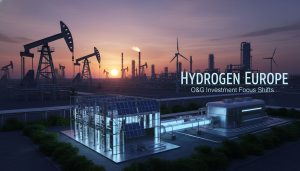
The energy investment landscape is in constant flux, driven by technological advancements, geopolitical shifts, and an accelerating global push for decarbonization. Against this backdrop, a significant milestone has been achieved in Europe’s green hydrogen sector: the final electrolysers for a 200MW industrial project in Lingen, Germany, have been successfully shipped. This development is not merely a logistical update; it represents a tangible step forward in de-risking and scaling a crucial component of the future energy mix, carrying profound implications for investors in both traditional oil and gas and the burgeoning clean energy space.
The Green Hydrogen Imperative: A New Frontier for Energy Investors
The successful dispatch of the final TRIDENT electrolyser stacks from ITM Power’s UK factory to RWE’s GET H2 Nukleus project in Lingen marks a pivotal moment for Europe’s energy transition. This 200MW facility, configured with two 100MW production lines, is set to become one of the largest electrolysis plants globally once fully operational. For investors, this signals a maturation in the green hydrogen sector, demonstrating that large-scale, complex projects can move from planning to execution with efficiency. The “on-time” delivery underscores improving supply chain reliability and manufacturing capabilities for critical clean energy infrastructure. As global industries seek viable pathways to reduce carbon footprints, projects like Lingen provide tangible proof of concept, opening new avenues for capital deployment in sustainable energy solutions and potentially diversifying portfolios away from pure fossil fuel exposure.
Market Realities: Oil Price Dynamics and Investment Outlook
While green hydrogen projects gain momentum, traditional energy markets continue to exhibit their characteristic volatility. As of today, Brent Crude trades at $93.31, holding steady with a marginal 0.08% increase within a day range of $92.57 to $94.21. WTI Crude mirrors this stability, currently priced at $89.70, up 0.03% from a day range of $88.76 to $90.71. However, a look at the past fortnight reveals a more significant trend: Brent has seen a notable decline of $7.07, or approximately 7%, from $101.16 on April 1st to $94.09 on April 21st. This downward pressure, even as gasoline prices hover around $3.12, impacts the economic calculus for all energy investments. A sustained dip in crude prices can shift the competitive landscape, potentially extending the payback period for traditional upstream projects while simultaneously highlighting the long-term, strategic value of carbon-neutral alternatives like green hydrogen, which offer insulation from fossil fuel price swings.
Navigating Volatility: Investor Sentiment and Strategic Implications
Our proprietary reader intent data reveals a keen investor focus on the near-term trajectory of crude prices, with frequent inquiries such as “is WTI going up or down?” and predictions for “the price of oil per barrel by end of 2026.” This immediate concern over market direction underscores the ongoing challenge for energy investors: balancing short-term commodity price fluctuations with long-term strategic positioning. The completion of the Lingen electrolyser delivery signals a crucial strategic move by energy majors like RWE, demonstrating an active commitment to diversifying revenue streams and hedging against future carbon costs. For investors holding traditional oil and gas assets, understanding these large-scale green energy investments becomes critical. It’s not just about the potential for new growth areas; it’s also about how traditional energy companies are adapting, mitigating future regulatory risks, and ensuring long-term relevance in an evolving energy ecosystem. Companies that successfully integrate such projects into their portfolios are likely to be viewed more favorably by investors seeking resilient, future-proofed investments.
Forward View: Upcoming Events Shaping the Energy Horizon
The next two weeks promise a flurry of critical data releases that will further shape the investment thesis for both traditional and alternative energy sources. Investors should mark their calendars for the EIA Weekly Petroleum Status Reports on April 22nd, April 29th, and May 6th, which will offer crucial insights into U.S. crude oil and product inventories, refining activity, and demand indicators. The Baker Hughes Rig Counts on April 24th and May 1st will provide a real-time pulse on upstream drilling activity, signaling future supply trends. Additionally, the API Weekly Crude Inventory reports on April 28th and May 5th offer early indications ahead of the official EIA data. Perhaps most impactful will be the EIA Short-Term Energy Outlook on May 2nd, which will present updated forecasts for global and domestic energy markets. These events collectively provide the backdrop against which green hydrogen projects like Lingen are evaluated. Strong demand signals for traditional fuels might ease the immediate pressure for energy transition, while signs of weakening demand or aggressive policy shifts could accelerate investment in green alternatives, making these upcoming data points essential for informed decision-making.
Scaling the Future: De-risking Green Hydrogen Investment
The successful shipment of electrolysers for the 200MW GET H2 Nukleus project is more than just a logistical achievement; it signifies a vital step in de-risking large-scale green hydrogen investments. Historically, nascent technologies face significant challenges in scaling production and deployment. The on-time delivery and installation of such substantial capacity by ITM Power and RWE provides tangible evidence of improving technological maturity, supply chain reliability, and project execution capabilities within the green hydrogen sector. For investors, this translates to reduced development risk and enhanced confidence in the viability of future projects. As the Lingen facility moves towards full operation, it will generate crucial data on operational efficiency, cost performance, and integration with existing energy infrastructure. These learnings will be invaluable for subsequent green hydrogen ventures, fostering an environment where capital can be deployed with greater certainty. The long-term investment horizon required for such projects demands a clear trajectory of continuous improvement and demonstrated success, and this milestone firmly places green hydrogen on that path.