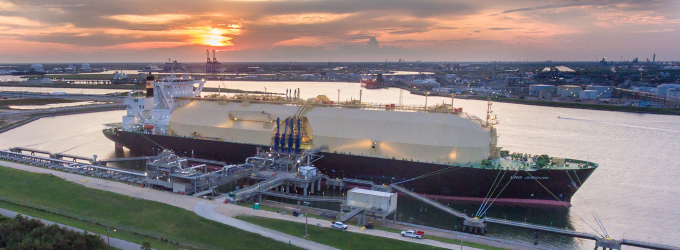
The recent announcement of McDermott securing a Master Services Agreement (MSA) with Monkey Island LNG for its ambitious Louisiana export facility marks a pivotal moment for the burgeoning North American liquefied natural gas (LNG) sector. This agreement, focusing on front-end engineering and planning services, sets the stage for a monumental $25 billion infrastructure investment across two phases, positioning Monkey Island LNG among the largest private energy developments in the region. For investors tracking the long-term energy transition and global gas demand, McDermott’s win underscores the strategic importance of U.S. LNG capacity and highlights the critical role of specialized engineering and construction firms in bringing these mega-projects to fruition.
Strategic Imperative: Fueling Global Demand from the U.S. Gulf Coast
The global energy landscape continues to grapple with the dual challenges of energy security and the transition to lower-carbon fuels. In this context, U.S. LNG exports have emerged as a crucial bridge, offering reliable supply to energy-hungry markets worldwide. Monkey Island LNG’s planned facility in Cameron Parish, Louisiana, is poised to significantly bolster this supply, with Phase 1 alone targeting a substantial 15.6 million metric tons per annum (MMtpa) across three LNG trains, each with a capacity of 5.2 MMtpa. Future expansion plans envision two additional trains, elevating the total capacity to an impressive 26 MMtpa. This scale of development reflects a robust conviction in sustained international demand for natural gas, driven by industrial growth, power generation needs, and a strategic shift away from higher-emitting fuels in many nations. Investors are keenly observing how new supply additions like Monkey Island LNG will reshape global gas trade flows and pricing dynamics, especially given the ongoing geopolitical pressures that underscore the value of diverse and secure energy sources.
McDermott’s Differentiated Approach and Project Execution Edge
McDermott’s selection for this critical MSA is a testament to its specialized capabilities in large-scale LNG infrastructure. The company’s proposed compact, modular LNG train design stands out, promising to deliver up to 60% more LNG production per acre compared to similar projects. This efficiency is achieved through the strategic deployment of LNG mega-modules, which significantly reduce the required site footprint, thereby driving down overall project costs and mitigating execution risks. Furthermore, McDermott’s integrated delivery model, encompassing self-perform construction capabilities and a vast network of company-owned fabrication yards globally, offers a compelling value proposition. This comprehensive approach minimizes reliance on external contractors, enhances quality control, and streamlines the construction timeline — all factors critical for a project of this magnitude. The project will leverage the proven ConocoPhillips Optimized Cascade® Process, further de-risking the technological aspect of the development. For McDermott shareholders, securing this agreement not only adds a significant project to its engineering backlog but also reinforces its leadership in a highly competitive market for complex energy infrastructure.
Navigating Market Volatility Amidst Long-Term Vision
While the long-term outlook for LNG remains robust, the broader energy market continues to exhibit a degree of volatility that can influence investor sentiment. As of today, Brent crude trades at $98.44 per barrel, reflecting a modest daily decline of 0.96%. This current snapshot comes on the heels of a more substantial market correction, with Brent prices having fallen by approximately 12.4% over the past two weeks, from $112.57 on March 27th to $98.57 on April 16th. Such fluctuations in crude prices, which often dominate headlines and investor questions, underscore the importance of distinguishing between short-term market noise and the long-term investment thesis for large-scale infrastructure projects like Monkey Island LNG. While crude price movements can indirectly affect the broader energy investment climate, LNG projects are typically underpinned by long-term sales and purchase agreements, providing a more stable revenue stream over their multi-decade operational lifespans. Investors are increasingly seeking assets that offer resilience against short-term commodity price swings, and a well-contracted LNG facility can provide such a hedge within a diversified energy portfolio.
Upcoming Catalysts and Investor Focus
The road ahead for Monkey Island LNG involves several critical milestones that investors should closely monitor. The current MSA is expected to transition into a final Engineering, Procurement, and Construction (EPC) contract, aligning with the project’s financing activities. This shift will mark a significant de-risking event and provide greater clarity on project economics. Looking ahead, engineering and permitting activities are slated to commence in 2026, with the ambitious target of achieving first LNG production in the early 2030s. Beyond project-specific developments, broader market events will also influence the investment landscape. Our proprietary intent data indicates that investors are keenly focused on global supply-side dynamics, frequently asking about “OPEC+ current production quotas” and the “current Brent crude price.” This heightened attention makes the upcoming OPEC+ Joint Ministerial Monitoring Committee (JMMC) meeting on April 18th, followed by the Full Ministerial meeting on April 20th, particularly relevant. Decisions from these gatherings could impact global oil supply, thereby influencing broader energy market sentiment and indirectly affecting the appetite for long-term gas investments. Additionally, weekly data releases such as the API and EIA crude inventory reports provide ongoing pulses on supply-demand balances, keeping investors informed on the immediate market trajectory as they evaluate long-term opportunities in the expanding LNG sector.


