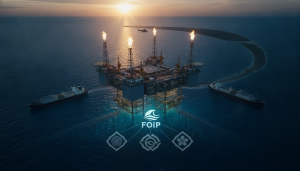
The vast expanse of the South China Sea, particularly the area Manila designates as the West Philippine Sea (WPS), continues to command global attention as a significant geopolitical hotspot. For astute investors eyeing the upstream oil and gas sector, understanding the evolving political landscape within the Philippines is paramount. The current administration, led by President Ferdinand Marcos Jr., has distinctly recalibrated the nation’s strategy regarding its maritime claims, signaling an unwavering commitment to asserting sovereignty and, by extension, its inherent rights to explore and develop critical energy resources within its exclusive economic zone.
This policy pivot marks a considerable departure from the more accommodating posture of the preceding government. Following years characterized by ambiguous signals and unfulfilled promises concerning the WPS, President Marcos Jr. has adopted a clear and assertive stance. His objective is twofold: to robustly safeguard the nation’s territorial integrity and to unlock the long-dormant energy prospects of this resource-rich maritime domain. This renewed governmental resolve holds particular significance for the energy industry, potentially clearing the path for future exploration licenses and strategic partnerships, albeit within a highly complex geopolitical environment.
Geopolitical Dynamics and Untapped Energy Wealth
The strategic importance of the West Philippine Sea for regional and national energy security cannot be overstated. Geological assessments indicate the presence of substantial reserves of both oil and natural gas beneath these waters. These resources are not merely commodities; they are foundational to the Philippines’ aspirations for energy independence and sustained economic expansion. However, these lucrative deposits are inextricably linked to overlapping territorial claims, predominantly with Beijing, thereby rendering any proposed exploration or development venture inherently susceptible to significant geopolitical risk.
A retrospective analysis reveals a period marked by potent rhetoric that ultimately failed to translate into substantive policy or action. During the 2016 Philippine presidential campaign, a prominent contender, Rodrigo Duterte, famously pledged to personally champion the nation’s claims, even suggesting a dramatic jet ski expedition to plant the Philippine flag in disputed territories should China resist. This audacious promise resonated deeply with a populace increasingly frustrated by perceived infringements on their traditional fishing grounds and sovereign entitlements.
Shortly after Duterte assumed office in June 2016, the Philippines secured a landmark legal triumph. In July 2016, the Permanent Court of Arbitration in The Hague delivered a definitive ruling, invalidating China’s expansive “nine-dash line” claims and unequivocally affirming the Philippines’ sovereign rights within the West Philippine Sea. This international legal victory was widely anticipated to significantly bolster Manila’s negotiating position. Yet, contrary to his electoral promises, the then-president largely downplayed the arbitral award throughout his six-year tenure, dismissing it as “just paper” and characterizing his earlier vows as mere “bravado” or campaign humor. This approach effectively kept the door to energy exploration in the WPS closed to international investors, who demand legal certainty and robust state backing before committing substantial capital.
Marcos Jr.’s Resolute Stance on Resource Rights
The current administration has unequivocally signaled a fresh direction. President Marcos Jr. has articulated a clear, non-negotiable position regarding the nation’s sovereign rights and economic entitlements in the West Philippine Sea. His declarative statement in December 2022 – “We are not surrendering a single square inch of our territory” – serves as a powerful testament to this resolve. This firm stance is a critical factor for energy investors, as it provides a foundation of political will that was notably absent under the previous leadership.
Significantly, President Marcos Jr. has directed key government bodies, including the Department of Energy (DOE) and the Department of Foreign Affairs (DFA), to actively explore viable avenues for resuming energy exploration activities within the WPS. He has also underscored the potential for joint exploration initiatives, implicitly with nations other than China, thereby diversifying the risk and enhancing the strategic viability of such projects. Energy Secretary Raphael Lotilla has echoed this sentiment, asserting that the Philippines’ rights in the area are “indisputable” and that “we continue to assert them.” Lotilla has further indicated the DOE’s openness to exploring joint projects with “willing parties,” signaling a proactive approach to resource monetization.
The Prize: Critical Energy Reserves and National Imperative
At the heart of this geopolitical chess match lies Service Contract 72 (SC 72), situated at Reed Bank (also known as Recto Bank) within the West Philippine Sea. This concession, operated by Forum Energy, a subsidiary of the UK-listed Philex Petroleum, holds immense potential. Exploration activities at SC 72 have been under a “force majeure” suspension since 2014, a direct consequence of heightened geopolitical tensions. However, the estimated reserves are staggering: approximately 165 million barrels of oil and a colossal 3.4 trillion cubic feet (TCF) of natural gas. The natural gas component alone is valued at an estimated $20 billion, representing a transformative asset for the Philippine economy.
The urgency to develop these resources is underscored by the Philippines’ current energy landscape. The nation imports an astounding 98% of its petroleum requirements, 40% of its coal, and 20% of the liquefied natural gas (LNG) crucial for its power generation sector. The Malampaya gas field, located off Palawan, currently accounts for a vital 20% of the Philippines’ power supply, but its reserves are steadily depleting. The successful development of SC 72 is therefore not merely an economic opportunity; it is an indispensable component of the nation’s long-term energy security strategy.
Reviving Suspended Projects and Investor Calculus
The DOE is currently undertaking a comprehensive review of the “force majeure” status on SC 72. This re-evaluation is a critical step towards potentially lifting the suspension and allowing exploration to resume. For investors, the re-activation of SC 72 represents a tangible opportunity to engage with a project holding world-class reserves in a nation actively seeking to bolster its domestic energy supply.
However, the investment landscape is not without its formidable challenges. China’s persistent and assertive presence, manifested through its coast guard and maritime militia, continues to pose a significant operational and security risk. Energy companies considering involvement in the WPS must carefully weigh not only the financial and operational risks but also the potential for reputational exposure. Any venture into this contested area necessitates robust state protection and a clear, consistently applied regulatory framework. The ability of Manila to provide such assurances will be a key determinant for attracting significant foreign direct investment.
Outlook and the Investment Horizon
The Marcos Jr. administration’s assertive posture is a game-changer for the Philippines’ energy future and for investors willing to navigate complex geopolitical terrain. While the risks remain high due to ongoing territorial disputes, the potential rewards are equally substantial. The clear political will from Manila to assert its rights and pursue resource development could pave the way for new exploration licenses and partnerships in the coming years. For oil and gas investors, monitoring the evolving diplomatic efforts, security guarantees, and regulatory developments will be crucial. The Philippines’ long-term energy security, and indeed a significant portion of its economic prosperity, now hinges on its ability to prudently and decisively unlock the immense hydrocarbon potential of the West Philippine Sea.