MAN’s Public Charging Network Launch Signals Accelerating EV Truck Transition
The commercial vehicle sector is witnessing a pivotal shift, a transformation with profound implications for energy markets and investment portfolios. In a significant move, European truck manufacturer MAN has officially launched its comprehensive public charging service, “Charge&Go,” for its electric truck (eTruck) fleet drivers. This initiative marks a critical step in building the necessary infrastructure to support the burgeoning electric heavy-duty transport market across Europe, a development closely watched by investors tracking the energy transition and its impact on traditional fuel demand.
The “Charge&Go” system is designed to streamline the charging experience for MAN eTruck operators, addressing key logistical challenges that have historically hindered the widespread adoption of electric commercial vehicles. Currently, the service provides access to approximately 650 dedicated eTruck-standard charging locations across the continent. MAN has ambitious plans to aggressively expand this network, targeting around 1,000 eTruck-ready locations by the close of the current year. This rapid expansion underscores the urgency and commitment behind electrifying commercial transport fleets.
Seamless Charging and Fleet Management Solutions
At its core, “Charge&Go” offers unparalleled convenience. Drivers utilize a digital map interface, integrated directly into the MAN in-vehicle display or accessible via the MAN DriverApp, to effortlessly locate compatible charging points. Critically, these points adhere to the “MAN eTruck ready” standard, ensuring they accommodate the specific maneuverability, height, and weight requirements of heavy-duty trucks. The system also identifies “eTruck limited” locations, which may have certain restrictions like vehicle length, providing drivers with comprehensive information upfront.
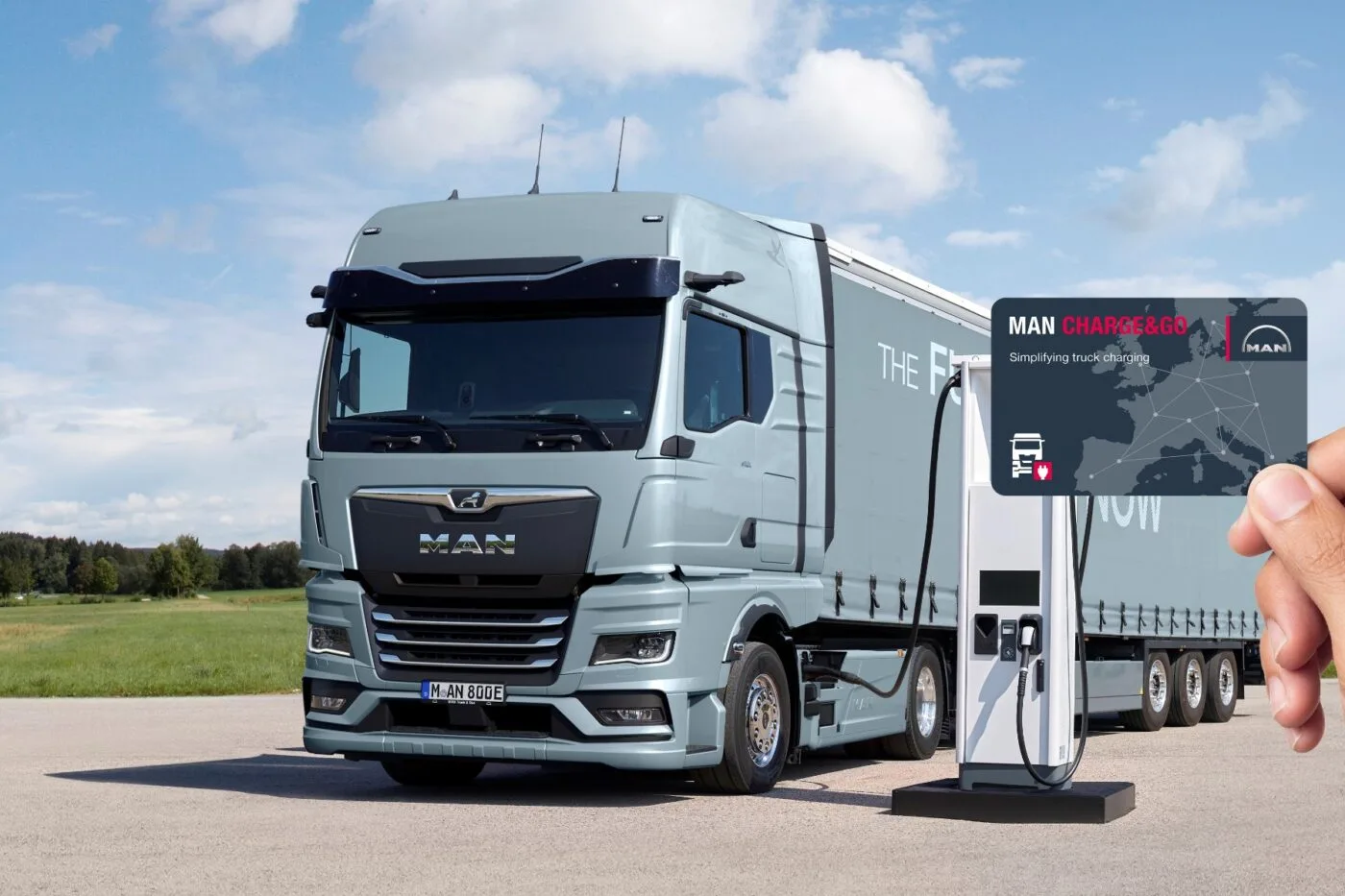
Beyond location finding, the service simplifies the payment process. A dedicated charging card allows drivers to authenticate at any participating station, with all payment transactions handled seamlessly in the background. For fleet managers, this translates into operational efficiency; consolidated invoices are issued monthly, offering a transparent overview of all charging activities and associated costs across their entire electric fleet. This level of financial transparency and administrative ease is a crucial incentive for businesses considering the transition to electric heavy-duty transport.
Furthermore, the utility of the MAN charging card extends well beyond its proprietary network. It is accepted at an impressive 15,000 additional public charging locations throughout Europe, significantly expanding the operational range and flexibility for eTruck drivers. This broad interoperability is vital for long-haul logistics, mitigating range anxiety and ensuring that electric trucks can operate effectively across diverse geographies.
Strategic Infrastructure Development and Market Traction
MAN’s expansion strategy is not solely reliant on third-party networks. The company is actively investing in its own infrastructure, including the development of approximately 170 dedicated truck charging parks in collaboration with energy giant E.ON. The inaugural site for this partnership commenced operations in September 2024 at a MAN service center in Berlin-Wildau, serving as a blueprint for future developments. These strategically located charging parks are critical for establishing reliable, high-power charging hubs necessary for commercial fleet operations.
The market response to MAN’s electric offerings has been robust, signaling strong confidence in the commercial EV segment. The company recently disclosed it has received approximately 2,800 orders and inquiries for its eTrucks from external customers. This substantial demand underscores the growing industry appetite for sustainable transport solutions and the increasing viability of electric heavy-duty vehicles.
Internally, MAN is also accelerating its own fleet electrification. Last month, the manufacturer initiated a tender process to integrate battery-electric trucks into its logistics operations, starting with one of 40 planned internal transport routes. This commitment to electrifying its own supply chain not only demonstrates faith in its product but also serves as a practical, real-world testing ground for further refinements and efficiencies.
Implications for Oil & Gas Investors
For investors deeply entrenched in the oil and gas sector, these developments from MAN present both challenges and evolving opportunities. The rapid expansion of electric heavy-duty vehicle infrastructure and the notable increase in eTruck adoption directly impact future diesel demand forecasts. As more commercial fleets transition to electric powertrains, the long-term consumption of traditional fossil fuels for road transport will inevitably see a decline. This trend necessitates a strategic re-evaluation of investment positions in refining, distribution, and upstream production.
However, the energy transition also opens new avenues for investment. Companies pivoting towards renewable energy generation, smart grid technologies, and advanced charging infrastructure stand to benefit significantly. The capital deployed in building out networks like MAN’s “Charge&Go” and its partnership with E.ON highlights a burgeoning market for energy services and infrastructure. Investors should consider companies involved in battery technology, charging hardware manufacturing, energy management software, and utility providers that are actively supporting the electrification of transportation.
The accelerating pace of commercial vehicle electrification, exemplified by MAN’s strategic moves, reinforces the broader global push for decarbonization. While it signals headwinds for certain segments of the oil and gas industry, it simultaneously illuminates substantial growth potential in the evolving energy landscape. Astute oil and gas investors are increasingly looking at diversified energy portfolios, recognizing that the future of fuel markets will be shaped by a mix of traditional resources and innovative electric solutions.