Malaysia Charts New Energy Course: A Deep Dive into the Green Hydrogen Hub
Malaysia has taken a decisive step into the future of energy, launching a Hybrid Hydro Floating Solar (HHFS) and Green Hydrogen Hub in Terengganu. This landmark initiative, a collaborative effort between national energy giants Petroliam Nasional Berhad (Petronas) and Tenaga Nasional Bhd. (TNB), signals a significant strategic pivot, aligning Malaysia with global decarbonization goals while positioning the nation as a regional leader in green energy. For astute investors, this development represents a tangible long-term play, blending traditional energy expertise with cutting-edge sustainable technologies, even as the immediate crude market navigates its own turbulent waters.
The Strategic Imperative: Building a Comprehensive Green Value Chain
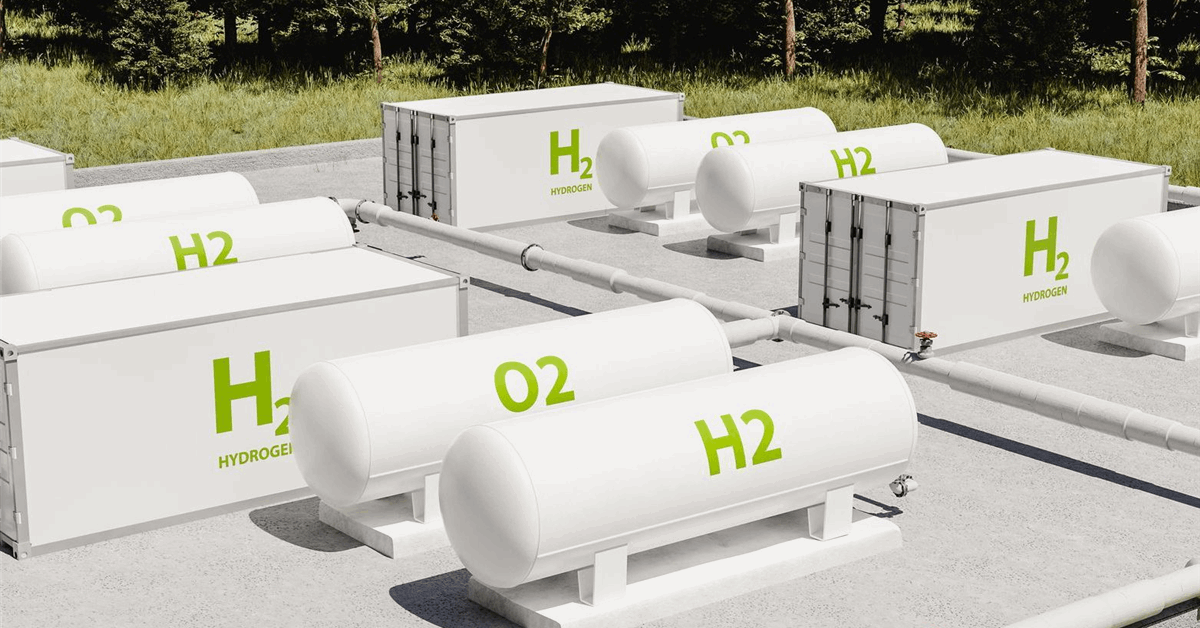
The Terengganu Green Hydrogen Hub is far more than an isolated project; it’s the cornerstone of a comprehensive, end-to-end green energy value chain. At its heart lies the continuous renewable energy generation from facilities like the Kenyir HHFS, a partnership between TNB Genco Sdn. Bhd. and state investment arm Terengganu Inc. This renewable power will fuel green hydrogen production, with plans to extend into high-value derivatives such as green methanol and green ammonia. Crucially, Petronas is leveraging its existing infrastructure in Kertih, integrating a planned hydrogen electrolyzer, a derivatives plant, and vital carbon capture, utilization, and storage (CCUS) facilities. TNB, for its part, is enhancing grid infrastructure to not only support Malaysia’s domestic energy transition but also facilitate ambitious regional clean energy trade. This integrated approach, dubbed the first project of its kind and scale within the Kenyir-Kertih Corridor, underscores Malaysia’s commitment to becoming a regional green energy hub, fostering technological transfer and local talent development. It provides Petronas, a traditional oil and gas behemoth, a critical pathway to diversify its revenue streams and future-proof its operations against evolving global energy demands.
Green Investments Amidst Crude Market Volatility
This bold move by Malaysia comes at a time when the global crude market is experiencing considerable volatility. As of today, Brent crude trades at $90.38, marking a significant 9.07% decline within the day, with its range fluctuating between $86.08 and $98.97. Similarly, WTI crude has seen a substantial drop, currently at $82.59, down 9.41%, having traded between $78.97 and $90.34. Looking at the broader trend, Brent has fallen sharply by $20.91, or 18.5%, from $112.78 on March 30th to $91.87 just yesterday. This sharp correction, likely influenced by broader macroeconomic concerns and shifting supply-demand perceptions, highlights the inherent risks in purely hydrocarbon-centric portfolios. For investors, Malaysia’s green hydrogen initiative offers a compelling counter-narrative: a strategic investment in long-term energy security and decarbonization that, while requiring significant capital, offers a degree of insulation from the short-term gyrations of the fossil fuel market. It underscores the critical need for integrated energy companies to evolve, balancing traditional revenue generators with forward-looking sustainable ventures.
Investor Sentiment: Seeking Clarity Amidst Transition
Our proprietary reader intent data reveals a clear and consistent focus among investors on the future trajectory of the energy market. A dominant theme this week centers on forward oil price predictions, with many asking “what do you predict the price of oil per barrel will be by end of 2026?” This illustrates a palpable desire for clarity on long-term commodity outlooks, which directly impacts the profitability and investment capacity of traditional oil and gas players. Furthermore, questions like “What are OPEC+ current production quotas?” highlight the ongoing importance of supply-side dynamics in shaping market expectations. In this context, Malaysia’s strategic shift offers a crucial diversification pathway. While the profitability of green hydrogen projects is still maturing, they represent a fundamental answer to the long-term energy transition question that increasingly weighs on investor minds. Investments in renewable energy and green hydrogen by national champions like Petronas and TNB provide a tangible response to ESG pressures and future energy demand scenarios, offering a hedge against the eventual plateauing or decline of fossil fuel demand, irrespective of short-term crude price fluctuations.
Navigating the Future: Upcoming Catalysts and the Green Horizon
The coming weeks are packed with events that will shape the near-term energy landscape, providing critical context for long-term strategic plays like Malaysia’s green hub. The highly anticipated OPEC+ Joint Ministerial Monitoring Committee (JMMC) meeting on April 18th, followed by the full Ministerial meeting on April 19th, will be pivotal in determining global crude supply policy. Any decisions on production quotas will directly influence the short-to-medium term crude price environment, impacting the financial health of traditional oil and gas producers, including those like Petronas who are concurrently investing heavily in green initiatives. Beyond OPEC+, we anticipate key insights from the API Weekly Crude Inventory reports on April 21st and 28th, alongside the EIA Weekly Petroleum Status Reports on April 22nd and 29th. These data points will provide granular detail on U.S. supply and demand, offering a snapshot of the world’s largest consumer market. Additionally, the Baker Hughes Rig Counts on April 24th and May 1st will indicate the health of upstream investment activity. While these events primarily focus on the conventional energy sector, their outcomes are critical. A stable and profitable traditional energy sector provides the necessary capital and operational expertise for companies like Petronas and TNB to fund and execute ambitious green transition projects, making the success of Malaysia’s Green Hydrogen Hub intricately linked to the broader, often volatile, energy ecosystem.


