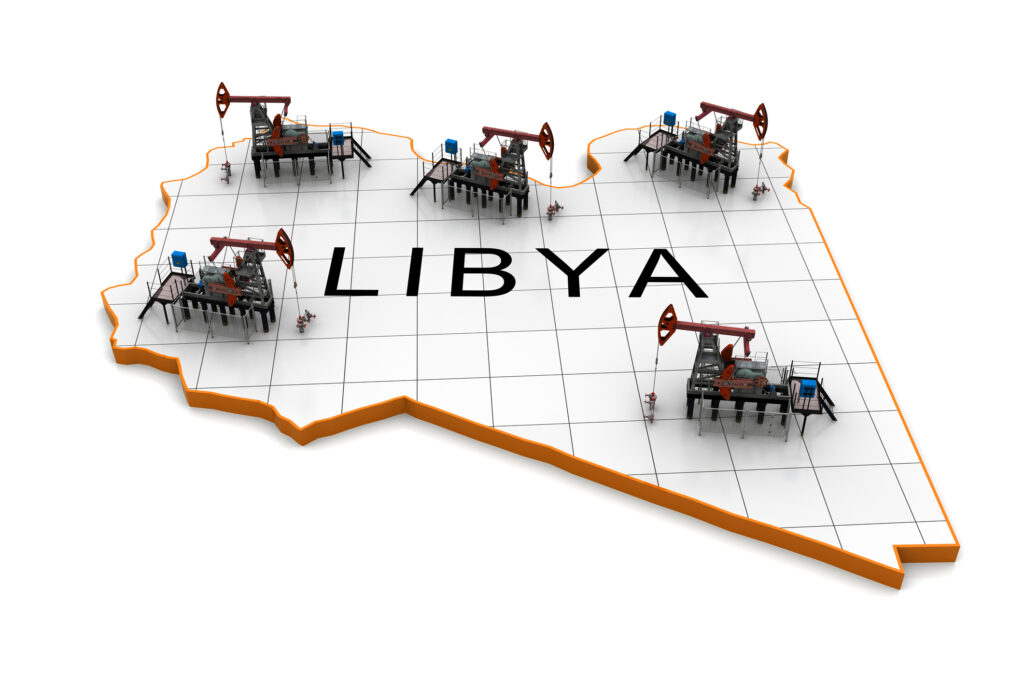
Libya, a nation boasting Africa’s most substantial proven oil reserves, is embarking on a pivotal journey to revitalize its energy sector, launching its first major exploration tender since the 2011 conflict. This strategic move aims to attract significant international investment, with global energy titans like Chevron Corp. and TotalEnergies SE actively vying for new offshore and onshore blocks. The initiative signals a clear intent from the National Oil Corp (NOC) to dramatically elevate the country’s crude production to unprecedented levels, presenting a high-stakes, high-reward proposition for savvy oil and gas investors.
Global Majors Target Libyan Oil Revival
The highly anticipated tender has drawn interest from a formidable roster of international energy powerhouses. Alongside Chevron and TotalEnergies, European giant Eni SpA and American titan Exxon Mobil Corp. are among an impressive 37 companies that have formally expressed interest in the 22 available blocks. Massoud Seliman, Chairman of the National Oil Corp, confirmed these developments from Tripoli, highlighting the broad appeal of Libya’s untapped hydrocarbon potential. He noted that “almost all well-known international companies” are actively competing for these coveted exploration rights, with final contracts slated for signing by the close of 2025.
The re-engagement of major foreign firms in Libyan exploration marks a watershed moment for the North African nation. For over a decade, political fragmentation and intermittent violence have severely hampered its ability to fully capitalize on its immense oil wealth. Infrastructure has suffered from neglect and damage, leading to production levels significantly below its historical capacity. Despite these challenges, the renewed interest from global players underscores a calculated bet on Libya’s long-term stability and inherent resource richness.
Ambitious Production Targets and Strategic Investment
Libyan authorities have set an ambitious target: to achieve a daily oil output of 2 million barrels before the end of the decade. This aggressive goal would not only restore but significantly surpass the country’s previous peak of 1.75 million barrels per day, recorded in 2006 during Muammar Qaddafi’s tenure. Currently, Libya’s production stands at approximately 1.4 million barrels per day, leaving substantial room for growth through new discoveries and enhanced recovery efforts.
The last time Libya conducted a bidding round for energy exploration was in 2007, just four years prior to the NATO-backed uprising that plunged the nation into conflict. The terms for the new tenders are designed to incentivize exploration, with successful bidders assuming responsibility for initial costs associated with seismic surveys and other exploratory activities. However, a crucial clause allows these firms to recoup their investments should commercially viable quantities of hydrocarbons be discovered, mitigating some of the upfront financial risk for investors.
Crucially, the NOC is awaiting governmental approval for a substantial development budget totaling approximately $3 billion. This critical funding is projected to elevate Libya’s daily oil output to 1.6 million barrels within a single year of its allocation. A significant portion of these funds will be directed towards enhancing the capabilities of key operating companies, including Akakus. Akakus operates the Sharara field, Libya’s largest oil field, as part of a joint venture that includes TotalEnergies, Repsol SA, OMV AG, and Equinor ASA, alongside Libyan state-owned enterprises. Investments here promise direct returns for these international partners.
Revitalizing Key Fields and Infrastructure
Further bolstering the country’s production outlook, Waha Oil Co., a cornerstone Libyan producer, possesses the inherent capacity to dramatically increase its output. Seliman indicated that Waha could boost production from its current 300,000 barrels per day to an impressive 800,000 barrels per day. The development of its North Jalo field alone is expected to contribute an additional 100,000 barrels per day to the national total, highlighting specific, actionable growth pathways for investors tracking operational expansions.
The return of international operators is not merely speculative; several companies have already recommenced activities. Spain’s Repsol, for instance, resumed exploration in the Marzuq basin in January, marking a significant return after a decade-long hiatus. Similarly, Eni, OMV, and bp Plc restarted drilling operations last year, ending a pause that had been in effect since 2014. These ongoing activities demonstrate a growing confidence among major players in Libya’s operational environment, offering a tangible precedent for prospective tender winners.
Navigating Downstream Challenges and Financial Stability
Despite its vast crude oil endowments, Libya grapples with limited domestic refining capacity, making it heavily reliant on imported refined fuels. This dependency has historically led to supply vulnerabilities, underscored by recent fuel shortages. These disruptions occurred after Libyan auditors discontinued a controversial system that involved swapping the nation’s crude for fuel shipments. This policy shift initially left the NOC with approximately $1 billion in arrears, a substantial financial burden.
However, the NOC has since proactively addressed and settled these outstanding dues, signaling improved financial management and a commitment to stabilizing its operational framework. This resolution is a critical positive indicator for potential investors, demonstrating the state oil company’s ability to manage complex financial obligations and ensure smoother trade relations for future energy partnerships.
The ongoing tender represents a crucial inflection point for Libya’s energy sector and offers compelling investment opportunities. While geopolitical risks remain a factor, the sheer scale of the hydrocarbon reserves, coupled with the commitment from the NOC and the return of international majors, positions Libya as a potentially lucrative frontier for those willing to navigate its unique landscape. Investors should closely monitor the tender’s progression and the broader stabilization efforts, as successful bids and subsequent development could unlock significant value in the coming years.