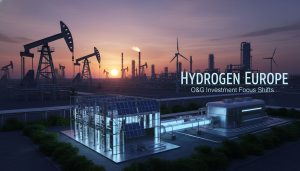
The energy landscape is in constant flux, a dynamic interplay between established fossil fuel markets and an accelerating transition towards sustainable alternatives. Amidst this evolution, a pioneering project led by Magnon, a key player in renewable energy, alongside ErasmoPower2X and Power2X, is set to establish a large-scale e-methanol production facility at Magnon’s renewable energy complex in Puertollano, Spain. This initiative, leveraging biogenic carbon capture from biomass and green hydrogen derived from a 1GW photovoltaic plant, represents more than just another renewable energy venture; it signifies a strategic pivot in the value chain, directly impacting the long-term outlook for oil and gas portfolios by introducing competitive green molecules into sectors traditionally dominated by hydrocarbons.
E-Methanol: A New Frontier for O&G Investment
The Magnon-led project in Puertollano is a significant development in the burgeoning green molecule economy. By combining biomass-derived biogenic carbon capture with green hydrogen supplied by ErasmoPower2X and Power2X from their Saceruela facility, the venture aims to produce e-methanol. This synthetic fuel, composed of renewable hydrogen, is designed to integrate directly into the Spanish Hydrogen Trunk Network, managed by Enagás. The strategic importance of this project lies not only in its scale but in its ambition to produce foundational elements for a range of critical industries. E-methanol can evolve into sustainable aviation fuels (eSAF), serve as a building block for polymerization into plastics, and even find applications in the food and biochemical sectors. For investors in traditional oil and gas, this presents a dual challenge and opportunity: a potential long-term displacement of hydrocarbon-derived products, yet also a blueprint for O&G companies to diversify their portfolios into green chemistry and fuels, leveraging existing infrastructure and expertise.
Navigating Market Volatility with Green Innovations
Against the backdrop of such long-term strategic shifts, the immediate crude oil market continues to demonstrate significant volatility. As of today, Brent crude trades at $90.38 per barrel, reflecting a notable 9.07% decline within the day, with its range fluctuating between $86.08 and $98.97. Similarly, WTI crude stands at $82.59, down 9.41% for the day, having traded between $78.97 and $90.34. This sharp daily downturn follows a more pronounced trend; Brent crude has shed $22.40, or nearly 20%, since March 30th, when it stood at $112.78. Gasoline prices have also seen a dip, currently at $2.93, a 5.18% decrease. This persistent price instability underscores the inherent risks in portfolios heavily weighted towards fossil fuels. Projects like Magnon’s e-methanol initiative offer a compelling counter-narrative, proposing investments in a sector driven by policy support, technological innovation, and a long-term demand for decarbonized products, potentially offering a hedge against the unpredictable swings of the conventional crude market.
Investor Sentiment: Seeking Stability Beyond Crude Prices
The current market dynamics are clearly influencing investor questions and strategies. Our proprietary intent data indicates that investors are keenly focused on the future trajectory of traditional energy, frequently asking questions such as, ‘what do you predict the price of oil per barrel will be by end of 2026?’ and ‘How well do you think Repsol will end in April 2026?’. These inquiries highlight a deep-seated concern about the sustainability and profitability of conventional oil and gas assets in the medium to long term. Magnon’s green e-methanol project directly addresses this underlying investor anxiety by demonstrating a viable pathway for the production of essential industrial chemicals and fuels using renewable resources. For discerning investors, the move into green molecules like e-methanol represents not just an ESG play, but a strategic diversification to future-proof portfolios against potential peak oil demand scenarios and escalating carbon costs. The ability to produce e-SAF and other renewable petrochemical building blocks could unlock substantial value in a decarbonizing world, offering a different return profile less tethered to geopolitical tensions and traditional supply/demand imbalances.
Upcoming Events and the Long-Term Energy Outlook
The immediate horizon for energy markets is punctuated by several key events that will undoubtedly influence short-term price action. Investors will be closely watching the OPEC+ Joint Ministerial Monitoring Committee (JMMC) Meeting on April 19th, followed by the full OPEC+ Ministerial Meeting on April 20th, where production quotas and market strategy will be deliberated. Further market signals will come from the API Weekly Crude Inventory on April 21st and 28th, and the EIA Weekly Petroleum Status Report on April 22nd and 29th, providing crucial insights into supply and demand fundamentals. While these events will shape the near-term volatility in crude markets, the long-term strategic implications of projects like Magnon’s e-methanol facility cannot be overstated. The increasing prominence of green molecule production signals a structural shift in the energy matrix. As Spain strengthens its position as a European green molecule hub, attracting investments and generating new economic opportunities, the demand outlook for traditional fossil fuels in certain applications will face growing competition. Investors must consider how these green initiatives, even as they develop on a different timeline than weekly inventory reports, fundamentally alter the risk-reward calculus for their oil and gas holdings, pointing towards a future where green molecules are an increasingly critical component of the global energy and industrial supply chain.