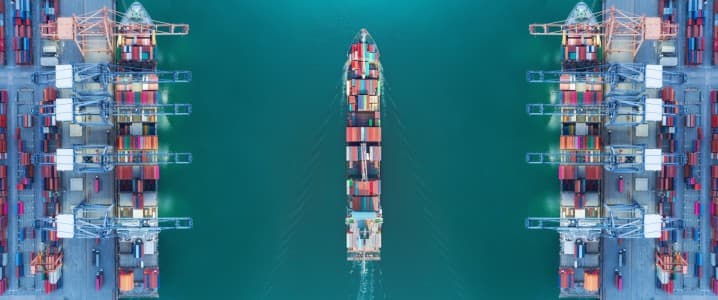
The global energy shipping landscape is undergoing a critical, albeit cautious, shift as Maersk, a titan in container shipping, signals a potential return to the Red Sea. Following months of rerouted voyages due to intensified Houthi attacks, the successful transit of the Maersk Sebarok on December 18-19, 2025, through the Bab el-Mandeb Strait and Red Sea marks a significant development. While Maersk emphasizes a “stepwise approach” and cautions against immediate wider network changes, this move holds profound implications for crude oil prices, refined product demand, and the broader geopolitical risk premium embedded in energy markets. For oil and gas investors, understanding the nuances of this tentative reopening is crucial for navigating future volatility and identifying emerging opportunities.
Red Sea Reopening: Initial Market Reaction and Lingering Caution
The news of Maersk’s successful, albeit highly protected, Red Sea transit could, in theory, alleviate some of the geopolitical risk premium that has buoyed crude oil prices. As of today, Brent crude trades at $91.87 per barrel, reflecting a significant daily decline of 7.57% within a range of $86.08 to $98.97. Similarly, WTI crude sits at $84.00, down 7.86% for the day, trading between $78.97 and $90.34. This immediate downward pressure on prices, while influenced by broader market sentiment, aligns with the notion that any perceived reduction in supply disruption risk can ease upward price momentum.
However, Maersk’s own statements temper enthusiasm, highlighting that this single transit does not signify a wholesale return to the Suez Canal corridor. The “highest possible safety measures” employed underscore the persistent threat. For investors, this creates a nuanced situation: while the *potential* for reduced shipping costs and shorter transit times exists, the *reality* remains fraught with uncertainty. The past 14 days have seen Brent crude fall by 18.5%, from $112.78 on March 30th to today’s $91.87. This broader downtrend suggests that while Red Sea developments are a factor, they are part of a larger confluence of market forces. A sustained, widespread return to the Red Sea would undoubtedly exert further downward pressure by increasing perceived supply security and reducing transport bottlenecks, yet the market remains wary of premature celebrations given the volatile geopolitical backdrop.
The Evolving Landscape of Fuel Oil Demand
One of the less obvious, yet significant, impacts of the Red Sea disruptions has been the surge in global fuel oil demand. With numerous tanker and container ship operators rerouting vessels around Africa, voyages lengthened considerably, consuming more fuel. This created an unexpected boost in fuel oil consumption, reaching multi-year highs and increasing demand for the product the most since 2019. The surge was further exacerbated by the rise of a “shadow fleet” operating with less efficiency and often relying on older, heavier fuel oils.
Should Maersk’s stepwise approach eventually lead to a more comprehensive return to the Suez Canal route, this dynamic would likely reverse. Shorter transit times would inherently reduce aggregate fuel consumption, potentially dampening global fuel oil demand. For refiners, this shift could impact margins, particularly for those heavily reliant on fuel oil production or with significant exposure to bunker fuel markets. Investors holding positions in refining companies should closely monitor this potential trend reversal, as it could alter profitability forecasts. Conversely, a reduction in the demand for longer voyages might free up vessel capacity, potentially lowering freight rates across the board, which could indirectly benefit importers and consumers by reducing landed costs of goods, including energy products.
Investor Horizon: Upcoming Events and Price Expectations
Many of our readers are keenly focused on the future trajectory of crude oil prices, with questions frequently surfacing around predictions for the price of oil per barrel by the end of 2026. Maersk’s cautious reentry into the Red Sea corridor adds another layer of complexity to these forecasts, primarily by influencing the geopolitical risk premium and global logistics. The implications of this development will undoubtedly be a topic of discussion at the upcoming OPEC+ Ministerial Meeting scheduled for April 18th. As the cartel assesses global supply and demand dynamics, any perceived easing of shipping bottlenecks and improved transit security could factor into their production decisions. If the Red Sea situation stabilizes, OPEC+ might face increased pressure to adjust quotas, especially if a more reliable supply chain alleviates some of the tightness in global markets.
Beyond OPEC+, investors should closely watch the weekly API and EIA inventory reports on April 21st/22nd and April 28th/29th. These reports will offer crucial insights into current supply levels, which, combined with the Baker Hughes Rig Count on April 24th and May 1st, will paint a clearer picture of the immediate market balance. A sustained return to Red Sea transits could lead to more efficient global energy flows, potentially contributing to inventory builds if demand does not keep pace, thus putting further downward pressure on prices. However, the unpredictability of the Houthi threat means that any return remains fragile, keeping a floor under prices due to persistent risk. Investors should recognize that while Maersk’s move is a positive signal, its full impact on end-of-2026 price targets will depend heavily on the permanence of this shift and the ongoing geopolitical stability in the region.
Strategic Implications for Oil & Gas Investment
The re-engagement of major shipping lines like Maersk with the Red Sea corridor presents both opportunities and challenges for the broader oil and gas investment landscape. On the one hand, a more secure and efficient Suez Canal route can reduce overall transportation costs for crude and refined products, potentially boosting demand by making energy more affordable in some markets. This could particularly benefit oil producers and refiners that rely on these routes for exports to key European and Asian markets. On the other hand, the reduction in geopolitical risk premium, if sustained, could lead to a tempering of crude oil prices, impacting the revenue streams of exploration and production companies.
Furthermore, the longer-term implications for the “shadow fleet” and older vessels that thrived during the Red Sea crisis are worth considering. If mainline shipping regains dominance, the demand for less efficient, riskier tonnage might diminish, impacting owners and operators in that segment. Investors should look for companies with strong fundamentals, diversified assets, and resilience to geopolitical shocks. The Maersk development underscores the inherent volatility of energy markets, where logistical and geopolitical factors can rapidly shift the supply-demand balance. Active monitoring of shipping advisories, Houthi activity, and the pace of other shipping companies returning to the Red Sea will be critical for making informed investment decisions in the months ahead.


