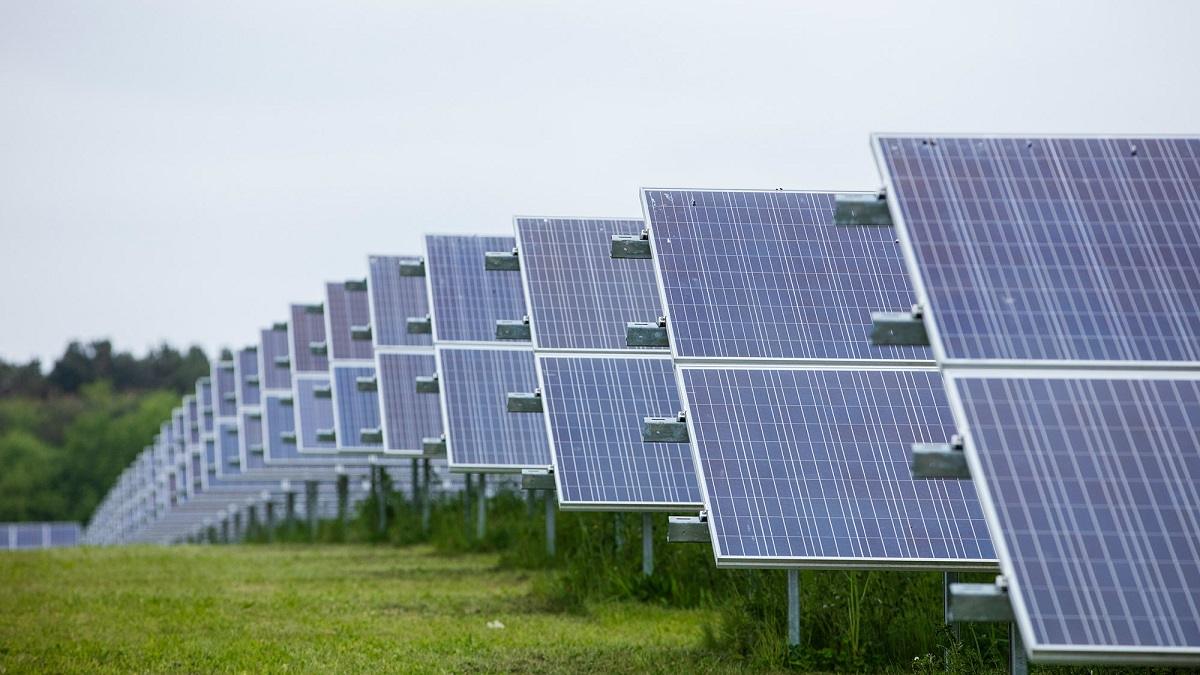
A significant capital injection into the clean energy sector has just been announced, with Lydian Energy securing $689 million in financing. This substantial funding package is earmarked for accelerating the company’s ambitious solar and battery energy storage initiatives across key U.S. markets, specifically Texas, Utah, and New Mexico. For investors navigating the complex and often volatile energy landscape, this move by Lydian, a developer specializing in distributed solar and storage for commercial, industrial, and institutional clients, signals a robust commitment to the energy transition. Backed by Excelsior Energy Capital’s Fund II, this financing underscores a growing institutional appetite for large-scale, long-term renewable infrastructure plays, offering a compelling counterpoint to traditional fossil fuel investments.
The Strategic Imperative Behind Lydian’s Expansion
Lydian Energy, established in 2024, has rapidly built an impressive portfolio comprising 18 solar and storage projects, collectively boasting 4.4 GW of capacity. This latest financing, meticulously arranged by CIBC and MUFG, includes a comprehensive suite of instruments: a Construction-to-Term Loan, a Tax Credit Bridge Loan, a Co-Investment Bridge Loan, and a Letter of Credit Facility. Such a sophisticated financial structure highlights the confidence institutional lenders place in Lydian’s business model and the escalating demand for reliable, sustainable, and affordable domestic energy solutions. The geographic focus on Texas, Utah, and New Mexico is particularly strategic, targeting regions with strong solar resources, growing energy demand, and evolving regulatory frameworks favorable to renewable integration. This investment is not merely about adding capacity; it’s about embedding resilient, localized energy solutions into critical economic hubs across the American West and Southwest.
Market Dynamics: Renewable Stability Versus Crude Volatility
This substantial investment in renewable energy arrives amidst a fascinating backdrop in the broader energy markets. As of today, Brent Crude trades at $94.74, marking a notable 4.77% gain, while WTI Crude stands at $91.54, up 4.71%. Gasoline prices have also seen an uptick, reaching $3.15. While these are strong daily performances, a look at the recent past reveals significant price swings. Brent, for instance, has seen a considerable retreat over the past two weeks, dropping from $118.35 on March 31st to $94.86 on April 20th, representing a sharp 19.8% decline. This pronounced volatility in the traditional crude markets underscores the appeal of long-term, contracted renewable assets. For investors seeking stability and predictable returns, the deployment of nearly $700 million into solar and storage projects offers a strategic diversification away from the immediate, often unpredictable, fluctuations of fossil fuel commodities. It suggests a growing consensus that large-scale renewable infrastructure can provide a more resilient investment thesis in the face of macro-economic uncertainty and geopolitical shifts that frequently impact crude prices.
Navigating the Future: Renewable Growth Amidst Upcoming Energy Events
The energy investment landscape is perpetually influenced by a confluence of factors, from geopolitical decisions to fundamental supply-demand shifts. In the coming weeks, a series of pivotal events will shape the narrative for traditional energy markets. The OPEC+ JMMC Meeting on April 21st, for instance, holds significant sway over global crude supply policies. Following this, the EIA Weekly Petroleum Status Reports on April 22nd and April 29th, alongside the Baker Hughes Rig Count on April 24th and May 1st, will provide critical insights into U.S. crude inventories and drilling activity. While these events directly impact the oil and gas sector, Lydian’s significant capital raise provides a forward-looking perspective on the broader energy transition. The long-term commitment embedded in this financing stands in contrast to the short-term market reactions these reports often trigger. Looking further ahead, the EIA Short-Term Energy Outlook on May 2nd will offer projections that could influence investment decisions across the entire energy spectrum. This sustained flow of capital into renewables, as exemplified by Lydian, suggests that even as traditional energy markets react to immediate data points, the strategic shift towards diversified, clean energy sources continues unabated, providing a degree of insulation from the daily vagaries of the crude market.
Investor Focus: Diversifying Beyond the Barrel’s Price Tag
Our proprietary reader intent data reveals a clear and persistent preoccupation among investors with the direction of crude oil prices. Questions like “is WTI going up or down” and “what do you predict the price of oil per barrel will be by end of 2026?” dominate current inquiries. This focus highlights a fundamental challenge for many energy investors: how to achieve growth and mitigate risk in a sector so exposed to commodity price volatility. Lydian Energy’s $689 million financing offers a compelling answer to this dilemma by providing a robust avenue for diversification. Investing in large-scale solar and battery storage projects, particularly those backed by institutional giants like Excelsior Energy Capital and financed by major banks, represents a pivot towards assets with more predictable, long-term revenue streams, often underpinned by power purchase agreements. This allows investors to gain exposure to the energy sector’s growth without being solely dependent on the daily fluctuations of crude barrels. The strategic backing from financiers like MUFG and CIBC further validates this investment thesis, demonstrating that significant institutional capital is actively seeking opportunities in the energy transition that extend beyond the traditional oil and gas value chain, catering to an evolving investor demand for stability and sustainable growth.


