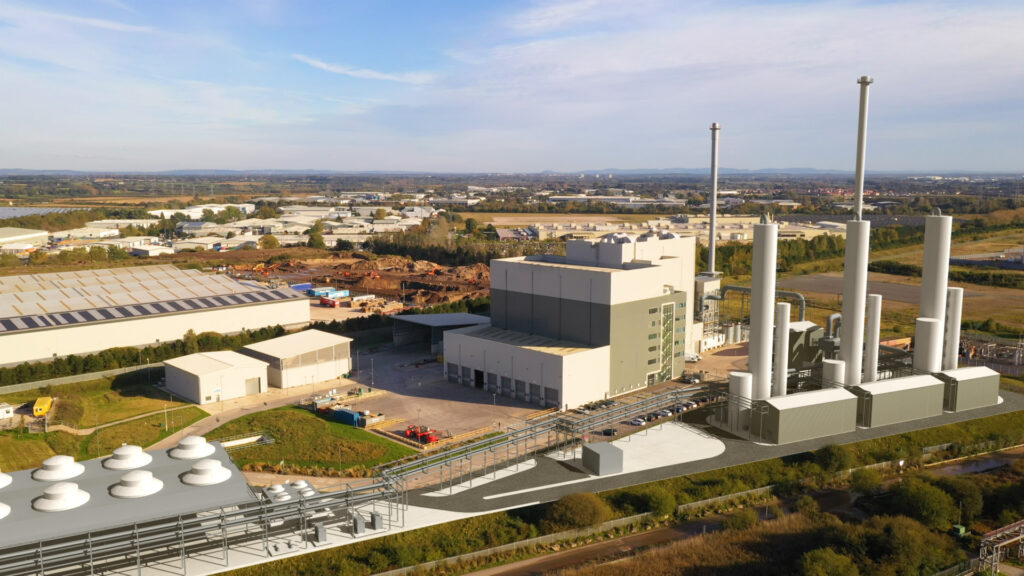
The global energy landscape is undergoing a profound transformation, challenging traditional investment paradigms in oil and gas. While upstream and downstream activities remain core, astute investors are increasingly looking at adjacent opportunities within the decarbonization and energy transition sectors. A recent development in North Wales offers a compelling case study: the Parc Adfer waste-to-energy facility, operational since 2019, is poised to become a significant player in the UK’s carbon capture, utilization, and storage (CCUS) ambitions. This project, which originally began as a partnership with the five local authorities forming the North Wales Residual Waste Treatment Partnership (NWRWTP), highlights how traditional infrastructure can evolve to meet modern environmental demands, creating new avenues for capital deployment and long-term value in the broader energy market.
Strategic Implications of Carbon Capture for Energy Investors
The proposed installation of carbon capture technology at Parc Adfer represents more than just an environmental upgrade; it signals a critical strategic shift with implications for energy investors. Diverting up to 232,000 tonnes of unrecyclable waste from landfill annually, the facility already plays a vital role in regional sustainability. The move towards CCUS, initially announced in April 2024, would transform Parc Adfer into Wales’s largest carbon removals project. Crucially, the project has been shortlisted by the UK Government for grant support, aiming to connect to the HyNet North West carbon capture network, which is currently under construction. This connection is key, as it would enable the captured carbon dioxide to be safely transported for permanent storage in depleted gas reservoirs – a direct linkage to legacy oil and gas infrastructure. For investors, this demonstrates the continued utility and strategic repurposing of existing O&G assets within the decarbonization framework, creating new revenue streams and extending asset lifespans for companies with expertise in subsurface storage and pipeline networks. Companies with exposure to CCUS technology providers, engineering firms, or those operating relevant infrastructure could see significant upside from such government-backed initiatives.
Navigating Market Volatility with Long-Term Vision
In the current volatile market environment, the stability offered by strategic energy transition projects becomes even more appealing. As of today, Brent Crude trades at $94.44 per barrel, reflecting a 1.09% decline, with its daily range spanning $93.87 to $95.69. WTI Crude follows a similar trend, priced at $86.21, down 1.38%, oscillating between $85.5 and $86.78. This daily fluctuation is set against a backdrop of significant recent price movements; our proprietary data shows Brent crude plummeting from $118.35 on March 31st to $94.86 just yesterday, marking a substantial 19.8% drop over 14 days. Such sharp corrections naturally prompt questions from our readership, with many asking about the near-term trajectory of WTI and broader oil price predictions for the end of 2026. While short-term commodity price swings are inherent to the sector, projects like Parc Adfer, with their long development cycles and government backing, offer a distinct counter-cyclical investment thesis. They represent a commitment to future energy infrastructure that can provide more predictable returns, balancing the inherent volatility of upstream exploration and production. Investors are keenly watching how major energy companies, like those our readers inquire about, position themselves to navigate this price environment while also allocating capital to these critical decarbonization initiatives.
Upcoming Catalysts and The Road Ahead
The investment landscape for energy transition projects is heavily influenced by policy decisions and project-specific milestones. For Parc Adfer, a pivotal moment is fast approaching: Flintshire County Council is expected to deliver a decision on the application for carbon capture in early 2026. This approval would unlock the next phase of development and significantly de-risk the project for potential investors. Beyond this specific local catalyst, the broader energy market will be shaped by a series of upcoming events that merit close attention from investors. The OPEC+ JMMC Meeting today, April 21st, 2026, could signal shifts in production policy that directly impact crude prices. Later this week, the EIA Weekly Petroleum Status Report on April 22nd and the Baker Hughes Rig Count on April 24th will provide crucial insights into supply, demand, and drilling activity. Looking further ahead, the EIA’s Short-Term Energy Outlook on May 2nd will offer a more comprehensive forecast, while API and EIA inventory reports on April 28th, April 29th, and May 5th will continue to inform market sentiment. While these macro events primarily influence traditional oil and gas prices, their outcomes directly affect the capital allocation strategies of major energy firms and, by extension, their capacity and willingness to invest in large-scale decarbonization projects like Parc Adfer. Savvy investors will monitor these events not just for short-term trading opportunities but for signals regarding the long-term financial health and strategic direction of companies operating across the entire energy spectrum.
Investor Focus: De-Risking Portfolios in the Energy Transition
Our proprietary reader intent data reveals a consistent theme among investors: a desire for clarity amidst uncertainty, particularly regarding future oil prices and the performance of key players like Repsol. Questions about the price of oil per barrel by the end of 2026 underscore the need for long-term strategic insights. Projects such as Parc Adfer offer a crucial piece of this puzzle by providing a pathway to diversify and de-risk energy portfolios. The consistent support from local authorities, as demonstrated by the North Wales Residual Waste Treatment Partnership, coupled with the UK government’s shortlisting for grant support, signals a robust political and financial backing that can buffer against commodity price volatility. Furthermore, the emphasis on creating and supporting skilled jobs and generating lasting growth in the region aligns with broader ESG (Environmental, Social, and Governance) investment criteria, attracting capital seeking sustainable returns. As Mike Maudsley, CEO at enfinium, highlighted, this initiative supports Wales’s “world-leading efforts to create a sustainable, circular economy.” For investors, this translates into exposure to a sector driven by long-term policy goals and societal demands, rather than solely by fluctuating global supply and demand for crude. Identifying companies that are actively participating in and developing such projects, especially those leveraging existing oil and gas infrastructure for new purposes like CO2 storage in depleted reservoirs, offers a compelling strategy for navigating the ongoing energy transition and securing robust returns.