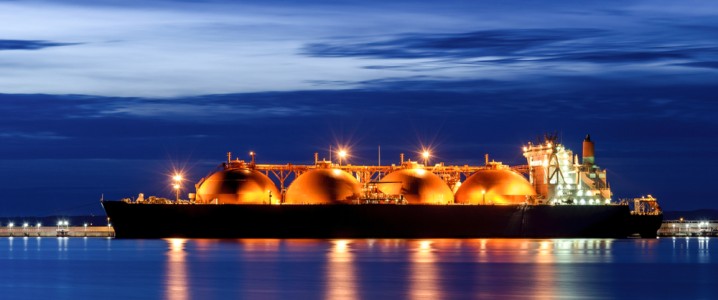
The energy investment landscape is witnessing a pivotal moment as LNG Canada, the nation’s sole export facility, successfully ships its inaugural cargo. This milestone marks not just the culmination of a monumental $40 billion capital expenditure but also the commencement of significant cash flow generation for its consortium of global energy majors, including Shell, Petronas, PetroChina, Mitsubishi, and Kogas. The project, located in Kitimat, British Columbia, is set to fundamentally reorient a substantial portion of Canadian natural gas exports away from their traditional reliance on the U.S. market and toward the rapidly expanding global LNG arena, with a primary strategic focus on Asian markets. This event underscores a profound shift in Canada’s role in global energy supply and validates the long-term strategic vision of its developers in a dynamic and evolving market.
The Strategic Imperative of Canadian LNG on the Global Stage
The dispatch of the first LNG cargo from Canada represents a critical turning point for the country’s vast natural gas resources. Historically, almost all Canadian gas has flowed south to the United States. LNG Canada’s operation changes this paradigm, establishing a direct conduit to high-demand international markets, particularly across Asia. The project, designed for an eventual capacity of 14 million tonnes per annum (mtpa), begins its journey with an initial production capacity of 5.6 mtpa from its first train. This scale positions it as a significant player. Its strategic advantages are compelling: an exceptionally low Canadian natural gas benchmark, currently trading around $0.71 per MMBtu, starkly contrasting with Henry Hub’s $3.75 per MMBtu. This cost differential offers a formidable competitive edge. Coupled with its geographic proximity to Asia, allowing for shipping times of under two weeks, LNG Canada is poised to capitalize on structural demand growth. Shell, a lead operator, views LNG supply as its most substantial contribution to the energy transition over the next decade, projecting a global LNG demand surge of up to 60% by 2040, primarily driven by Asian economies transitioning from coal to cleaner-burning natural gas.
Market Dynamics and Investor Confidence Amidst Shifting Sands
In assessing the timing and impact of LNG Canada’s operational start, investors must consider the broader energy market context. As of today, Brent crude trades at $95.57, reflecting a modest daily increase of 0.82%, with its intraday range fluctuating between $91 and $96.89. This current stability follows a notable cooling period for crude, where Brent prices moved from $102.22 on March 25 to $93.22 on April 14, registering an 8.8% decline over two weeks. This recent volatility in crude prices highlights the dynamic nature of energy markets. However, the multi-decade investment horizon for an LNG project like Canada’s demonstrates a long-term conviction that largely decouples from short-term crude price fluctuations. While some investors are asking for a base-case Brent price forecast for the next quarter or the consensus 2026 Brent forecast, the strategic rationale for LNG Canada hinges less on these immediate crude price movements and more on the sustained, structural demand for cleaner energy. The sheer scale and long-term nature of this $40 billion investment underscore a robust belief in the enduring role of natural gas in the global energy mix, particularly in powering Asia’s economic expansion and energy transition goals.
Unlocking Asia: The Demand Driver and Investor Focus
A key area of inquiry for many investors this week revolves around “What’s driving Asian LNG spot prices.” LNG Canada’s strategic positioning directly addresses this critical question. The project’s primary market is Asia, where surging economic growth and an imperative to reduce carbon emissions are fueling a robust transition from coal to natural gas for power generation and industrial use. Shell’s projection of a 60% increase in global LNG demand by 2040, with Asia as the undeniable epicenter, validates the immense market opportunity. The cost advantage derived from Canada’s low domestic gas prices, combined with the logistical benefit of a shorter shipping route to key Asian destinations, significantly enhances LNG Canada’s competitive standing. This efficiency allows the project to deliver a reliable and economically attractive supply to a region actively seeking stable energy sources. Furthermore, the construction of two additional, albeit smaller, LNG export facilities on Canada’s west coast serves as tangible evidence of the industry’s widespread conviction in the strong, enduring outlook for LNG demand and the strategic imperative of securing supply chains to Asia.
Forward Outlook: Navigating Upcoming Catalysts and Long-Term Value
With LNG Canada now online and generating initial cash flow, the investment focus shifts to its operational ramp-up and the broader market signals that will influence its long-term value. In the immediate term, investors will be monitoring a series of key energy events that shape the overall sentiment. The upcoming OPEC+ Joint Ministerial Monitoring Committee (JMMC) meeting on April 18, followed by the Full Ministerial meeting on April 20, will be crucial in setting the tone for global crude supply and, by extension, general energy market sentiment. Weekly inventory reports, such as the API Weekly Crude Inventory on April 21 and the EIA Weekly Petroleum Status Report on April 22, will provide further insights into market balances. While these events predominantly impact crude oil, they contribute to the overarching investment climate for the energy sector. For LNG Canada and its partners, the immediate priority is to ensure a smooth and efficient ramp-up to its initial 5.6 mtpa capacity, establishing consistent cargo shipments and solidifying cash flow. Longer-term, the project’s success will be measured by its ability to achieve full 14 mtpa capacity, consistently leverage its inherent cost and logistical advantages, and continually meet the burgeoning demand from Asian markets, cementing its role as a cornerstone asset in the global energy transition.


