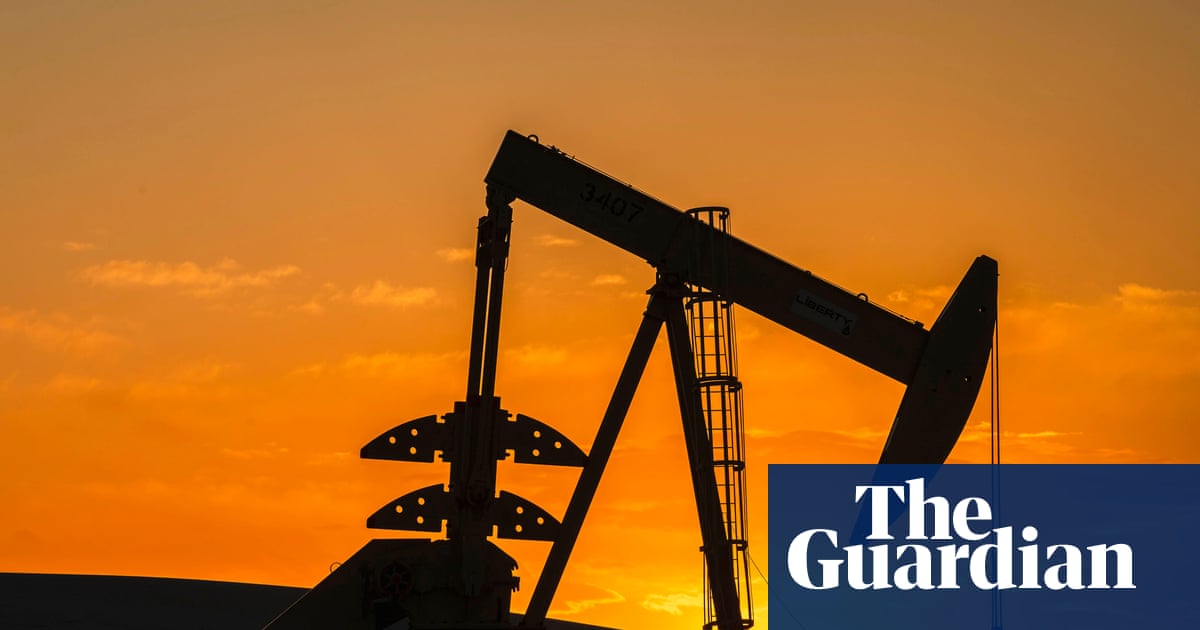
The global energy landscape is perpetually shaped by a complex interplay of geopolitics, economics, and environmental considerations. This week, a significant pivot from one of the world’s most influential insurance markets signals a potentially profound long-term shift for fossil fuel project viability. The new leadership at Lloyd’s has articulated an “apolitical” approach to underwriting, moving away from previous directives that discouraged insuring certain carbon-intensive projects. This policy recalibration, emphasizing deference to national energy strategies, could unlock critical insurance capacity for oil, gas, and even coal developments, fundamentally altering the risk calculus for energy investors.
The Evolving Stance on Energy Risk Underwriting
Patrick Tiernan, the recently appointed chief executive of Lloyd’s, has emphasized a return to neutrality, declaring that the market will no longer actively discourage its members from underwriting fossil fuel ventures. This represents a notable departure from policies articulated by his predecessor, which included a commitment to phase out insurance for thermal coal, oil sands, and new Arctic energy exploration activities from early 2022. While a spokesperson maintained the market’s underlying policy hadn’t formally changed, Tiernan’s public comments highlight a renewed focus on supporting the “energy mix that the government of a jurisdiction chooses” and respecting “the laws of the land.” For oil and gas investors, this signals a potential easing of a significant hurdle: securing essential insurance coverage, which can be a make-or-break factor for large-scale, long-term energy projects. The prior restrictive stance had already posed challenges for project financing and operational continuity in some segments of the industry, making this shift a closely watched development for future capital allocation.
Crude Volatility and Investor Scrutiny
This evolving insurance backdrop plays out against a notably dynamic crude market. As of today, Brent Crude trades at $98.34, registering a daily decline of 1.06%, while WTI Crude sits at $90.02, down 1.26%. Gasoline prices have also dipped slightly to $3.08. This recent softness continues a broader trend; Brent crude has seen a significant pullback, dropping from $108.01 just fourteen days ago to $94.58 yesterday, marking a a 12.4% decrease. This volatility underscores why investors are keenly focused on factors influencing future supply and demand balances. Our proprietary reader intent data reveals a consistent investor query: “What is the current Brent crude price and what model powers this response?” This indicates a thirst for reliable, real-time market data and underlying analytical frameworks. The question of how new insurance policies might ultimately influence future supply growth, potentially offsetting current price pressures or reinforcing long-term bullish theses, is now a critical dimension for forward-looking analysis.
Upcoming Events and Supply-Side Implications
The potential for easier access to insurance for fossil fuel projects could have long-term implications for global energy supply, a topic that will be central to several key events in the coming days. Investors are closely monitoring the upcoming OPEC+ Joint Ministerial Monitoring Committee (JMMC) meeting on April 18th, followed by the Full Ministerial meeting on April 20th. Our data indicates that “What are OPEC+ current production quotas?” is a top question for our readers, highlighting the market’s preoccupation with supply management. Any decisions on production cuts or increases from OPEC+ will directly impact crude prices. Simultaneously, the Baker Hughes Rig Count, scheduled for release on April 17th and again on April 24th, will offer critical insights into North American drilling activity. If the insurance market’s shift facilitates new drilling or the sustainment of existing, higher-risk operations, it could contribute to supply expansion over the medium term, potentially counteracting any restrictive actions from OPEC+ or natural decline rates. Furthermore, weekly inventory reports from the API and EIA, due on April 21st/22nd and April 28th/29th respectively, will provide immediate snapshots of supply-demand balances, which could be influenced by future production increases enabled by more accessible insurance.
Strategic Considerations for Oil & Gas Investors
For oil and gas investors, this recalibration in the insurance sector presents a nuanced opportunity and risk. The “apolitical” stance from Lloyd’s could ease financial and operational burdens for companies engaged in projects previously deemed challenging to insure, such as those in oil sands, deepwater exploration, or certain frontier regions. This could lower capital costs, improve project economics, and extend the life of existing assets or enable new final investment decisions (FIDs). While the immediate impact on crude prices might be muted given the long lead times for major energy projects, the long-term implications for global supply diversity and resilience are significant. Investors should consider how this shift might differentially benefit E&P companies with substantial exposure to these previously constrained segments. Furthermore, the emphasis on respecting national energy policies implies that regions prioritizing energy security and domestic production, regardless of carbon intensity, will likely find a more supportive insurance market. This development, combined with ongoing geopolitical tensions and the persistent need for reliable energy, reinforces the strategic value of diversified exposure across the energy value chain, particularly in companies poised to capitalize on renewed access to critical risk transfer mechanisms.


