Leclanché Ramps Zero-Emission Marine System Production
The global energy landscape is undergoing a profound transformation, with increasing pressure across all sectors to decarbonize. While much investor attention remains fixed on traditional oil and gas dynamics, a significant and often overlooked shift is occurring in heavy-duty transport. Leclanché SA’s recent announcement of commencing serial production for its Navius MRS-3 marine energy storage system at its Swiss facility marks a critical milestone in the maritime industry’s journey towards sustainability. This development signals a strategic pivot by a vertically integrated provider to meet a burgeoning demand for high-performance, safe, and scalable battery systems, presenting a compelling investment angle for those looking beyond the immediate commodity cycle.
The Decarbonization Drive and Leclanché’s Strategic Position
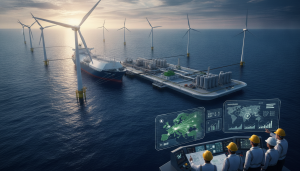
The maritime industry, a significant contributor to global greenhouse gas emissions, faces mounting regulatory and public pressure to adopt cleaner propulsion technologies. Leclanché’s Navius MRS-3 is engineered precisely for this imperative, designed to enable hybrid and fully electric vessel operations. This advanced marine rack system boasts industry-leading energy density and safety, crucial attributes for sea-faring applications where space and operational integrity are paramount. Its modular architecture ensures seamless scalability, making it adaptable for a diverse range of vessels, from bustling ferries and luxury cruise ships to robust offshore supply vessels and cargo carriers. The system’s certification by leading bodies such as Lloyd’s Register, Bureau Veritas, and DNV provides a critical layer of de-risking for operators and investors alike, confirming adherence to stringent marine safety and performance standards. Furthermore, Leclanché’s vertical integration – designing and producing its own lithium-ion cells, modules, and battery management systems – underscores a commitment to quality control and a comprehensive, high-integrity solution, positioning the company as a formidable player in this emerging sector.
Zero-Emission Solutions as a Hedge Against Commodity Volatility
In the current volatile energy market, the strategic importance of insulating operations from fluctuating fuel costs cannot be overstated. As of today, Brent Crude trades at $90.38, reflecting a significant daily drop of 9.07% within a day range of $86.08 to $98.97. WTI Crude shows a similar downturn, now at $82.59, down 9.41% with a day range of $78.97 to $90.34. This sharp decline is part of a broader trend, with Brent having plummeted by $20.91, or 18.5%, over the past 14 days, from $112.78 to $91.87. Such drastic price movements highlight the inherent unpredictability of fossil fuel markets.
Many investors are actively seeking clarity on this uncertainty, with questions frequently surfacing regarding the long-term trajectory of oil prices, such as “what do you predict the price of oil per barrel will be by end of 2026?” This consistent interest underscores the market’s hunger for stability. For maritime operators, adopting zero-emission solutions like the Navius MRS-3 offers a significant hedge against this commodity volatility. By reducing reliance on bunker fuel, these systems provide more predictable operational expenses, long-term cost stability, and crucial compliance certainty in an increasingly regulated environment. Investing in companies at the forefront of this transition offers a strategic play to mitigate exposure to the boom-and-bust cycles of traditional energy commodities, aligning with broader investor demand for resilient, future-proof assets.
Scaling Up for a Greener Fleet: Future Catalysts and Market Dynamics
The commencement of serial production for the Navius MRS-3 at Leclanché’s Yverdon-les-Bains facility, benefiting from high levels of automation and quality control, signals readiness to meet large-scale market demand. This move is not merely an incremental step but a commitment to industrializing the supply of critical components for maritime decarbonization. The modularity and scalability of the system mean it can address diverse segments of the vast global fleet, from short-sea shipping to long-haul routes that increasingly integrate hybrid solutions. While the immediate focus of the broader energy market remains on events like the upcoming OPEC+ Joint Ministerial Monitoring Committee (JMMC) meeting on April 18th and the Full Ministerial meeting on April 19th, which will undoubtedly influence near-term crude prices, the underlying demand for marine electrification is driven by structural forces that transcend these cyclical fluctuations.
Furthermore, ongoing market indicators such as the API Weekly Crude Inventory (April 21st, 28th) and the EIA Weekly Petroleum Status Report (April 22nd, 29th) provide snapshots of traditional fuel demand. Similarly, the Baker Hughes Rig Count (April 24th, May 1st) tracks upstream investment. However, these traditional metrics exist alongside a rapidly accelerating investment trend in green technologies. The regulatory mandate to reduce greenhouse gas emissions is a powerful, non-cyclical driver, ensuring sustained demand growth for advanced energy storage solutions. For investors, this creates an opportunity to participate in a market segment propelled by clear policy direction and technological advancement, offering a compelling narrative for long-term growth distinct from the often-turbulent conventional energy sector.
Investment Implications for the Energy Transition Landscape
Leclanché’s move to serial production of its Navius MRS-3 system underscores a critical inflection point in the energy transition narrative, specifically within the maritime sector. For investors, this development highlights the growing maturity and commercial viability of zero-emission technologies. It represents an opportunity to gain exposure to a segment of the energy market that is directly addressing climate change imperatives while simultaneously offering a hedge against the inherent volatility of fossil fuel prices. The strong product features, comprehensive certifications, and vertical integration position Leclanché favorably to capture significant market share as global fleets increasingly electrify. As the industry grapples with the dual challenges of decarbonization and energy security, solutions that offer both environmental benefits and operational stability will attract increasing capital. Investors seeking to diversify their portfolios beyond traditional oil and gas, and to align with the future of sustainable energy, should closely monitor the growth trajectory of companies like Leclanché that are delivering tangible, scalable solutions for a greener future.