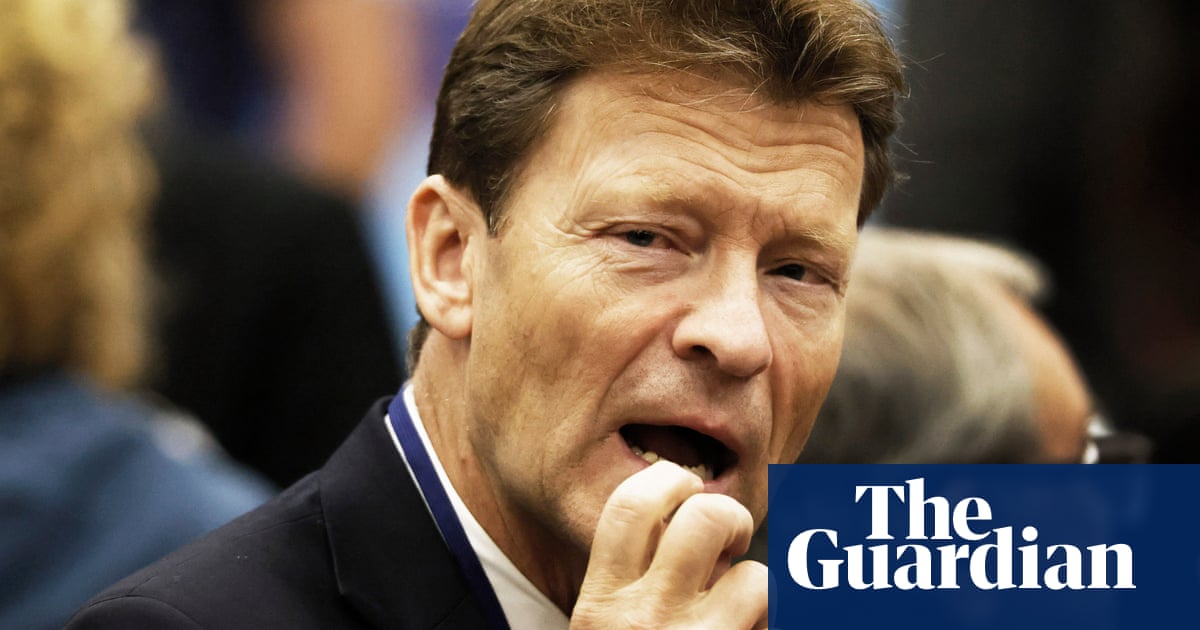
The intricate dance of energy policy and political ambition is reaching a critical juncture in the United Kingdom, presenting a complex outlook for oil and gas investors. A prominent figure from the Reform party, Richard Tice, has boldly asserted that the Labour party, despite its current public stance, will ultimately soften its rigorous net zero commitments. This prediction carries significant weight for market participants scrutinizing the future of hydrocarbon investments within the UK’s evolving energy landscape.
Tice, who serves as the energy spokesperson for Reform and represents Boston and Skegness in Parliament, articulated his party’s starkly different approach to climate policy. He indicated that a Reform government would withdraw the UK from the 2015 Paris Agreement, an international accord aimed at limiting global temperature increases to 1.5 degrees Celsius. Furthermore, Reform proposes to cease a five-year funding initiative designed to assist developing nations in addressing climate change impacts, deeming the projected £10 billion expenditure for climate aid as “absurd” given pressing domestic issues. This radical departure from established climate policy could fundamentally reshape the investment thesis for energy companies operating in or looking at the UK.
Labour’s Shifting Sands: Political Pressure and Policy Implications
Despite personally owning an electric vehicle, Tice contends that Labour is grappling with a “mounting apprehension” regarding its net zero agenda. He forecasts that if household energy expenditures fail to decrease, the party will face “severe electoral repercussions.” Tice has also criticized the current government for allegedly attempting to obscure the true financial burden of net zero initiatives within the most recent spending review, branding the aggressive push for renewable energy as “financially unsustainable” and a “monumental miscalculation.” From an investor’s perspective, such political rhetoric highlights the inherent volatility and risk associated with long-term energy projects heavily reliant on consistent policy support.
The Reform party’s growing influence was underscored by a recent Holyrood byelection, where Labour secured victory by a margin of fewer than 1,500 votes over Reform. Tice interpreted this narrow win as a “serious warning” to Labour, suggesting that even in historically strongholds like Scotland, a significant segment of the electorate is gravitating towards Reform’s platform. This political dynamic could compel Labour to subtly recalibrate its energy policies rather than execute an overt reversal.
Tice does not foresee a public U-turn from Labour leader Keir Starmer on net zero. Instead, he predicts a more gradual concession: “They will delay, they will gradually wind down, they will push back the timing of targets and policies,” he stated. This strategy would involve “clever ways to walk back from their clean power targets,” specifically referencing the ambitious goal of decarbonizing the electricity sector by 2030. For oil and gas investors, a delayed or softened net zero timeline could offer a reprieve, extending the operational lifespan and profitability of existing fossil fuel assets, while potentially deferring costly transition investments.
Internal Divisions and External Declarations
Labour’s net zero strategy has not been without its detractors, facing scrutiny from Conservative rivals, elements within the media, and even some trade unions. Notably, former Prime Minister Tony Blair penned an influential piece in April, arguing that any strategy predicated on a rapid phase-out of fossil fuels or a severe curtailment of consumption in the short term is “destined for failure.” Such high-profile critiques, even from within the broader Labour-aligned establishment, underscore the political tightrope the party walks. There have also been reports of internal dissent, with “unfriendly briefings” targeting Energy Secretary Ed Miliband.
However, Starmer recently sought to quell these internal murmurs with a decisive speech, unequivocally committing to “all out” climate action and vowing to “accelerate” rather than delay net zero efforts. This firm declaration signals to investors that, for now, the official party line remains steadfast in its green ambitions, potentially increasing regulatory certainty for renewable energy projects while maintaining pressure on traditional fossil fuel sectors.
Capital Allocation: A Green Spending Spree
The recent spending review, led by Chancellor Rachel Reeves, further illuminates the government’s current commitment to green initiatives, allocating more than £60 billion towards environmental endeavors. This substantial capital injection includes specific allocations of £13.2 billion for enhancing home insulation, approximately £30 billion dedicated to nuclear power development, and £15 billion for public transportation improvements outside of London. These figures represent a clear signal of where governmental financial priorities lie, directing significant investment away from new fossil fuel infrastructure and towards decarbonization projects.
A notable beneficiary of this review was the Department for Energy Security and Net Zero (DESNZ), whose budget experienced a dramatic surge. Its funding is set to increase by 16% annually, culminating in a 68% expansion over the review period through 2029. This significant budgetary boost positions DESNZ as a pivotal agency in steering the UK’s energy transition, impacting everything from regulatory frameworks to funding opportunities for energy innovation. For oil and gas companies, this translates into an environment where the regulatory and policy landscape is increasingly geared towards phasing out conventional energy sources in favor of alternatives, necessitating a strategic pivot towards low-carbon solutions or a focus on international markets with different policy trajectories.
Investor Outlook: Navigating the UK’s Energy Future
The UK’s energy market presents a fascinating, albeit challenging, landscape for investors. On one hand, the substantial government investment in renewables, nuclear, and energy efficiency signals a robust commitment to decarbonization, creating opportunities in clean energy technologies, infrastructure, and related services. Companies specializing in offshore wind, carbon capture, grid modernization, and sustainable transport stand to benefit from this policy direction.
On the other hand, the political predictions of a gradual retreat from strict net zero targets, coupled with the persistent economic realities of energy costs, introduce an element of uncertainty. Should Labour indeed “slow walk” its targets, it could provide a longer runway for existing oil and gas operations, potentially boosting valuations for companies with mature assets and stable production. The debate surrounding domestic energy security, particularly in light of geopolitical events, could also temper the pace of fossil fuel divestment, creating a demand floor for natural gas and potentially even new oil field developments, provided they align with broader energy security objectives.
Investors in the oil and gas sector must closely monitor these political machinations. The interplay between electoral pressures, economic realities, and ambitious climate goals will dictate the speed and shape of the UK’s energy transition. Understanding the nuances of these policy shifts—whether they manifest as outright reversals, strategic delays, or targeted investments—will be paramount for making informed capital allocation decisions in an increasingly dynamic and politically charged energy market.