Geopolitical Tensions Escalate: Drone Strikes Halt Kurdistan Oil Output Amidst Deepening Instability
The semi-autonomous Kurdistan Region of Iraq (KRI) has once again become a flashpoint for energy market volatility, as a series of targeted drone attacks brought oil production at several key fields to an abrupt halt. This latest wave of instability, impacting operations of prominent international energy firms, sends a stark warning to investors about the escalating geopolitical risks inherent in the region’s hydrocarbon sector. The incidents, occurring over Tuesday and Wednesday, underscore the complex interplay of security challenges and unresolved political disputes that continue to plague Kurdistan’s vital oil industry.
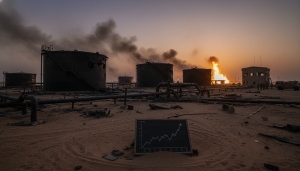
The initial strike occurred on Tuesday, forcing the immediate suspension of operations at the Sarsang oilfield. This facility, managed by HKN Energy, a privately held U.S. firm, ceased production following an explosive drone attack on its infrastructure. Remarkably, this disruption unfolded just hours before HKN Energy was slated to finalize a preliminary agreement with Iraq’s federal oil ministry for the development of another field. While the company confirmed the production halt at Sarsang, it reassuringly reported that all personnel were safely accounted for, a critical first concern in such incidents. For investors monitoring the region, such events highlight the vulnerability of even established operations and the potential for rapid, unforeseen operational interruptions.
Multiple Operators Targeted: A Broader Threat Landscape
The coordinated nature of these attacks became evident as the aggression continued into Wednesday morning. Kurdistan’s counter-terrorism services reported that explosive-laden drones struck additional oilfields, broadening the scope of the disruption. Norwegian energy giant DNO and U.S.-based Hunt Oil Company were the latest operators to be impacted. DNO, a publicly traded entity with significant regional interests, quickly issued a statement confirming the temporary suspension of activities at its Tawke field in Kurdistan. The company detailed three distinct explosions: one targeting a small storage tank at Tawke and another impacting surface processing equipment at its nearby Peshkabir field. Fortunately, no injuries were reported, and DNO has initiated a comprehensive damage assessment. The company expressed an expectation to resume production once this critical evaluation is complete, but the timeline remains subject to the extent of the damage and the prevailing security situation. For DNO shareholders, this incident introduces immediate operational risk and potential revenue loss, demanding close scrutiny of the company’s updates and regional security developments.
Unclaimed Attacks Amidst Suspected Iranian Backing
As of now, no specific group has officially claimed responsibility for these sophisticated drone attacks. However, intelligence from Kurdistan security sources, relayed to international news outlets, points towards a familiar and concerning pattern. Initial investigations suggest the drones originated from areas under the control of Iran-backed militias. This attribution, if confirmed, significantly elevates the geopolitical stakes, framing the attacks not merely as acts of local insurgency but as potential proxies in a wider regional power struggle. For energy investors, the involvement of such actors introduces a layer of systemic risk, where local operations can be caught in the crossfire of international rivalries, making risk assessment and long-term planning exceedingly complex.
The Persistent Shadow of Political Disagreement
These latest security breaches do not occur in a vacuum; they are superimposed on an already fragile political landscape defined by a protracted dispute between the federal government in Baghdad and the Kurdistan Regional Government (KRG) in Erbil. At the heart of this long-standing contention lies the fundamental question of authority over oil exports and, crucially, the subsequent distribution of generated revenues. Baghdad maintains that it should possess sole discretion in managing all Iraqi oil exports and associated financial flows, a position that directly challenges the KRG’s historical autonomy in this sector.
Adding another layer of complexity for investors, the KRI’s oil exports have already been entirely shut in since March 2023. This comprehensive halt, now extending nearly two and a half years, stemmed from an earlier dispute over who holds the legitimate authority to authorize Kurdish oil shipments. Despite various rounds of negotiations and intermittent breakthroughs reported in recent months, the core disagreements stubbornly persist. Consequently, the KRI’s significant oil export potential remains unrealized, representing a substantial loss of revenue for the region and a continuous point of friction with Baghdad. The current drone attacks, by further disrupting internal production, exacerbate an already dire situation, diminishing the KRI’s capacity to even produce oil, let alone export it, once the political gridlock eventually breaks.
Investment Implications and Forward Outlook
The confluence of escalating security threats and entrenched political paralysis presents a formidable challenge for current and prospective investors in Kurdistan’s oil and gas sector. The recent drone strikes underscore the heightened operational risks, including potential damage to infrastructure, forced production halts, and the ever-present threat to personnel. Companies operating in the region must now contend with an elevated security premium, potentially impacting operational costs and insurance rates. For public companies like DNO, such events can trigger immediate market reactions, reflecting investor concerns over earnings stability and future growth prospects.
Furthermore, the prolonged export shutdown since March 2023 continues to cast a long shadow. This ongoing dispute not only deprives the KRG of crucial income but also severely limits the profitability and viability of international oil companies (IOCs) operating within its borders, as their produced crude cannot reach international markets. The recent attacks further complicate any potential resolution, as the KRI’s ability to maintain stable production, even for domestic consumption or future export, is now directly threatened. Investors must carefully weigh the significant potential of Kurdistan’s hydrocarbon reserves against the deep-seated political instability and the increasing frequency of security incidents. The path forward for Kurdistan’s oil industry, and for those who invest in it, remains shrouded in uncertainty, demanding continuous monitoring of both geopolitical developments and the intricate political negotiations between Erbil and Baghdad.