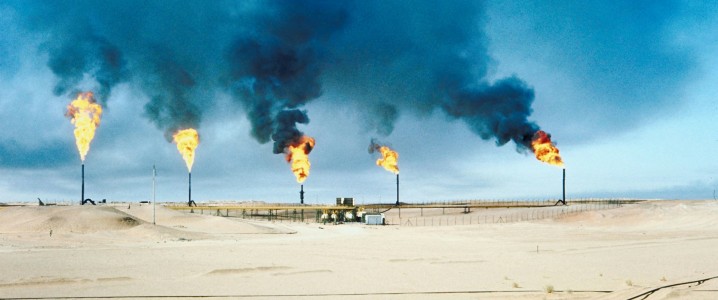
After a protracted two-and-a-half-year hiatus, crude oil exports from Iraq’s semi-autonomous Kurdistan region are poised to resume, injecting an initial 230,000 barrels per day (bpd) back into global markets. This significant development follows a series of breakthroughs in negotiations between the federal Iraqi government in Baghdad, the Kurdistan Regional Government (KRG) in Erbil, and Turkey, the conduit for these crucial flows. For investors closely monitoring global supply dynamics, this represents a material shift, signaling a de-escalation of a long-standing geopolitical impasse and potentially influencing crude price trajectories in the coming months.
The Return of Kurdish Barrels: A Market Rebalancing Act
The reintroduction of 230,000 bpd from Kurdistan is a noteworthy event, particularly against the backdrop of current market conditions. As of today, Brent crude trades at $98.22, marking a -1.18% decline, while WTI sits at $89.69, down -1.62% within its daily range of $89.5 to $90.26. This recent dip follows a broader trend over the last 14 days, where Brent has shed over $14, falling from $112.57 on March 27th to $98.57 on April 16th. While 230,000 bpd represents less than 0.25% of global daily demand, its sudden re-entry, particularly after such a prolonged absence, can exert immediate psychological and fundamental pressure on prices, especially in a market already experiencing some softness.
The initial volume of 230,000 bpd is expected to flow through the Iraq-Turkey pipeline to the Turkish Mediterranean port of Ceyhan. This restores a critical artery for Kurdish crude, which has been shut in since March 2023 due to the dispute over export authorization and revenue distribution. While the volume is not a global game-changer on its own, it contributes to overall supply liquidity and could alleviate some tightness in specific regional markets. Investors should consider how this additional supply might be perceived by major producers and whether it prompts any strategic adjustments in their own output policies.
Geopolitical Resolution De-Risks Regional Investment
The resumption of exports is a testament to the successful, albeit lengthy, resolution of complex political and financial disagreements. Key agreements have been reached, including a deal between Iraq’s state oil marketing firm SOMO and Turkish companies to restart crude flows, as well as a critical revenue-sharing and distribution agreement between the KRG and the federal Iraqi government. These resolutions address the core issues that led to the shutdown, providing a more stable framework for future operations.
For international oil companies (IOCs) operating in the Kurdistan region, this is a significant de-risking event. Many firms have had their operations curtailed and revenues impacted by the export halt. The reported preliminary approvals from the Iraqi federal government and the tentative green light from foreign oil firms operating in Kurdistan indicate a broad consensus for moving forward. This newfound stability could encourage renewed investment in the region’s upstream sector, potentially unlocking further production capacity beyond the initial 230,000 bpd in the longer term. Investors with exposure to these IOCs or with an interest in frontier oil and gas opportunities should view this development as a positive catalyst.
Investor Focus and Upcoming Market Catalysts
Our proprietary reader intent data reveals a consistent interest in key market drivers, with many investors asking about current Brent crude prices, the models powering these responses, and crucially, OPEC+ production quotas. This indicates a sharp focus on how supply-side events, like the KRG resumption, interact with cartel policy and broader market fundamentals. The reintroduction of Kurdish barrels directly impacts the global supply picture, making its timing particularly relevant ahead of critical energy events.
Looking ahead, the next 14 days are packed with pivotal energy events that will shape the market’s reception of these new barrels. The upcoming OPEC+ Joint Ministerial Monitoring Committee (JMMC) meeting on April 17th, followed by the Full Ministerial meeting on April 18th, will be paramount. With 230,000 bpd returning to the market, investors will be closely watching for any signals on whether OPEC+ might adjust its voluntary cuts or maintain its current stance. Given the recent softening in crude prices and the additional supply from Kurdistan, this could influence discussions around supply discipline within the alliance. Furthermore, the API Weekly Crude Inventory report on April 21st and the EIA Weekly Petroleum Status Report on April 22nd, along with their subsequent releases on April 28th and 29th, will provide fresh data on U.S. crude stock levels, offering further insights into global supply-demand dynamics. These reports, combined with the Baker Hughes Rig Count on April 24th and May 1st, will offer a comprehensive snapshot of the market’s immediate response to both fundamental shifts and policy decisions, guiding investment strategies in the short to medium term.


