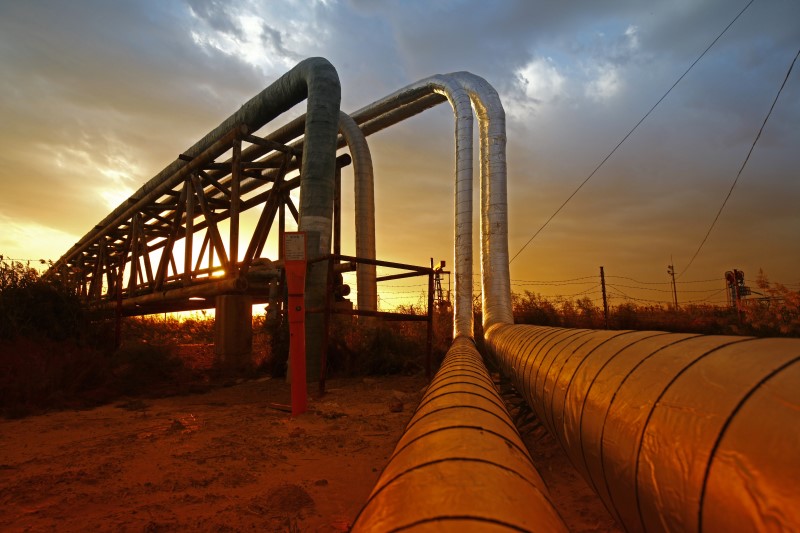
Kuwait Petroleum Corp. (KPC), a cornerstone of OPEC’s production capacity, is on the cusp of a transformative financing initiative. The state-backed oil giant is actively exploring a multi-billion dollar pipeline lease agreement, potentially unlocking up to $7 billion in capital. This strategic move aims to fuel an ambitious upstream investment program, earmarking approximately $33 billion out of a total $65 billion portfolio investment towards boosting oil production capacity to a formidable 4 million barrels per day (bpd) by 2035. This strategy mirrors the successful capital monetization tactics previously employed by regional heavyweights like Saudi Aramco and Abu Dhabi National Oil Co. (ADNOC), signaling a broader trend among Gulf national oil companies to leverage midstream assets for upstream expansion. For investors, this development represents a clear signal of Kuwait’s unwavering commitment to its long-term role in global energy supply and offers compelling insights into the evolving landscape of oil and gas financing.
KPC’s Strategic Imperative: Funding Upstream Dominance
KPC’s drive to raise significant capital through a pipeline lease is fundamentally rooted in its long-term strategic vision for upstream growth. The company plans to invest a staggering $65 billion across its diverse energy portfolio, with a concentrated $33 billion dedicated to expanding its crude oil production capabilities. This substantial investment is critical for achieving the ambitious target of 4 million bpd by 2035. In a global energy market grappling with the dual pressures of transition and sustained demand for reliable hydrocarbons, securing capital efficiently is paramount. KPC’s consideration of leasing 13 pipelines for up to 25 years, with Centerview Partners LLC advising, demonstrates a pragmatic approach to financing. This strategy allows KPC to maintain operational control while unlocking non-dilutive capital, a model successfully pioneered by peers such as Saudi Aramco with its $11 billion lease-and-leaseback deal on the Jafurah gas project and ADNOC’s prior pipeline divestments. It underscores a regional consensus: midstream asset monetization is a powerful tool to accelerate core upstream projects and solidify market position.
Market Volatility Reinforces Midstream Appeal
The timing of KPC’s potential pipeline deal is particularly noteworthy given the current dynamics in the global crude market. As of today, Brent crude trades at $90.38, reflecting a significant 9.07% drop within a single day, with its intra-day range fluctuating dramatically between $86.08 and $98.97. Similarly, WTI crude sits at $82.59, down 9.41% for the day, having traded between $78.97 and $90.34. This daily volatility follows a more extended downtrend, with Brent having fallen from $112.78 on March 30th to $91.87 just yesterday, a substantial 18.5% decline over two weeks. In such an environment, characterized by sharp price swings and broader market uncertainty, stable infrastructure assets become increasingly attractive. The predictable, long-term cash flows generated by midstream pipeline leases offer a compelling proposition for institutional investors seeking stable returns insulated from commodity price fluctuations. For KPC, this strategy provides a robust funding mechanism that de-risks its upstream expansion from the immediate impact of volatile crude prices, ensuring capital availability regardless of short-term market sentiment.
Investor Concerns and KPC’s Role in Future Supply
Our proprietary reader intent data from this week reveals a strong focus among investors on future oil price trajectories, with a prominent question being about the prediction for oil prices per barrel by the end of 2026. This reflects a pervasive market uncertainty and a keen interest in the fundamental supply-demand dynamics shaping long-term pricing. KPC’s aggressive upstream investment strategy directly addresses these concerns. By aiming to boost its production capacity to 4 million bpd by 2035, Kuwait is signaling its commitment to being a significant and reliable supplier in the future, which is a critical factor in any long-term oil price forecast. Furthermore, investors are actively inquiring about OPEC+ current production quotas. While KPC’s long-term capacity goals are ambitious, its immediate production levels remain subject to OPEC+ agreements. The successful monetization of pipelines could provide KPC with the financial flexibility to optimize its existing quota utilization and position itself to ramp up production efficiently should OPEC+ policies or global demand warrant higher output in the years to come, creating a compelling opportunity for investors tracking the supply side of the equation.
Navigating Upcoming Events and Strategic Implications
The discussions around KPC’s pipeline deal, which requires government approval, unfold against a backdrop of critical near-term industry milestones that will shape the operating environment for all major producers. This weekend is particularly significant, with the OPEC+ Joint Ministerial Monitoring Committee (JMMC) scheduled for April 18th, followed by the full OPEC+ Ministerial Meeting on April 19th. These gatherings are pivotal for setting or reaffirming production policies, directly influencing the immediate operational capacity and revenue streams for OPEC members like Kuwait. Following these key policy discussions, investors will closely monitor weekly data from the American Petroleum Institute (API) and the Energy Information Administration (EIA) on crude inventories, with reports due on April 21st/22nd and again on April 28th/29th. These provide vital snapshots of market balance and demand health. Concurrently, the Baker Hughes Rig Count on April 24th and May 1st will offer insights into North American drilling activity. A successful pipeline deal for KPC, by freeing up capital for upstream, would empower Kuwait to more effectively navigate these events, potentially allowing it to accelerate drilling programs, enhance recovery, and ultimately better position itself to respond to future OPEC+ directives or shifts in global demand, thereby securing its long-term strategic objectives irrespective of short-term market fluctuations.
Conclusion: A Blueprint for Future Growth
KPC’s pursuit of a $7 billion pipeline lease to finance its upstream expansion is more than just a capital raise; it is a strategic blueprint for sustained growth and a testament to Kuwait’s long-term commitment to its role as a global energy supplier. By adopting a proven monetization strategy from its regional peers, KPC is demonstrating financial acumen in unlocking value from its midstream assets to power its core upstream business. This move ensures the necessary capital is available to meet its ambitious 4 million bpd production target by 2035, a critical factor for investors focused on future supply stability. In a volatile crude market, this strategy offers a robust framework for insulating growth initiatives from short-term price swings. As KPC navigates government approvals and forthcoming OPEC+ decisions, this initiative positions Kuwait not only to maintain but to enhance its competitive edge in the evolving global energy landscape, presenting a clear long-term value proposition for discerning oil and gas investors.