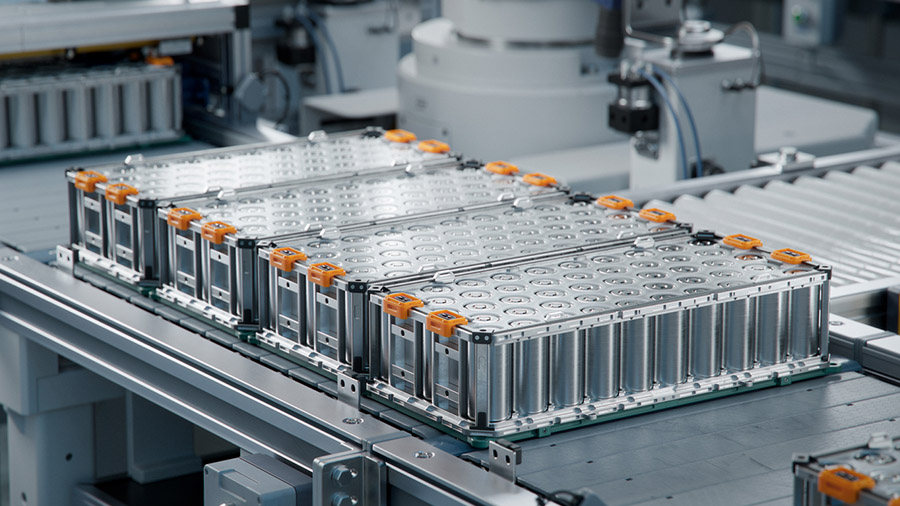
Korean Battery Giants Pivot to US Energy Storage Amid EV Market Volatility
Major South Korean battery manufacturers, navigating a challenging period marked by a slowdown in electric vehicle (EV) demand, are strategically intensifying their focus on the energy storage system (ESS) sector. This shift represents a crucial pivot for these industry titans – LG Energy Solution, Samsung SDI, and SK On – as they seek new avenues for growth and profitability, particularly within the burgeoning United States market.
The strategic reorientation comes as the global EV battery market faces what some analysts term a “chasm” – a temporary stagnation in demand impacting financial performance. Simultaneously, the U.S. government’s assertive stance against Chinese battery imports, primarily through tariffs, is creating a significant competitive vacuum. Korean firms are actively leveraging this geopolitical dynamic to reclaim market share and establish dominance in the critical US ESS landscape, expanding production capabilities stateside and optimizing cost structures to mitigate tariff impacts.
First Quarter Performance Reveals Divergent Paths
The first quarter of 2024 offered a mixed financial picture for these battery behemoths, with LG Energy Solution emerging as the sole profitable entity among the trio. Reporting its Q1 results by April 30th, LG Energy Solution posted sales totaling 6.265 trillion won, a modest 2.2% increase year-on-year. Crucially, its operating profit witnessed a dramatic 138.2% surge, transforming a previous quarter’s loss of 225.5 billion won into a healthy profit.
This impressive turnaround for LG Energy Solution was largely underpinned by its proactive establishment of manufacturing facilities in the United States, which qualified it for substantial government incentives. The company received 457.7 billion won in Advanced Manufacturing Production Credit (AMPC) subsidies under the Inflation Reduction Act (IRA) from the U.S. government during the quarter. Without these critical subsidies, LG Energy Solution would have recorded an operating loss of 83 billion won, underscoring the profound impact of US industrial policy on its financial health.
In contrast, Samsung SDI and SK On, which have been slower to establish significant US production footprints, faced considerable headwinds. Samsung SDI reported an operating loss of 434.1 billion won for Q1, despite receiving 109.4 billion won in AMPC subsidies. This deficit was primarily attributed to reduced battery shipments as automotive manufacturers, their primary clients, aggressively adjusted inventories in response to the decelerating EV demand.
Similarly, SK On grappled with an operating loss of 299.3 billion won in the first quarter. Even with 170.8 billion won in AMPC benefits, the company could not avoid a deficit. Both Samsung SDI and SK On have now registered operating losses for two consecutive quarters, highlighting the persistent challenges in the current EV battery market environment.
Navigating Q2 and Beyond: The ESS Imperative
Looking ahead, Korean battery manufacturers anticipate continued challenging conditions for the second quarter, citing the ongoing EV demand “chasm” coupled with the complexities introduced by U.S. tariff policies. Lee Chang-sil, Chief Financial Officer of LG Energy Solution, articulated these concerns during a recent conference call, suggesting that automakers’ conservative inventory management strategies, influenced by tariffs and market dynamics, would likely lead to a certain level of sales decline compared to the previous quarter.
Against this backdrop, the ESS market is increasingly viewed not just as an alternative, but as a vital growth engine and a strategic imperative for these companies. Unlike the current volatility in EV battery demand, the ESS sector is demonstrating robust growth, fueled by two powerful macro trends: the global expansion of renewable energy sources and the explosive development of artificial intelligence (AI) industries, both of which require reliable, large-scale energy storage solutions.
Market intelligence from SNE Research reinforces this optimism. The global ESS battery market is projected to expand significantly, from an estimated 300 gigawatt-hours (GWh) this year to over 610 GWh by 2035, representing an impressive average annual growth rate of 7.7%. This rapid expansion is expected to propel the market size to an estimated $39.5 billion (approximately 57.8 trillion won) by 2035, presenting a compelling investment opportunity for battery manufacturers.
Strategic Implications for Investors
For investors monitoring the broader energy transition landscape, the strategic redirection of these Korean battery giants toward ESS holds significant implications. The move signifies a crucial diversification away from an overreliance on the cyclical EV market, offering a more stable and rapidly expanding revenue stream driven by fundamental shifts in global energy infrastructure.
The proactive engagement with the US market, underscored by investments in local production and the leveraging of IRA subsidies, positions these firms to benefit directly from government incentives and a protected market. As geopolitical tensions continue to shape global supply chains, establishing a strong domestic presence in the US for ESS manufacturing becomes a powerful competitive advantage against rivals, particularly those from China.
While the immediate financial performance of some players reflects the headwinds in the EV sector, the long-term outlook for those successfully pivoting to ESS appears robust. Investors should closely watch how these companies execute their ESS expansion strategies, their ability to reduce costs, and their capacity to capitalize on the growing demand for grid-scale and commercial energy storage solutions. The future of energy storage is not just about powering vehicles; it’s about stabilizing grids, enabling renewables, and supporting the insatiable energy demands of the AI era, making it a critical area of focus for sophisticated energy market participants.


