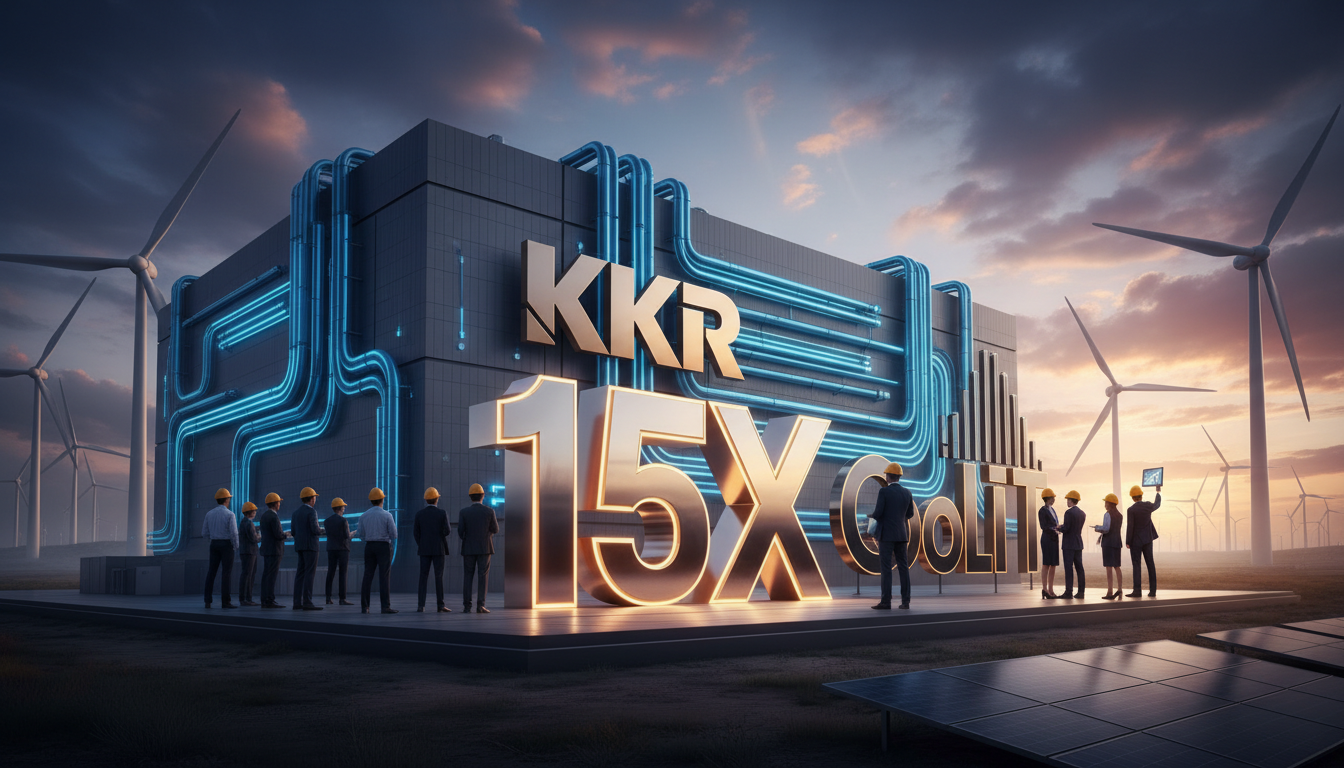
The recent divestment of CoolIT, a pioneer in direct liquid data center cooling, by private equity giant KKR for a staggering $4.75 billion, represents far more than just a successful exit. This transaction, which generated an approximate 15-fold return on KKR’s 2023 equity investment, including distributions, serves as a potent signal to the broader energy investment community. It underscores the accelerating convergence of traditional energy markets with the burgeoning demand for highly efficient, sustainable infrastructure. For investors navigating the complex landscape of global energy, this deal highlights where smart capital is finding exceptional value: not just in extracting energy, but in optimizing its consumption, particularly within the energy-intensive digital economy.
The Critical Nexus of Data Centers and Energy Efficiency
CoolIT’s journey, from its 2001 origins designing cooling systems for high-performance gaming rigs to its strategic pivot in 2014 towards enterprise data centers, exemplifies a keen understanding of evolving energy demands. This foresight positioned the Calgary-based company at the forefront of a critical challenge: managing the colossal energy footprint of the rapidly expanding data center industry. Data centers are voracious consumers of electricity, with cooling components often accounting for a substantial portion of their total energy and water usage. The shift to direct liquid cooling, as championed by CoolIT, offers a transformative advantage, typically reducing cooling energy consumption by 30-40% compared to traditional air-cooled systems. Furthermore, these closed-loop systems significantly curtail water consumption, delivering a dual benefit of resource conservation. For oil and gas investors, recognizing this trend is paramount. As global energy demand continues to rise, the efficiency gains from technologies like CoolIT’s represent a powerful mechanism for decoupling economic growth from raw energy consumption, shaping future demand curves for traditional fuels and creating new avenues for capital deployment in sustainable technologies.
High Returns on Impact: KKR’s Strategic Blueprint
KKR’s impressive 15x return on CoolIT was executed through its Global Impact Strategy, launched in 2018. This initiative is designed to invest in companies offering commercial solutions to pressing environmental or social challenges, aligning with objectives like the United Nations Sustainable Development Goal 7 (Affordable and Clean Energy). The CoolIT deal emphatically demonstrates that “impact investing” is not merely about social good; it is a highly profitable strategy. This success story offers a compelling blueprint for how capital can be deployed to address energy challenges while delivering outsized financial returns. Investors watching the energy sector are increasingly asking about the long-term viability of various energy plays. While some might focus on the immediate fluctuations of commodity prices, such as the question “what do you predict the price of oil per barrel will be by end of 2026?”, the KKR-CoolIT transaction points to a more fundamental shift. It highlights that businesses offering scalable, energy-efficient solutions are becoming critical growth engines, capable of delivering robust returns irrespective of short-term commodity price volatility. This focus on underlying market demand for sustainable efficiency, rather than just supply-side dynamics, is a key takeaway for strategic portfolio construction.
Market Volatility Underscores the Value of Efficiency Plays
The current energy market landscape, characterized by dynamic price movements, further emphasizes the strategic value of investments in energy efficiency. As of today, Brent crude trades at $92.45 per barrel, down 0.85% for the day, with a daily range between $91.39 and $94.21. Similarly, WTI crude is priced at $88.69, reflecting a 1.09% decrease today, ranging from $87.64 to $90.71. This follows a broader retreat in Brent prices, which have fallen by approximately 7% from $101.16 on April 1st to $94.09 just yesterday. Gasoline prices also reflect this softening, currently at $3.10, down 0.96%. While some investors are acutely focused on these immediate directional shifts, perhaps asking “is WTI going up or down?”, the sustained profitability demonstrated by KKR’s exit from CoolIT offers a counter-narrative. In an environment where traditional commodity prices can swing dramatically, investments in technologies that fundamentally reduce energy consumption and improve operational efficiency present a more stable and predictable growth trajectory. These efficiency-driven businesses are less exposed to geopolitical shocks or sudden shifts in supply-demand balances for raw commodities, instead capitalizing on the inevitable and growing need for smarter energy use.
Navigating Future Demand: Upcoming Data and Strategic Diversification
Looking ahead, the next two weeks will provide crucial insights into the evolving energy landscape, with a series of pivotal reports shaping market sentiment. Investors will closely monitor the EIA Weekly Petroleum Status Reports on April 22nd, April 29th, and May 6th, alongside the Baker Hughes Rig Count on April 24th and May 1st, and the API Weekly Crude Inventory data on April 28th and May 5th. Critically, the EIA Short-Term Energy Outlook on May 2nd will offer updated projections for both supply and demand across various energy sources. While these reports traditionally focus on upstream oil and gas metrics, their relevance is increasingly intertwined with the growth of efficiency technologies. The question of “How well do you think Repsol will end in April 2026?” for instance, implicitly touches upon how integrated energy companies are adapting. Their future performance will increasingly depend not just on their core hydrocarbon assets, but on their strategic diversification into areas that address the underlying demand for energy, including energy efficiency, renewables, and sustainable infrastructure. The KKR-CoolIT deal is a vivid example of how robust returns are being generated by companies that enable more efficient energy utilization, a trend that oil and gas investors must integrate into their forward-looking strategies as the broader energy ecosystem continues its rapid transformation.


